
The Spring left China, and the grant can follow it
Dacia Spring
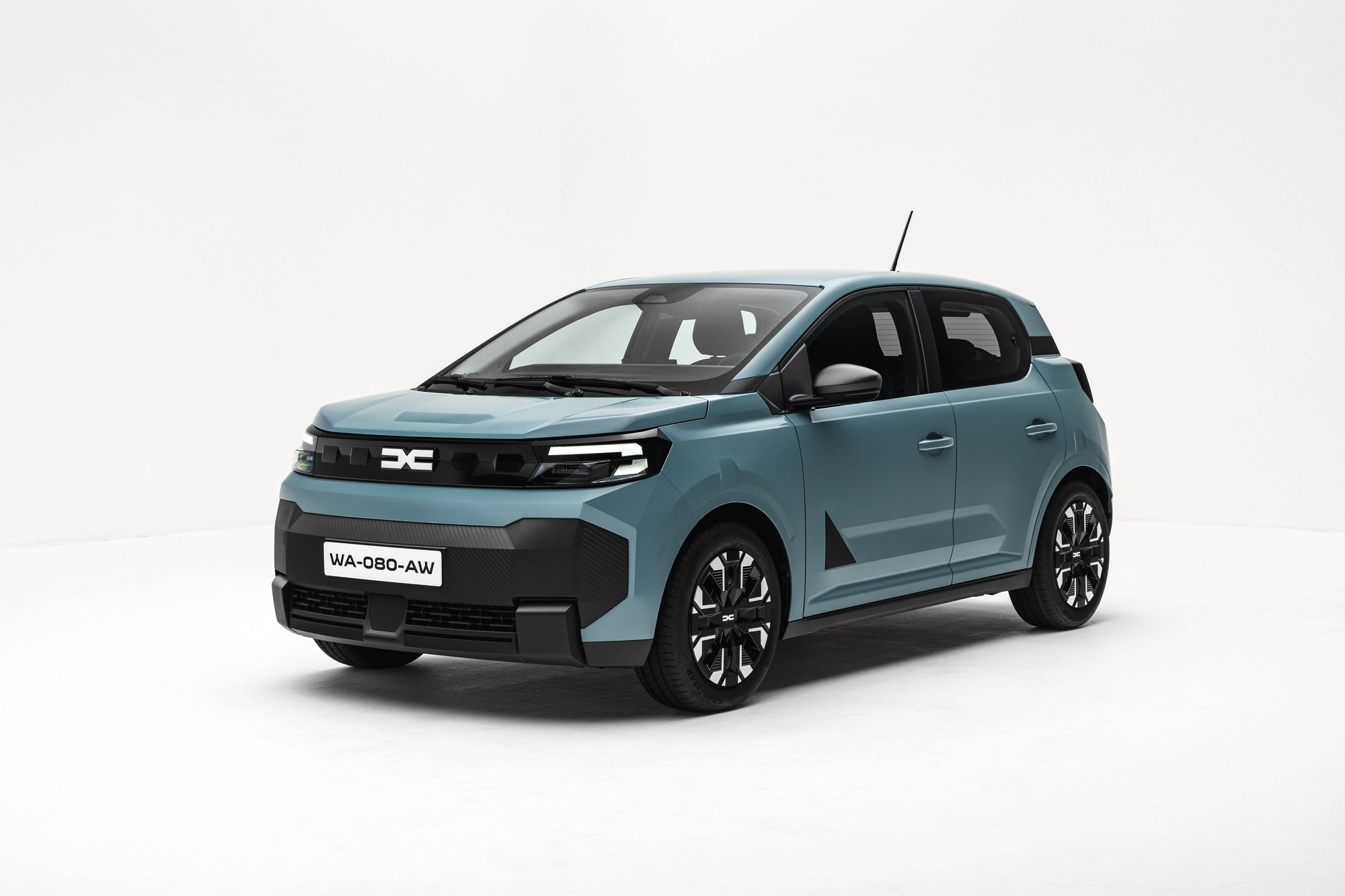
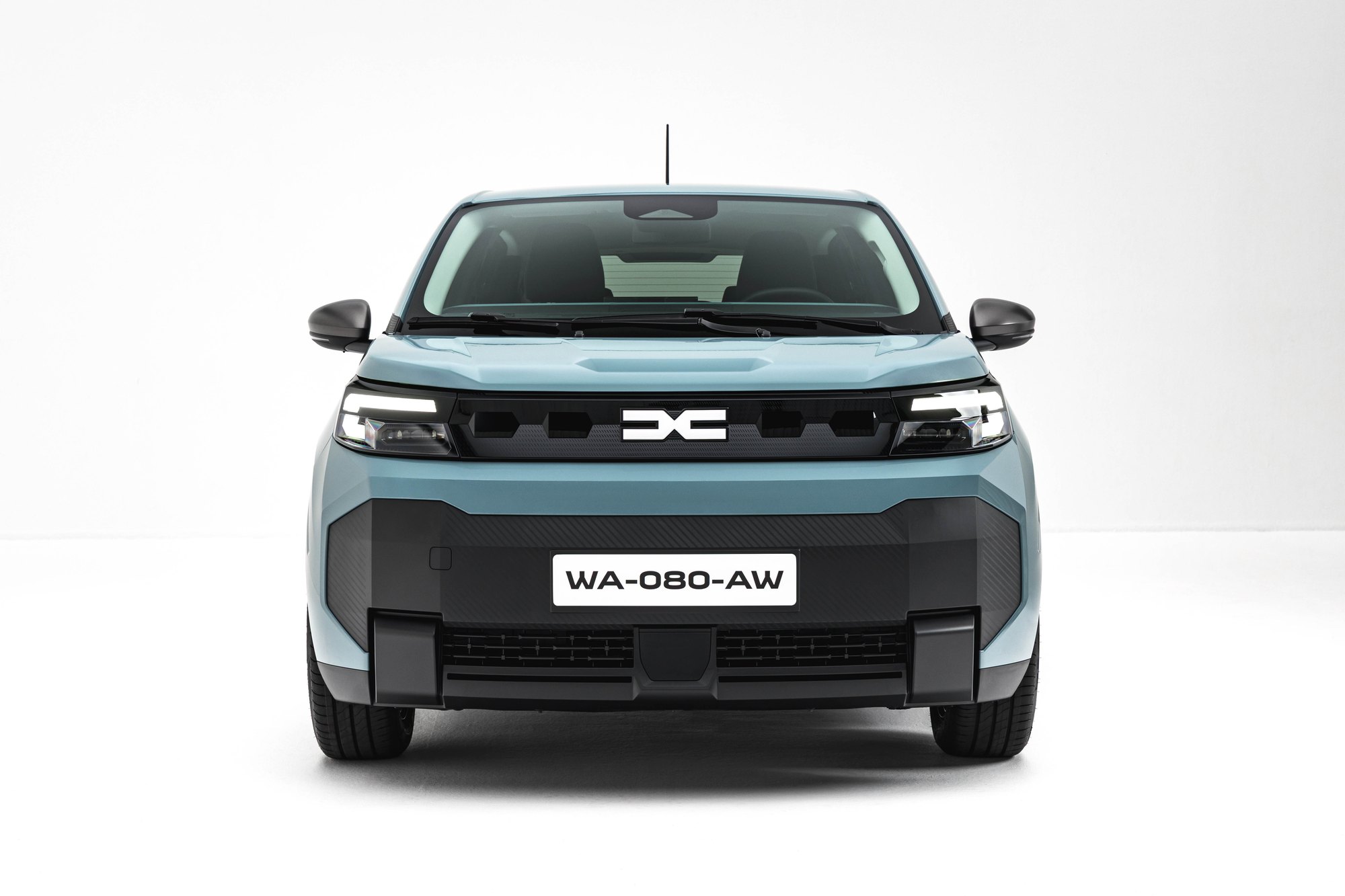
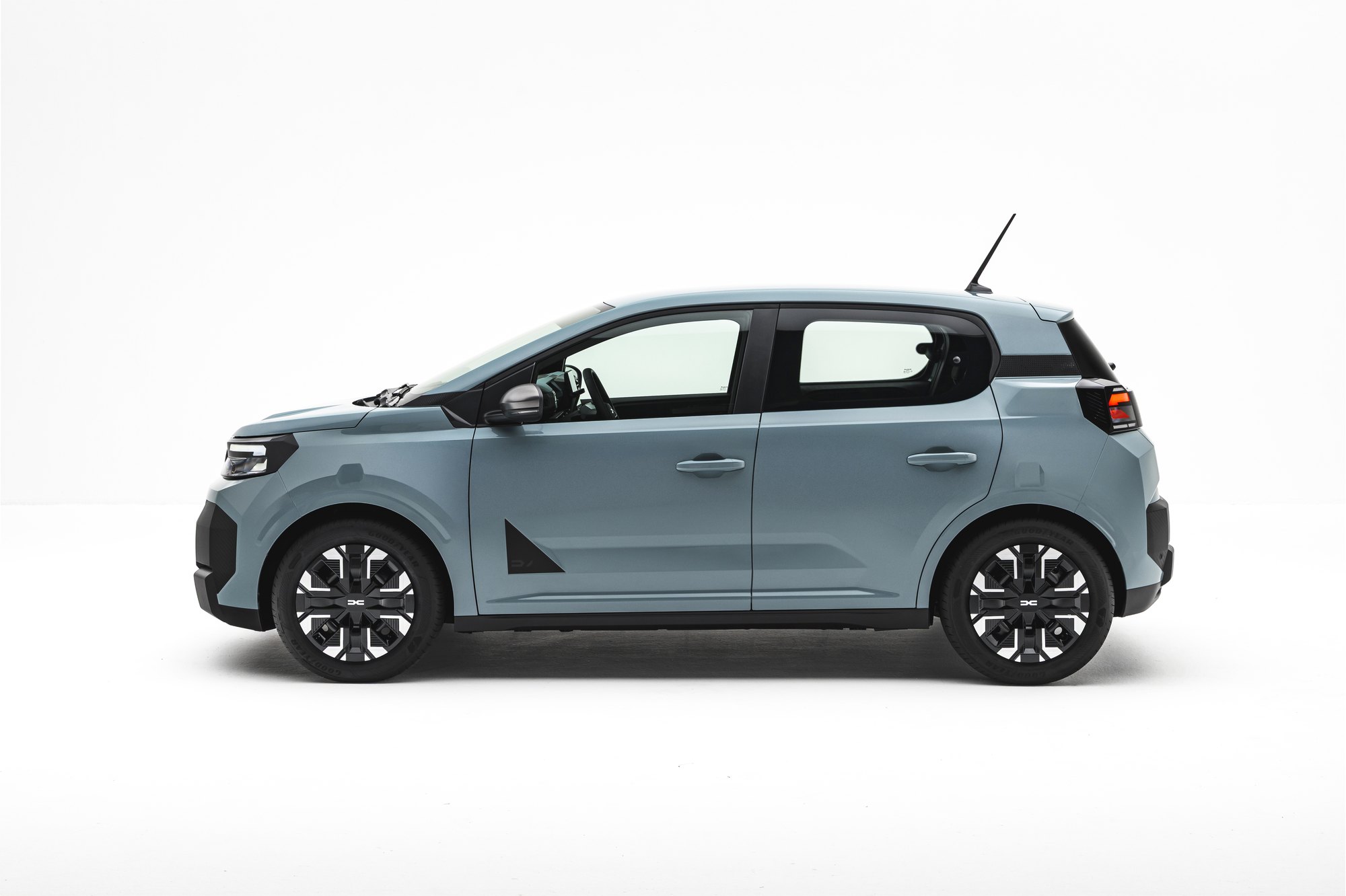
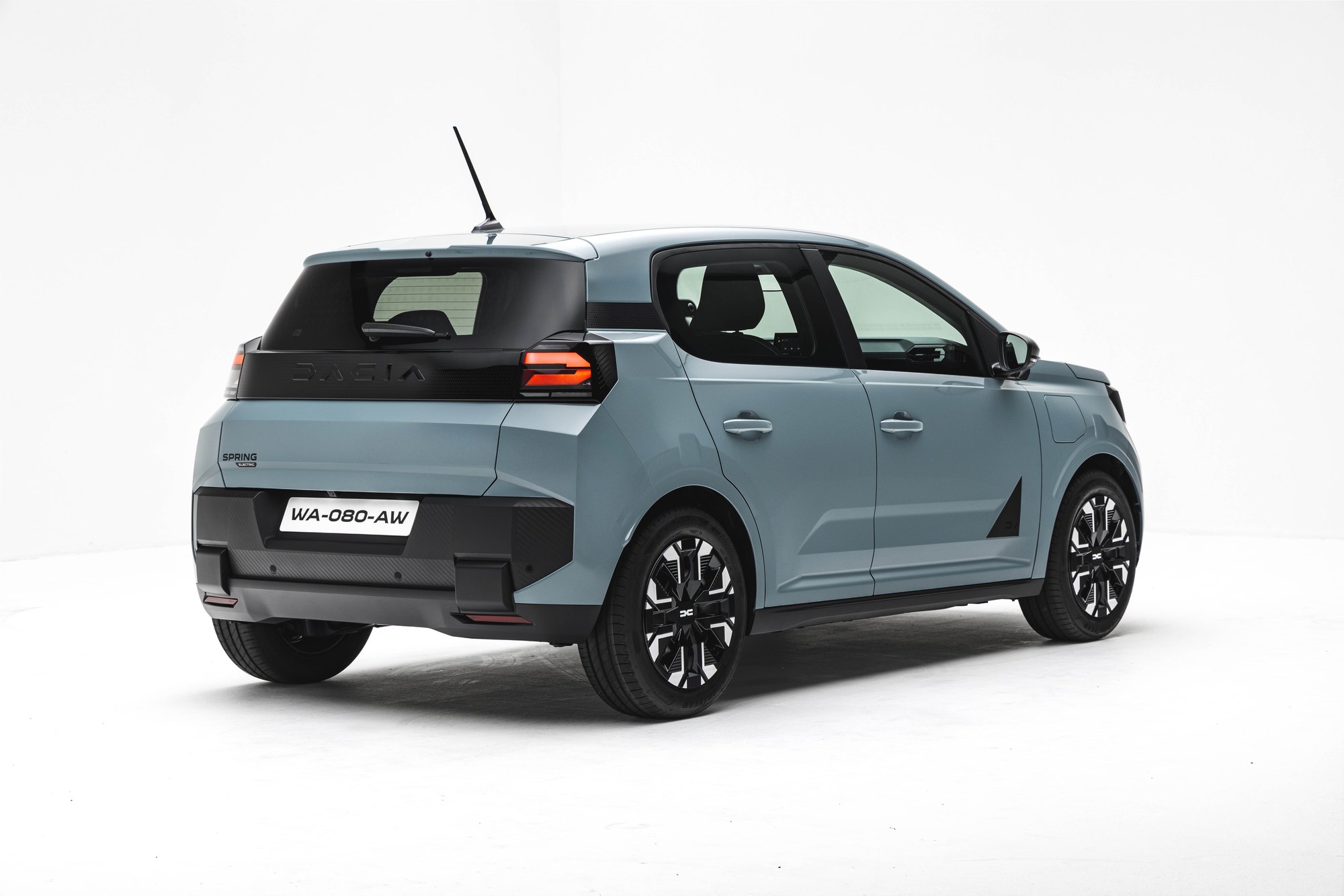
The new Dacia Spring is built in Slovenia, which the old one never was. Dacia says the whole range will be under £18,000 before subsidies. The sum worth doing is the one after them.
8 September 2026
of 31
The Dacia Spring has been the cheapest electric car in Britain since it arrived, and the reason is not complicated: it was built in China. That is also why it has never taken a penny of the Electric Car Grant. £11,990 is a remarkable price with no help at all behind it, and it has been quietly costing Dacia the £1,500 or £3,750 that its rivals get to advertise.
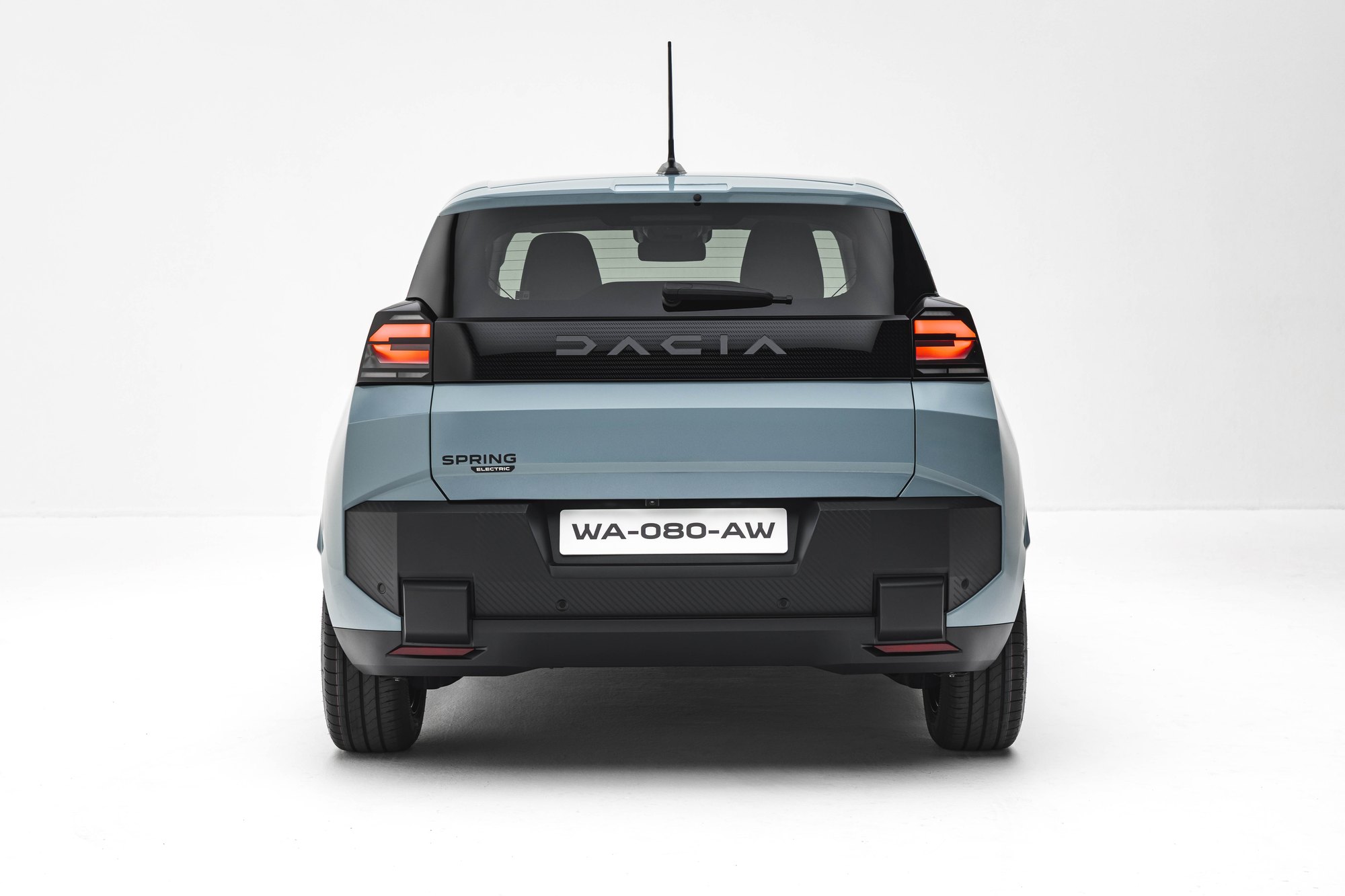
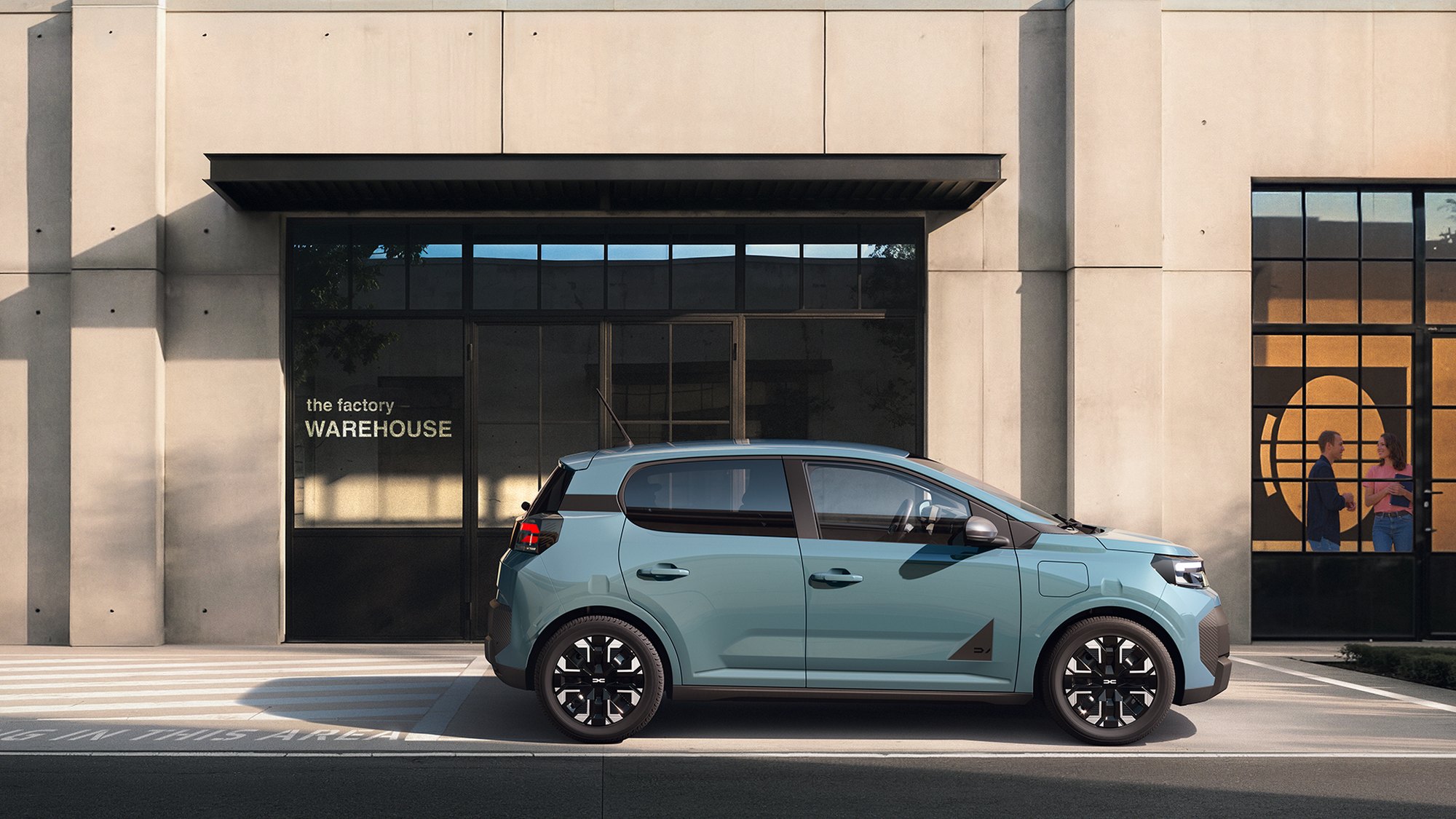
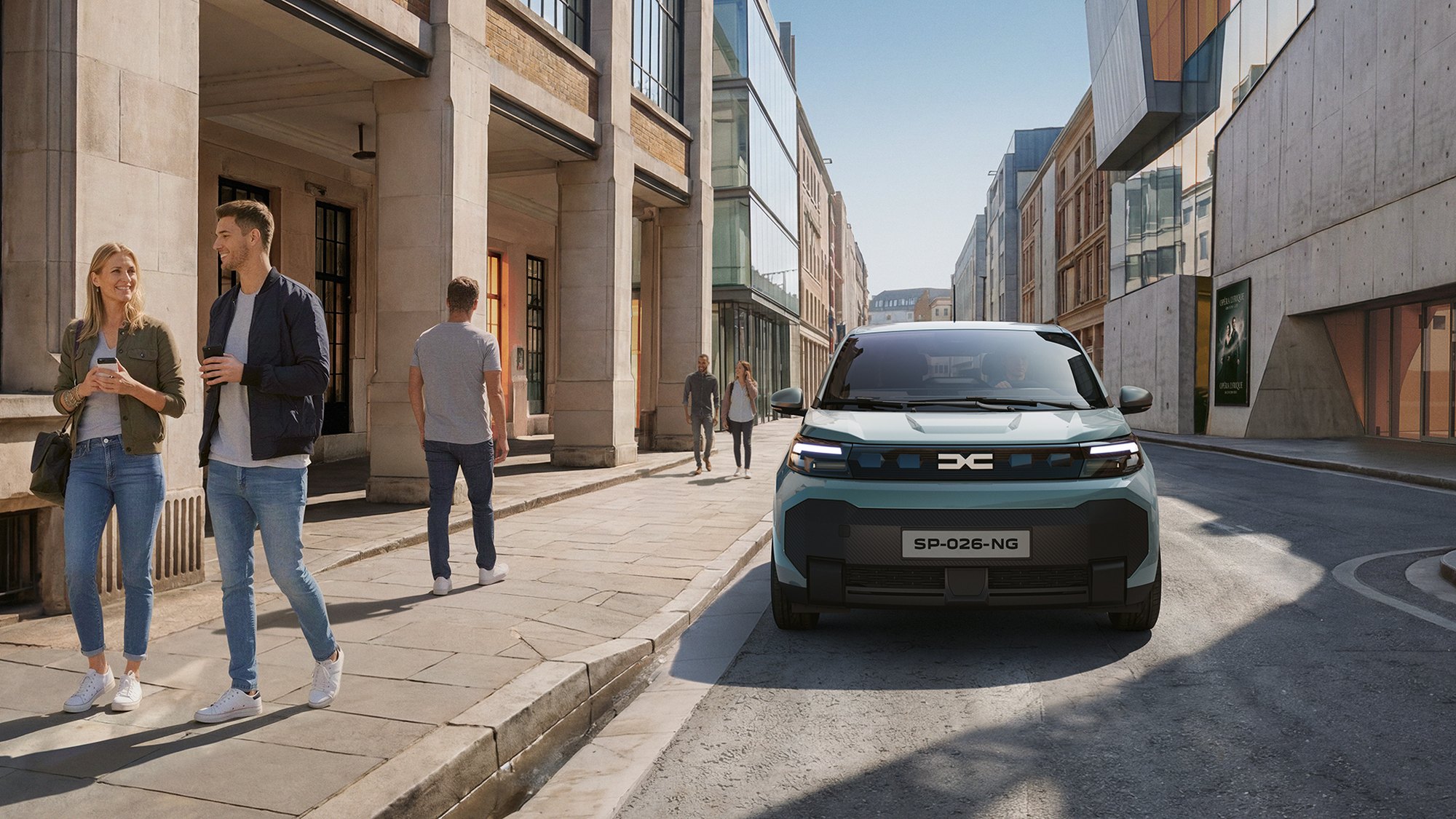
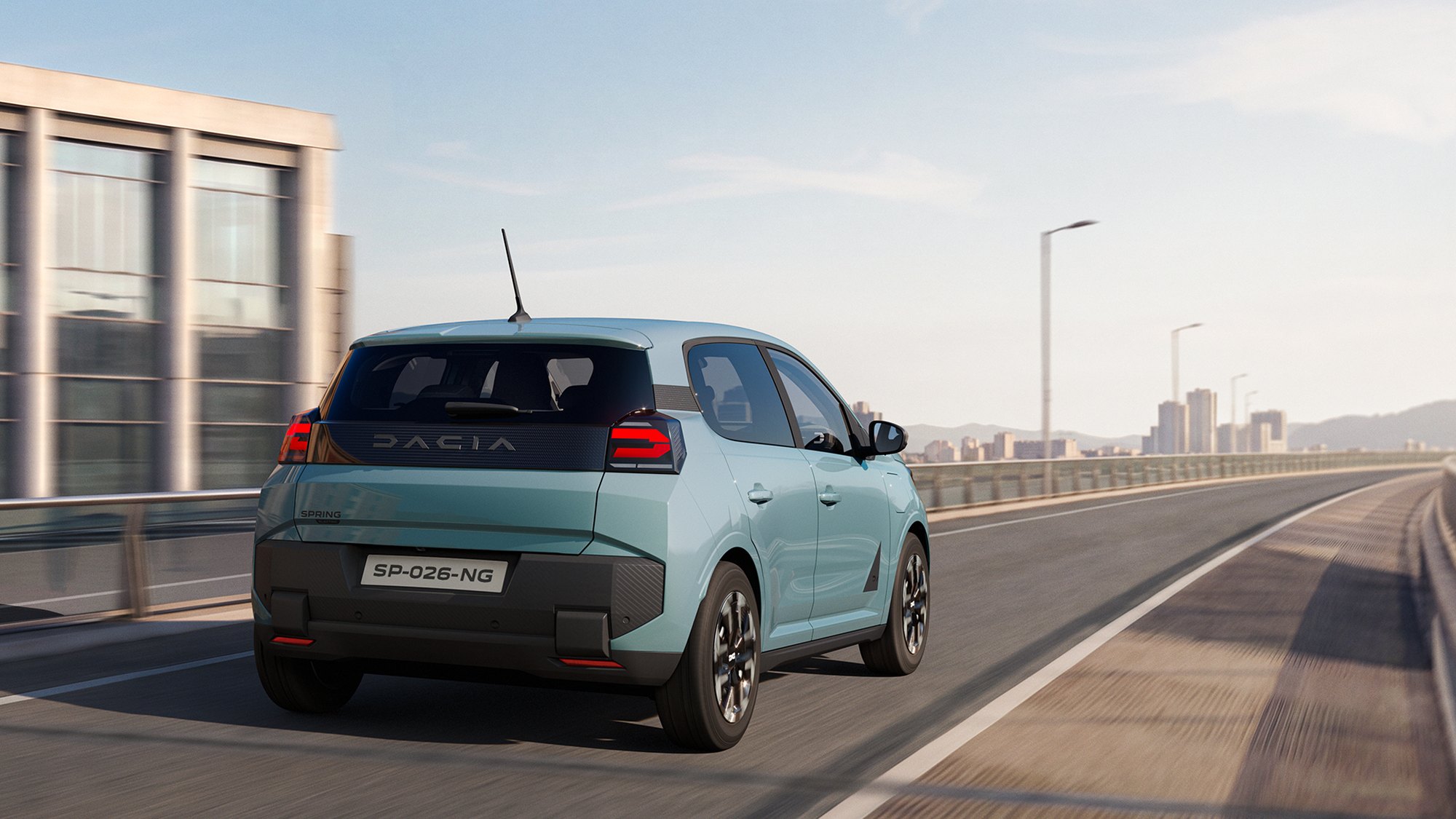
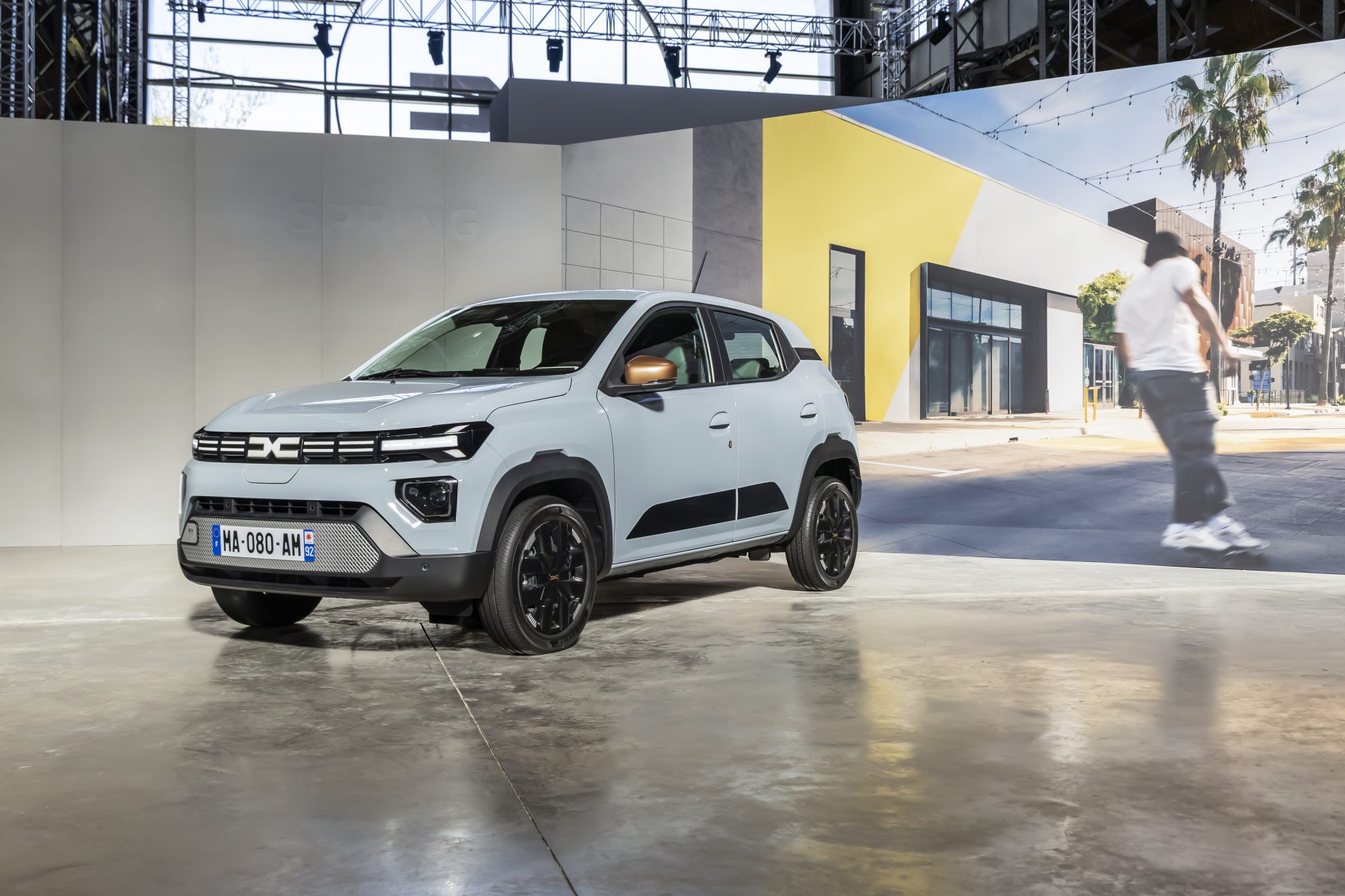
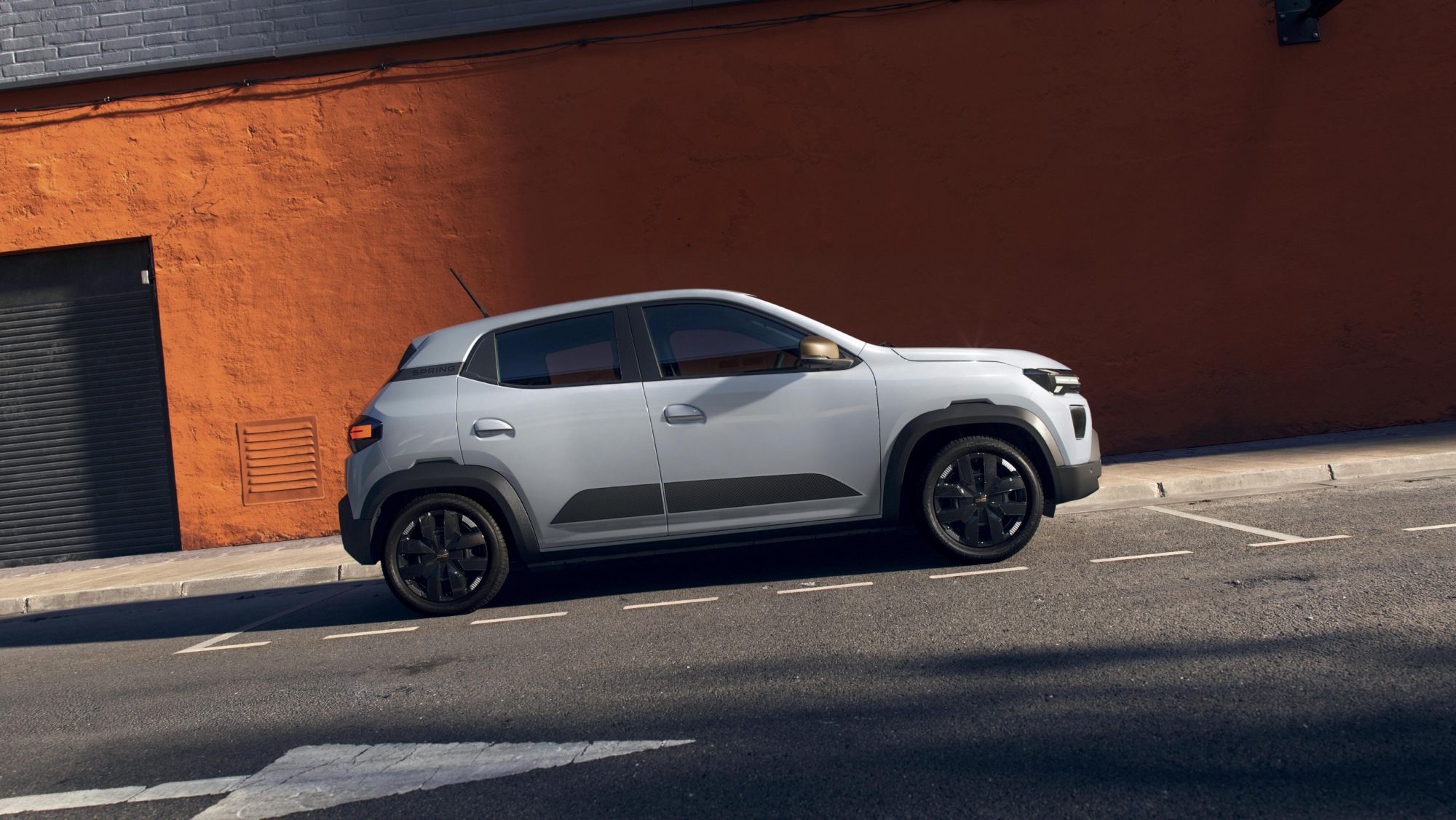
The new one is built at Novo Mesto in Slovenia, on Renault Group's new RG-EV Small platform. Everything else in the release — 15 cm longer, 18 cm wider, a new battery, a new dashboard — is downstream of that one decision.
Dacia will not price it yet. What it will say is that "the entire New Dacia Spring range will be priced below £18,000 before any potential government subsidies", which is a ceiling on the dearest of two trims rather than a price for either. Take the grant off that ceiling and the range tops out somewhere between £16,500 and £14,250, depending on which band it lands in. The entry car sits under whichever of those it is.
That band is not decided yet and nobody should pretend otherwise. Eligibility is worked out model by model, and there is no consistency to lean on even inside one group: a Renault 5 on the 40 kWh battery takes £1,500 while the same car on 52 kWh takes £3,750, and the Renault 4 and Scenic take the full amount. What can be said is that the thing standing in the Spring's way has gone. A European-built car well under the £37,000 threshold is in the conversation, and a Chinese-built one never was.
Now the part nobody selling this will lead with: it is going to cost more than the car it replaces. The Spring is £11,990 today. Even £14,250 after the best possible grant is £2,260 more than that, and £14,250 is the top of the range rather than the bottom of it. The cheapest electric car in Britain is about to get dearer. It is also about to become a substantially better car, and those two sentences are the same sentence.
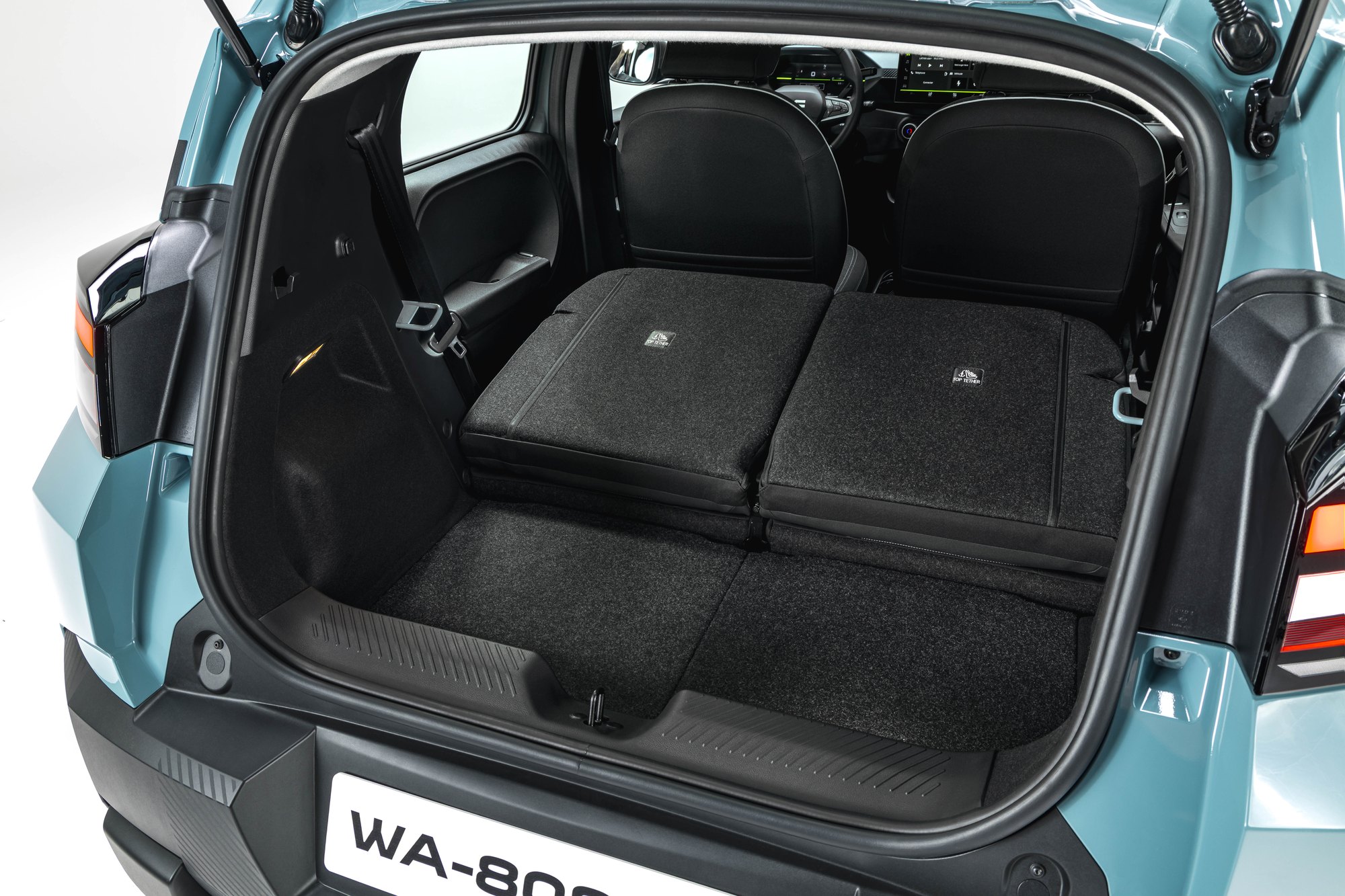
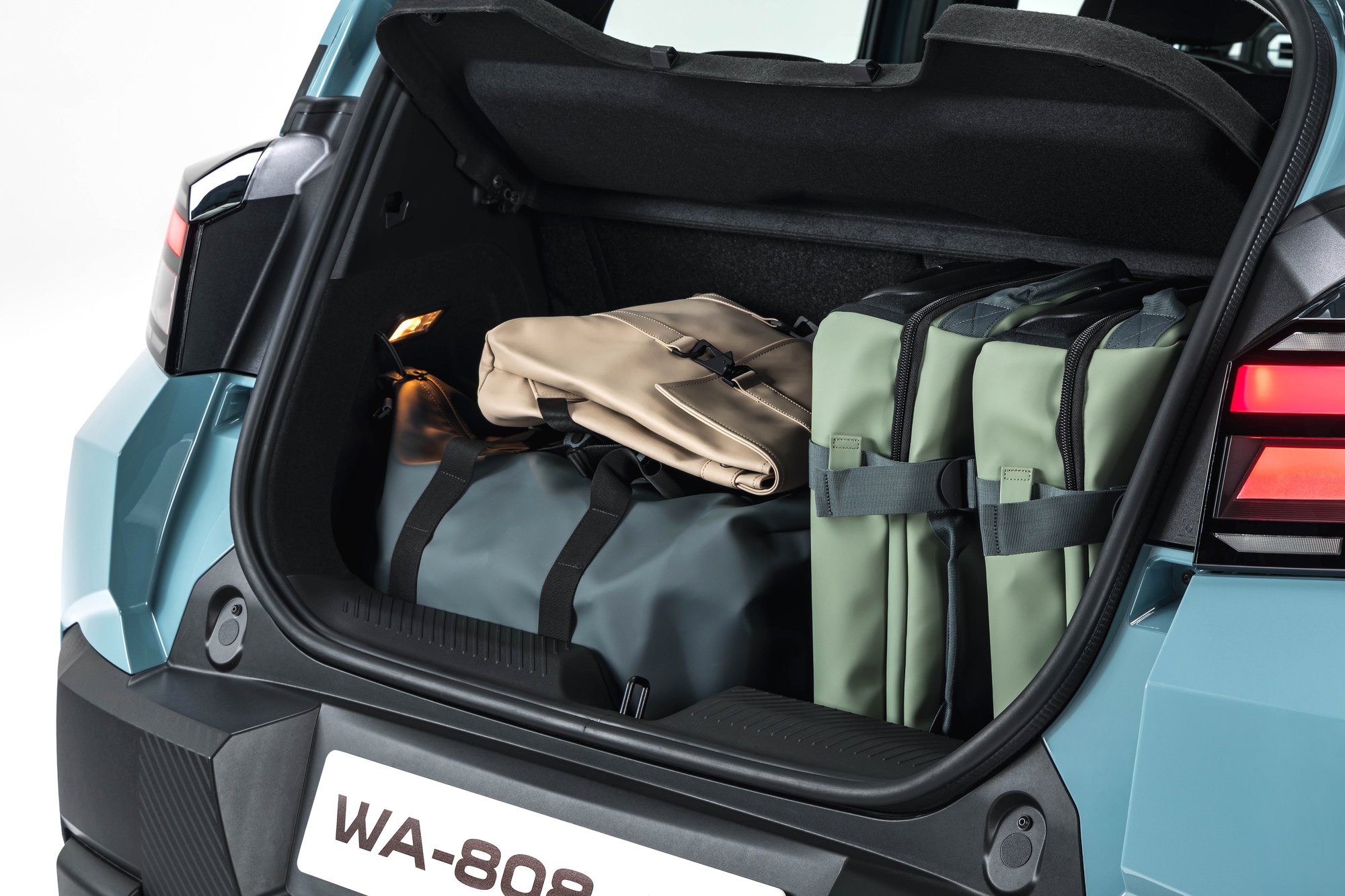
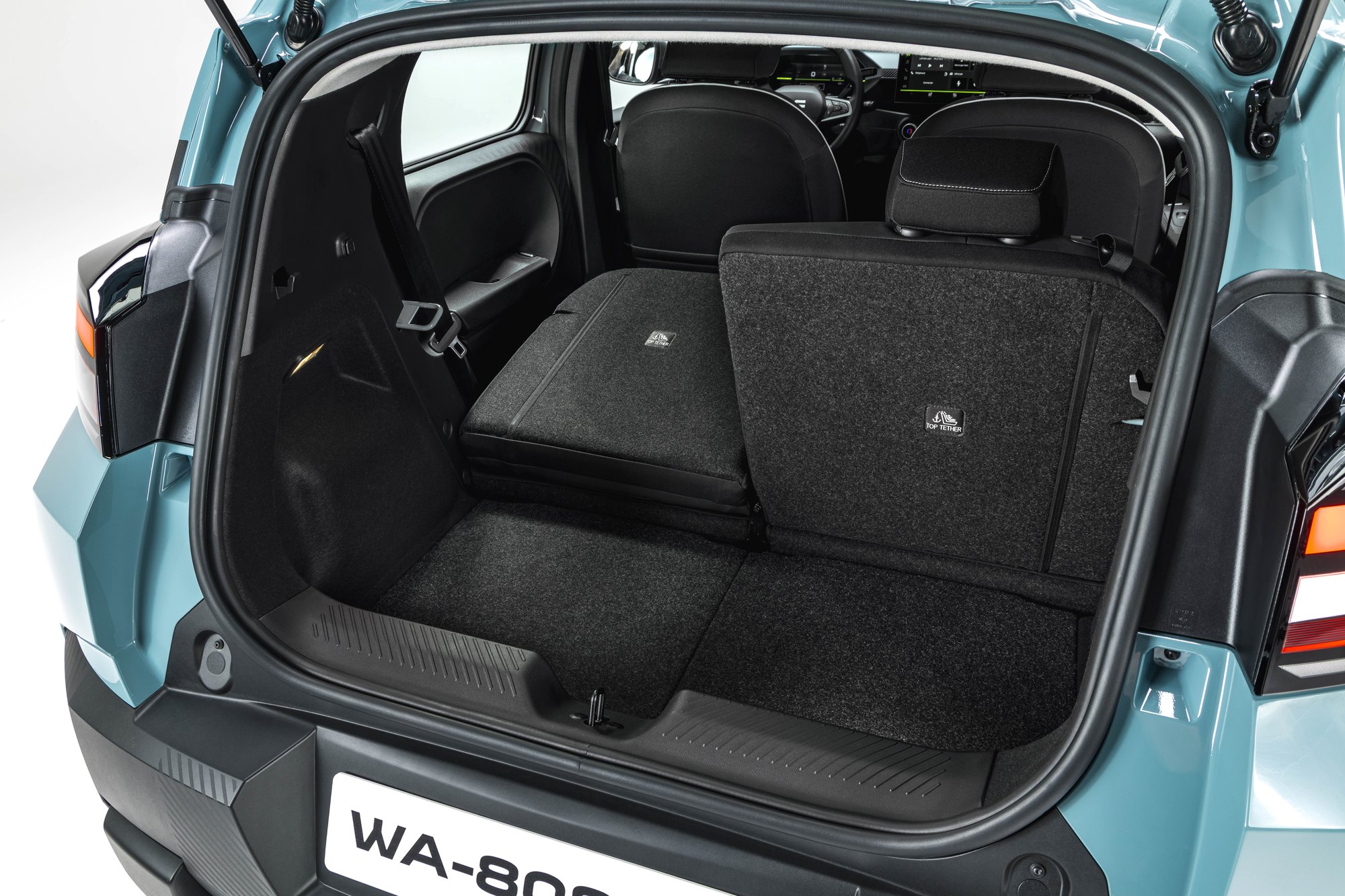
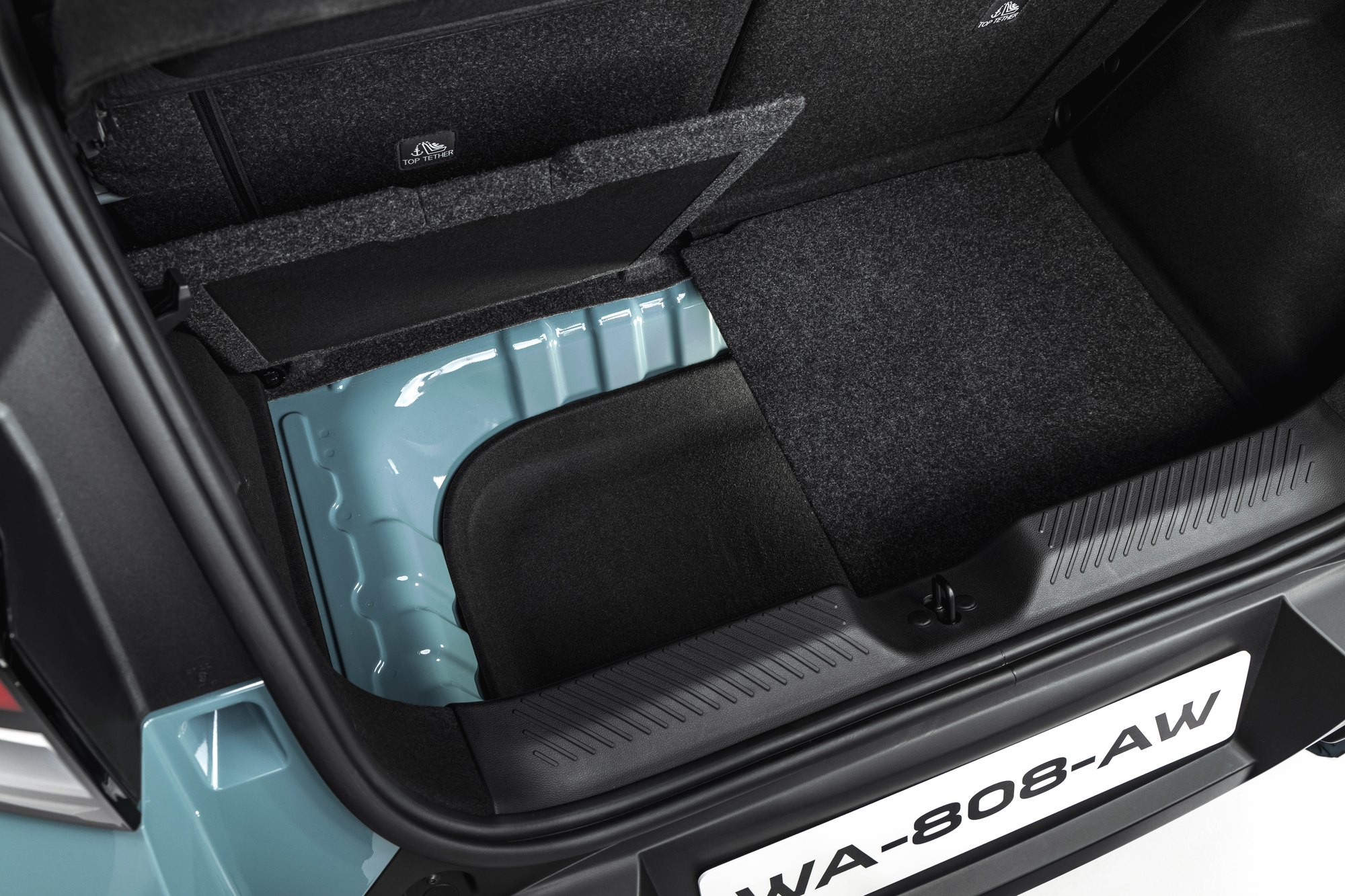
Here is what the extra buys. The boot is 337 litres, which is 29 more than the old Spring and, more to the point, 57 more than a Hyundai INSTER — a car that is 25 mm shorter, holds 280 litres and starts at £23,755. Fold the 50/50 bench and it is 1,283. A removable floor in two sections divides it. Dacia is not exaggerating when it calls this the biggest boot in the class; it is the biggest boot by a distance.
The engineering that pays for it is the weight. At 1,212 kg the Spring is 82 kg lighter than a BYD Dolphin Surf, 93 kg lighter than the INSTER, 126 kg lighter than a Citroën ë-C3 and 251 kg lighter than a Renault 5. That is why 27.5 kWh of LFP goes 155 miles on the WLTP combined cycle, and why the consumption figure is 12.7 kWh per 100 km, or 4.89 miles per kWh. A Dolphin Surf manages 4.01, a Renault 5 4.23, a ë-C3 3.68. The Spring covers more ground on less battery than any of them.
Set the whole thing against the two cars closest to it on price today and the case makes itself. A ë-C3 Plus is £18,495 with its £1,500 already taken off, carries 30 kWh and goes 130 miles. A Dolphin Surf Active is £18,650, carries 30 kWh and goes 137. The Spring will be under £18,000 before any grant at all, carries less battery than either, and goes 155 miles.
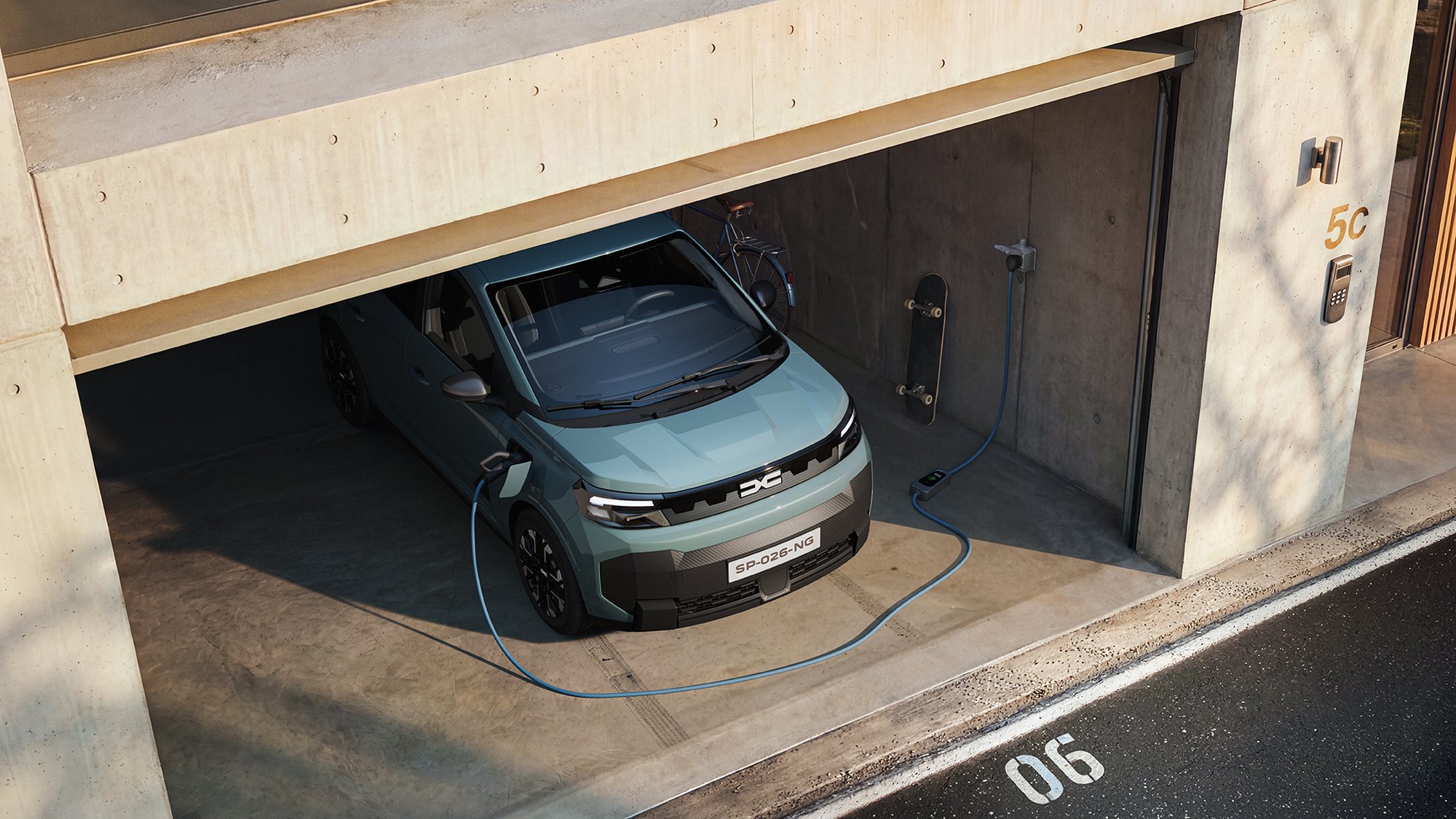
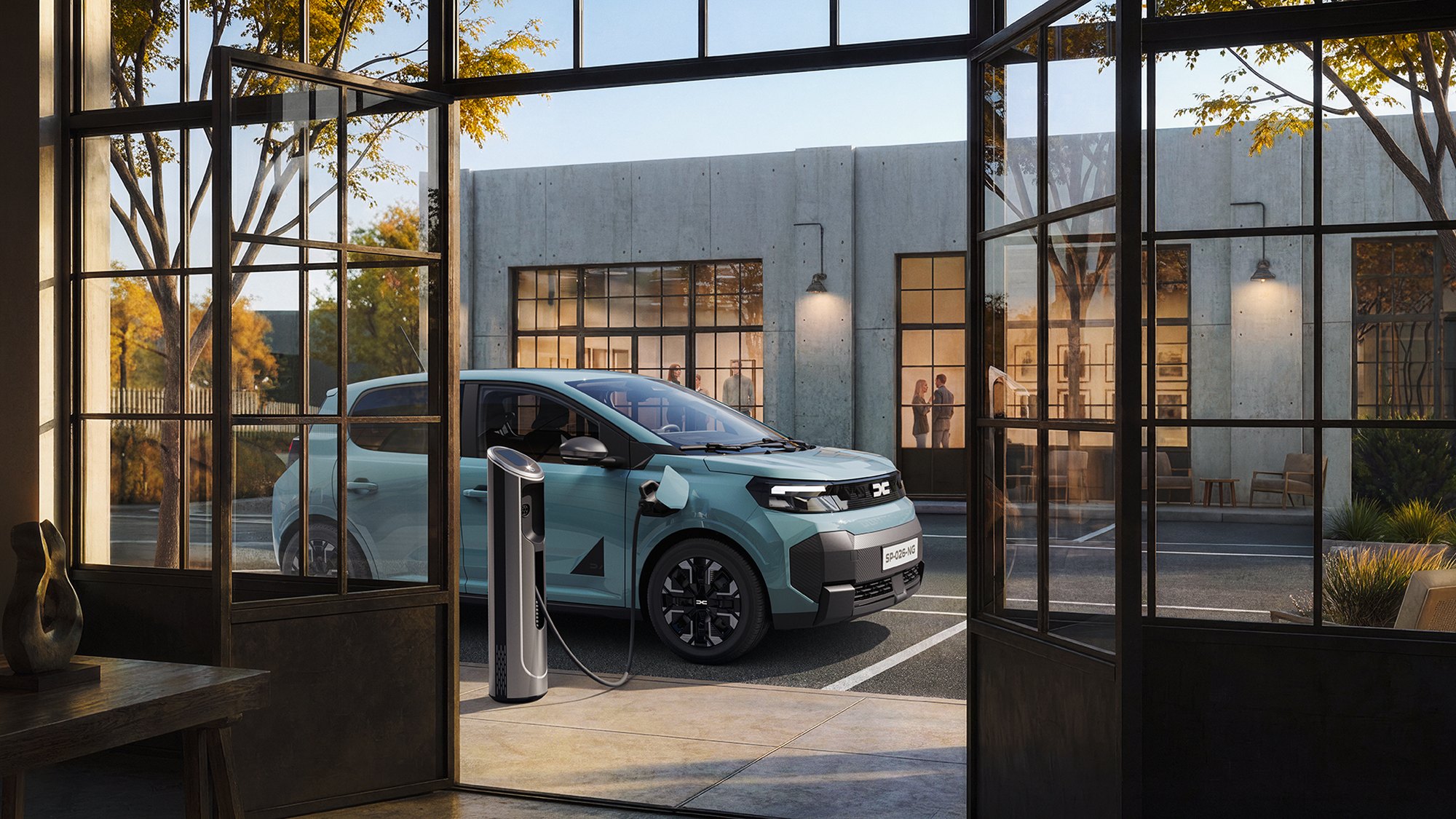
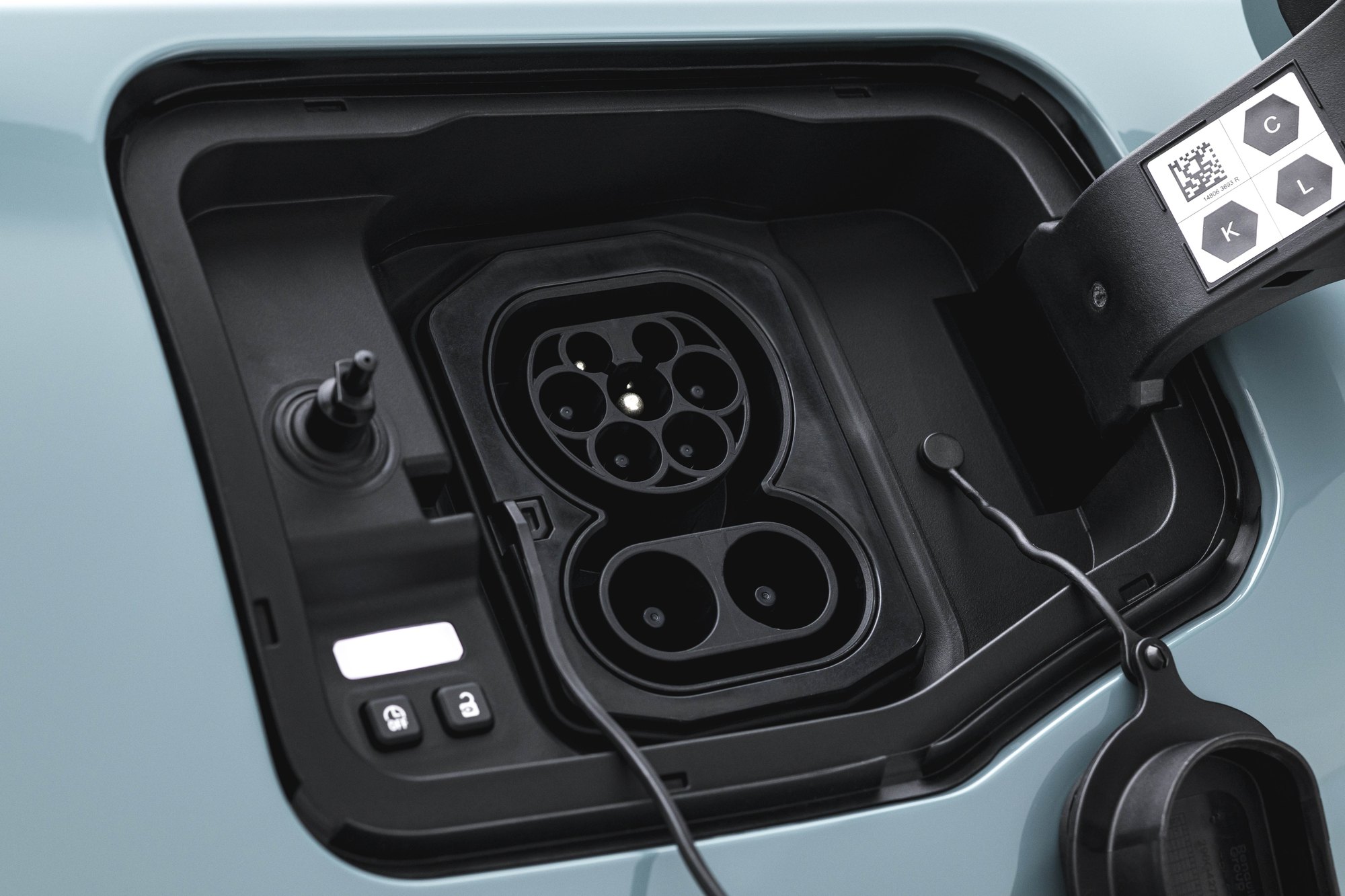
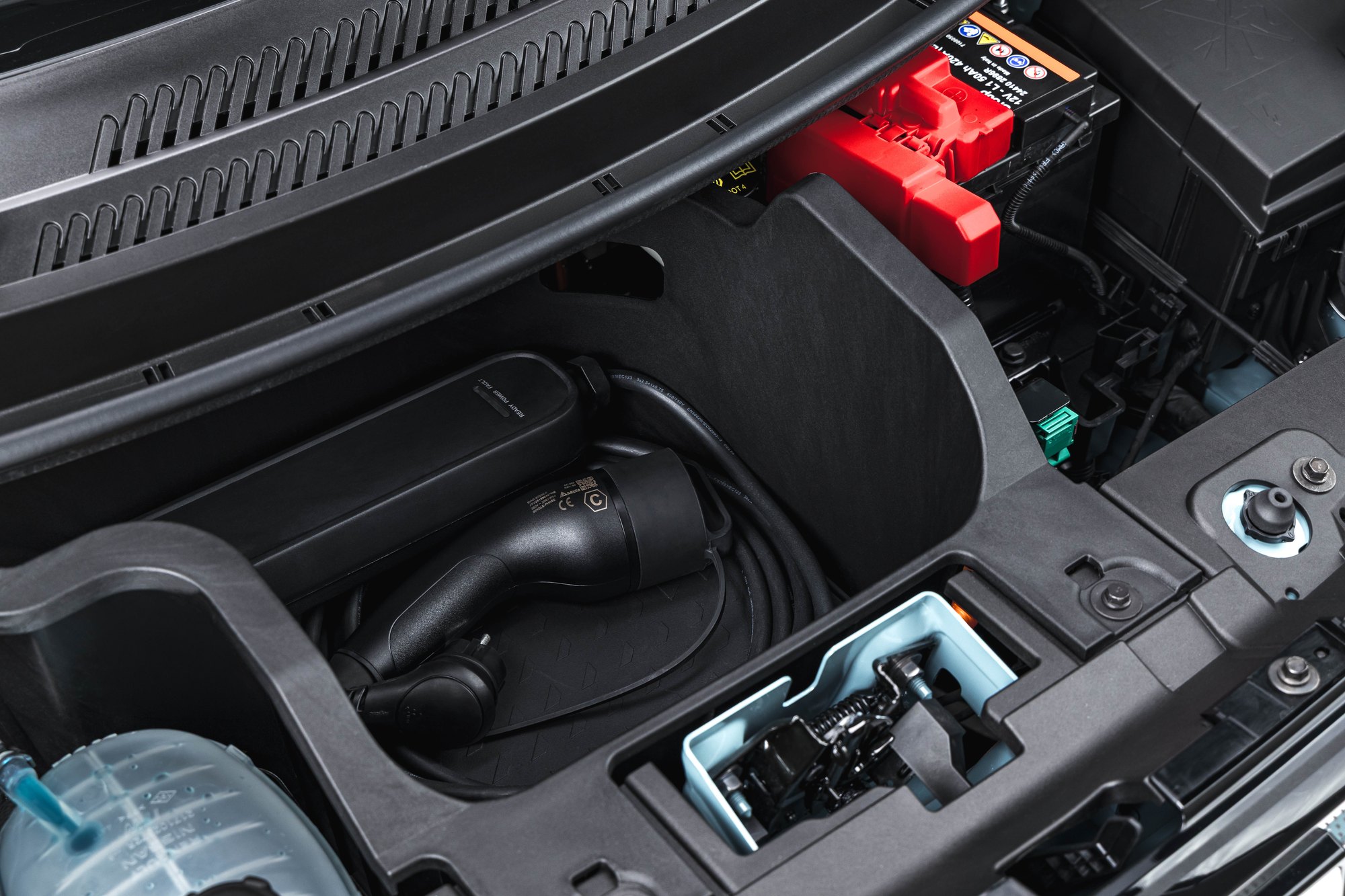
Then read the charging, because this is where Dacia has made its cut, and it is a cut. The £11,990 Spring in the showroom today has a 40 kW DC combination socket as standard, on both trims — Dacia's own brochure grid marks it standard on the Expression and the Extreme alike. The new one has a 6.6 kW AC charger and no DC charging whatsoever. 50 kW rapid charging arrives only with the optional Charge Pack, which also brings the 11 kW AC charger and vehicle-to-load, and which Dacia has not costed. Without it, 15 to 80% takes 2 hours 55 on a 7 kW home charger, 5 hours 40 on a heavy-duty socket and 9 hours on a three-pin plug. With it, 28 minutes on a 50 kW post.
Dacia's own data says three quarters of Spring owners charge at home and average 13 miles a day, and for those people the standard car is honestly enough. For anyone who occasionally drives to another city, a Spring without the Charge Pack cannot be rapid charged at all — which the car it replaces could, for £11,990, without ticking anything. Until the pack has a price on it nobody can say what the comparable version of this car actually costs. That, rather than the £18,000, is the number to wait for.
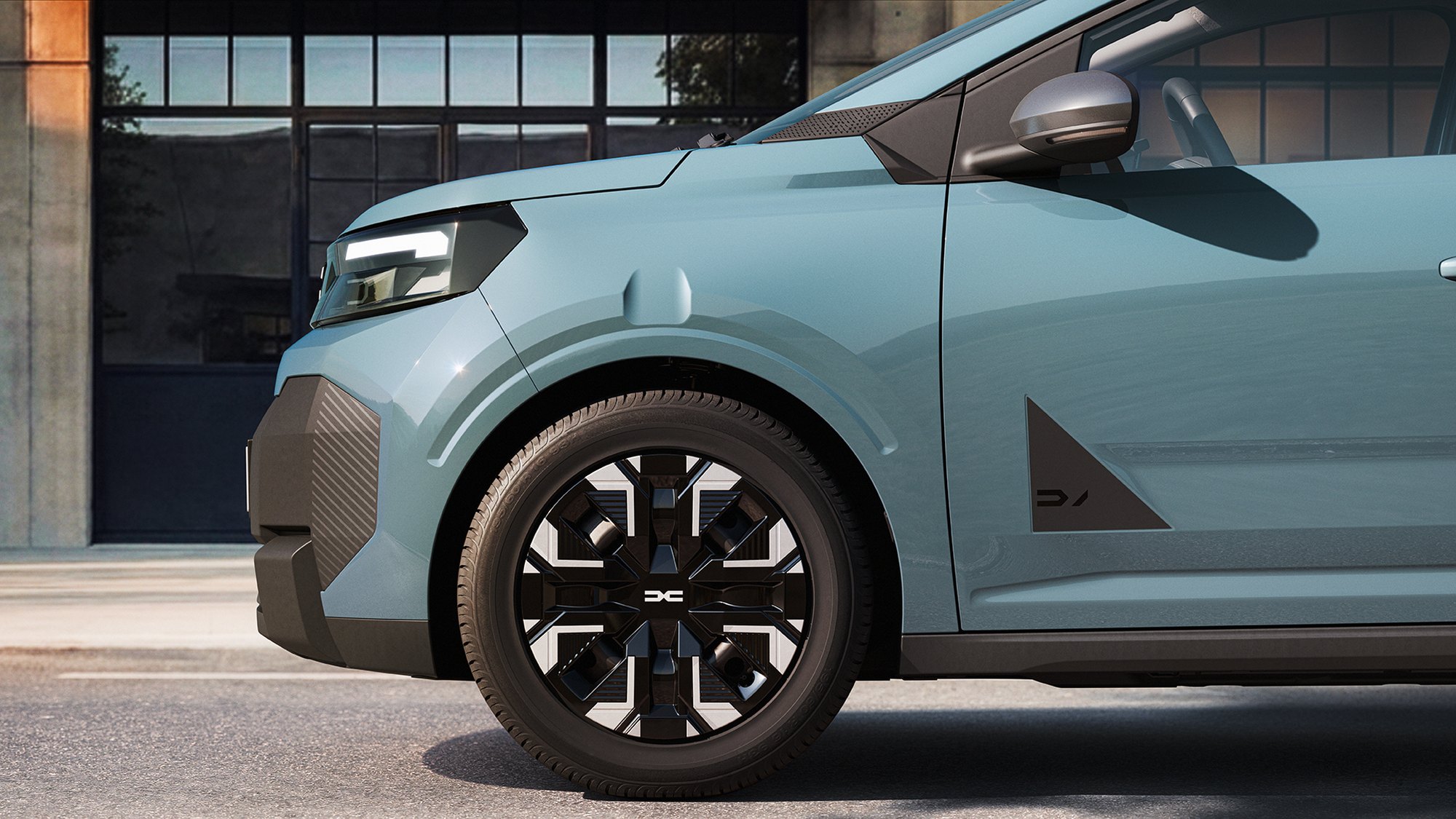
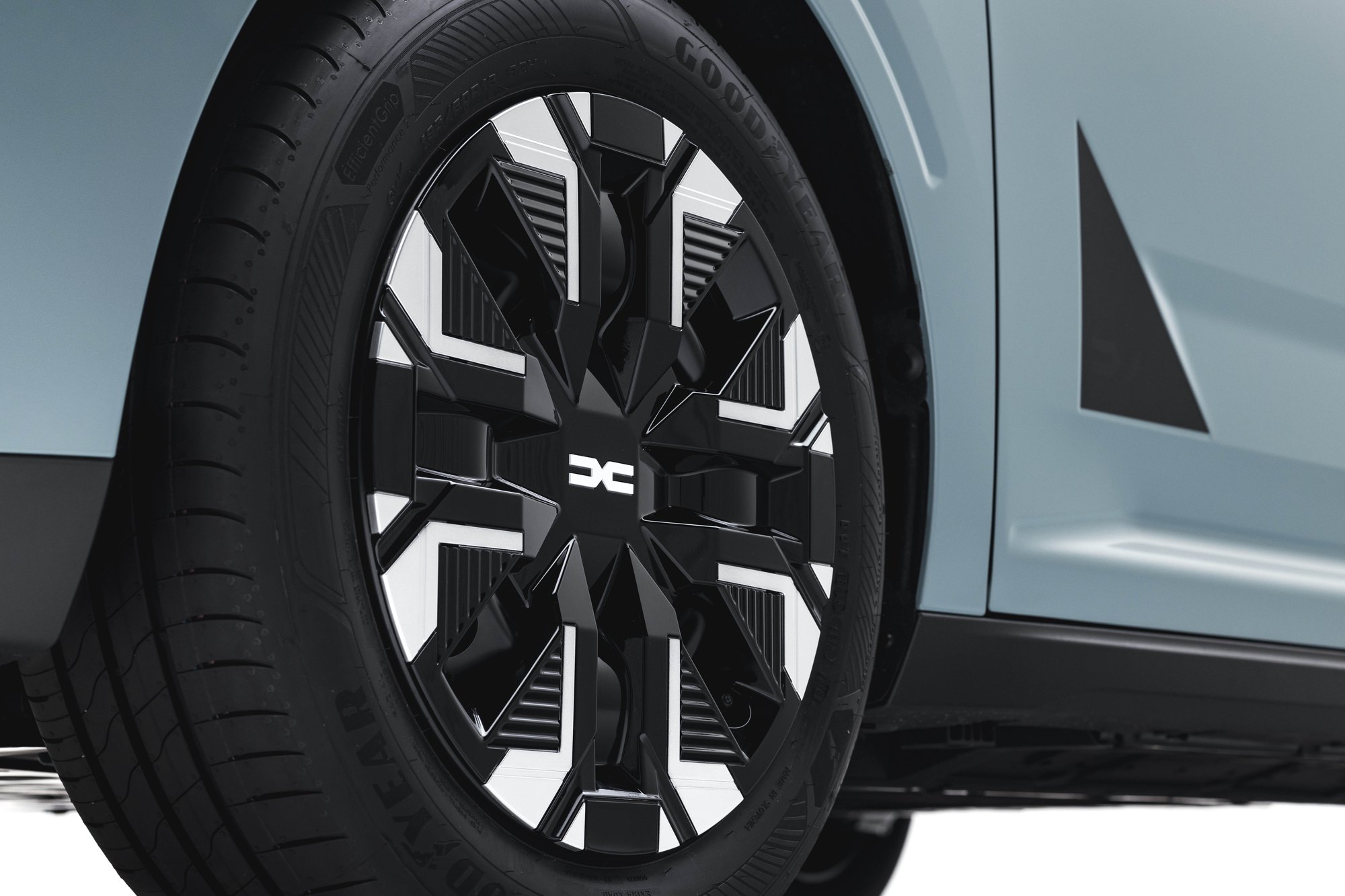
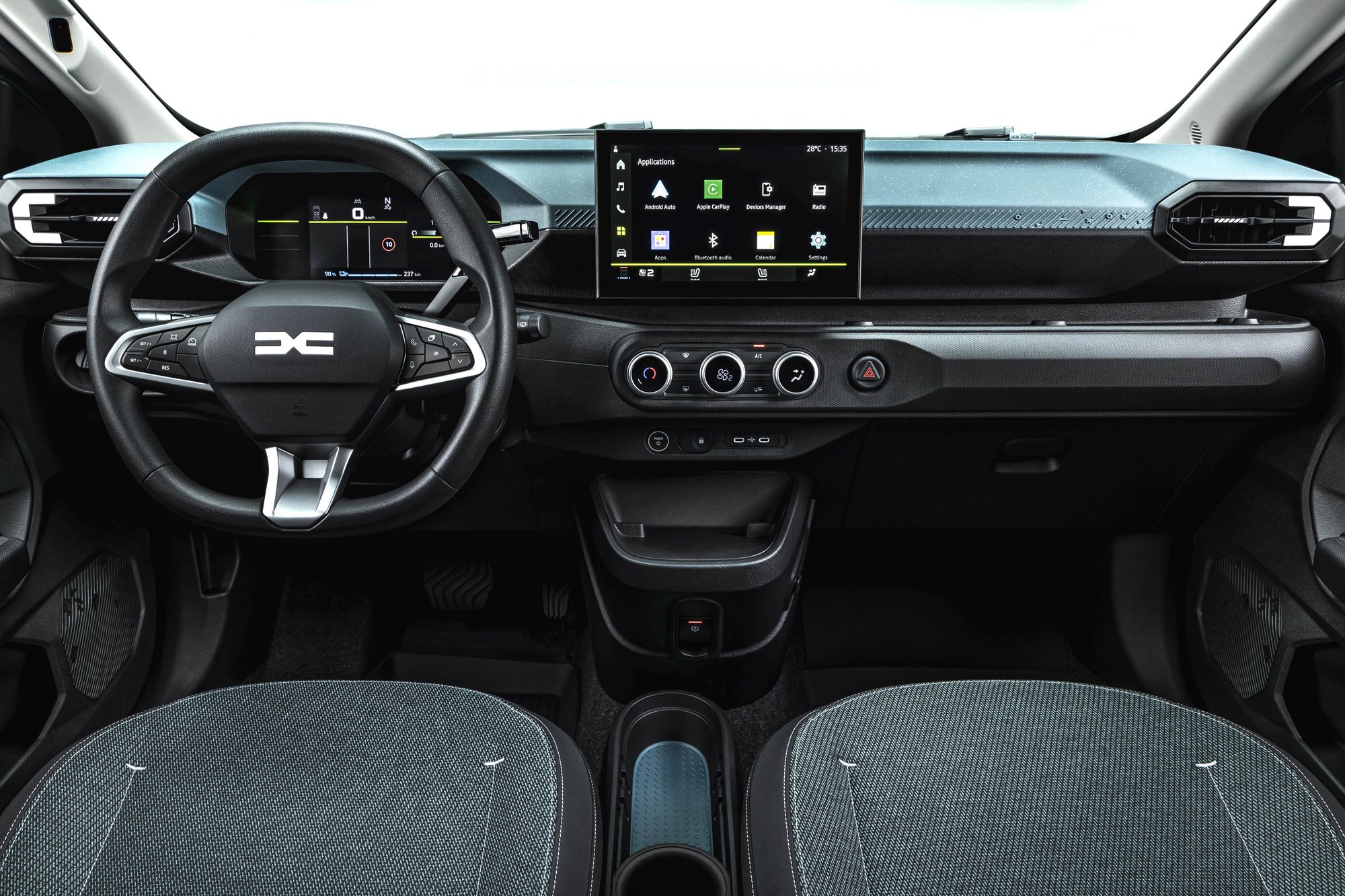
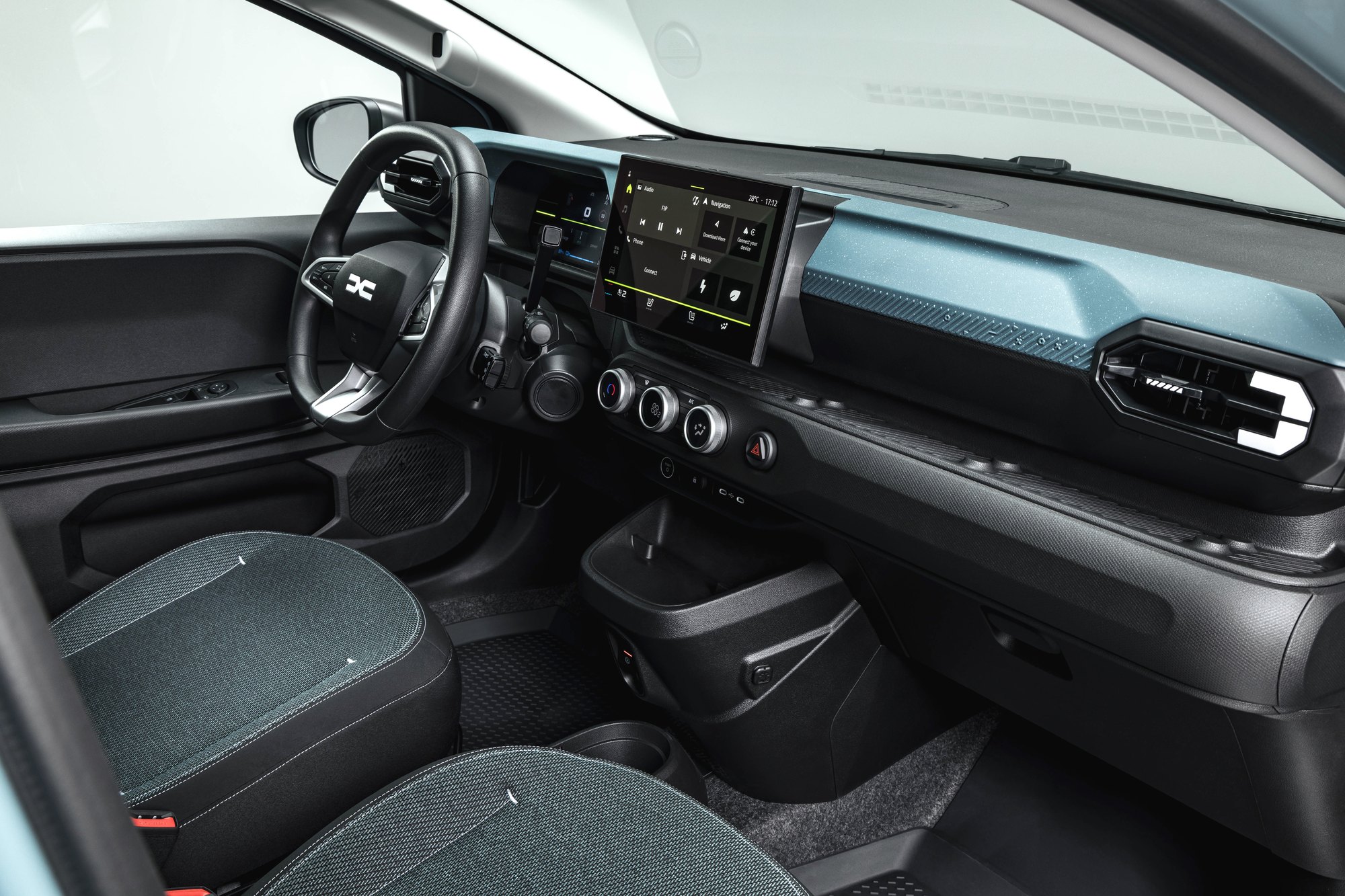
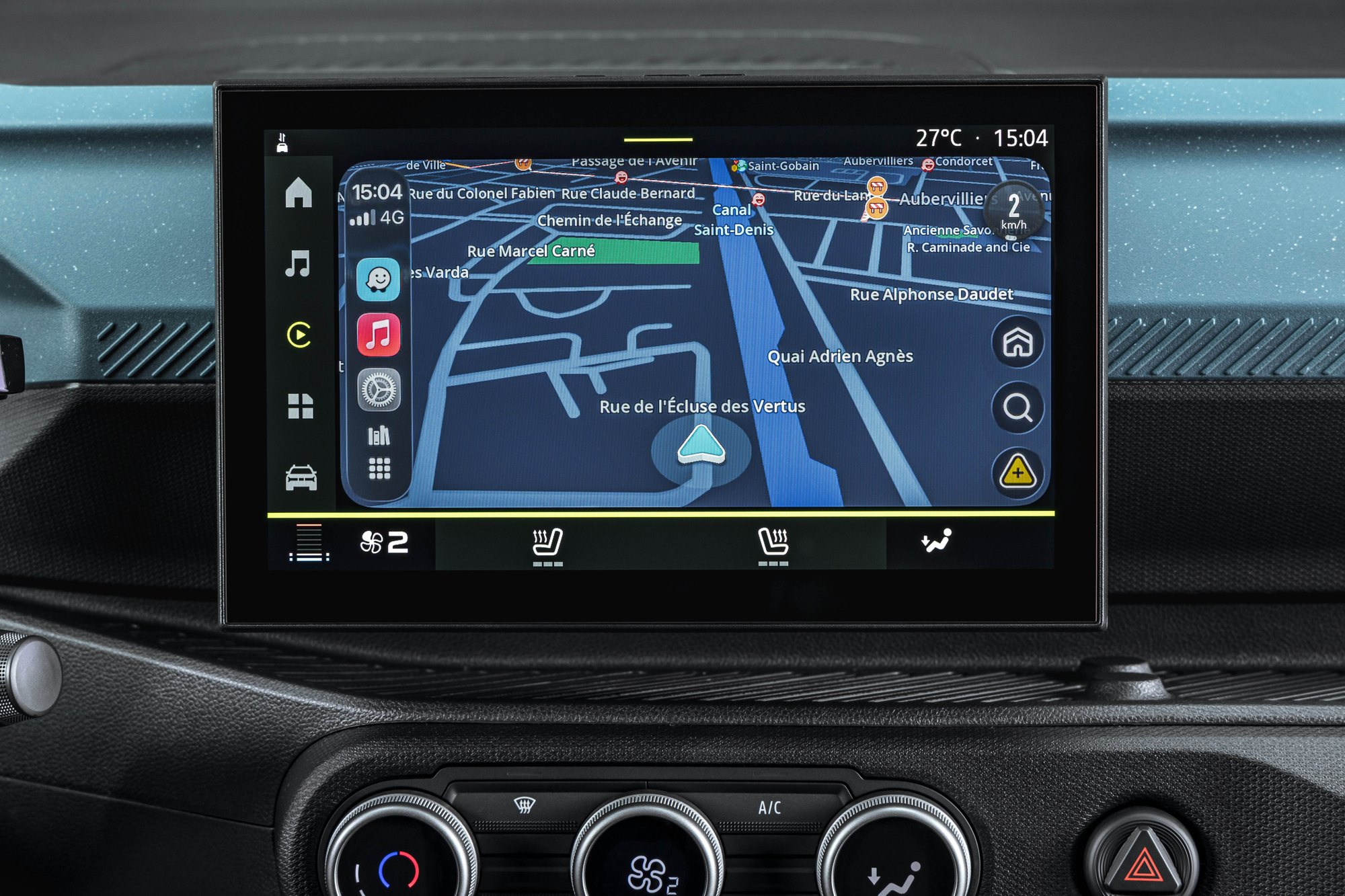
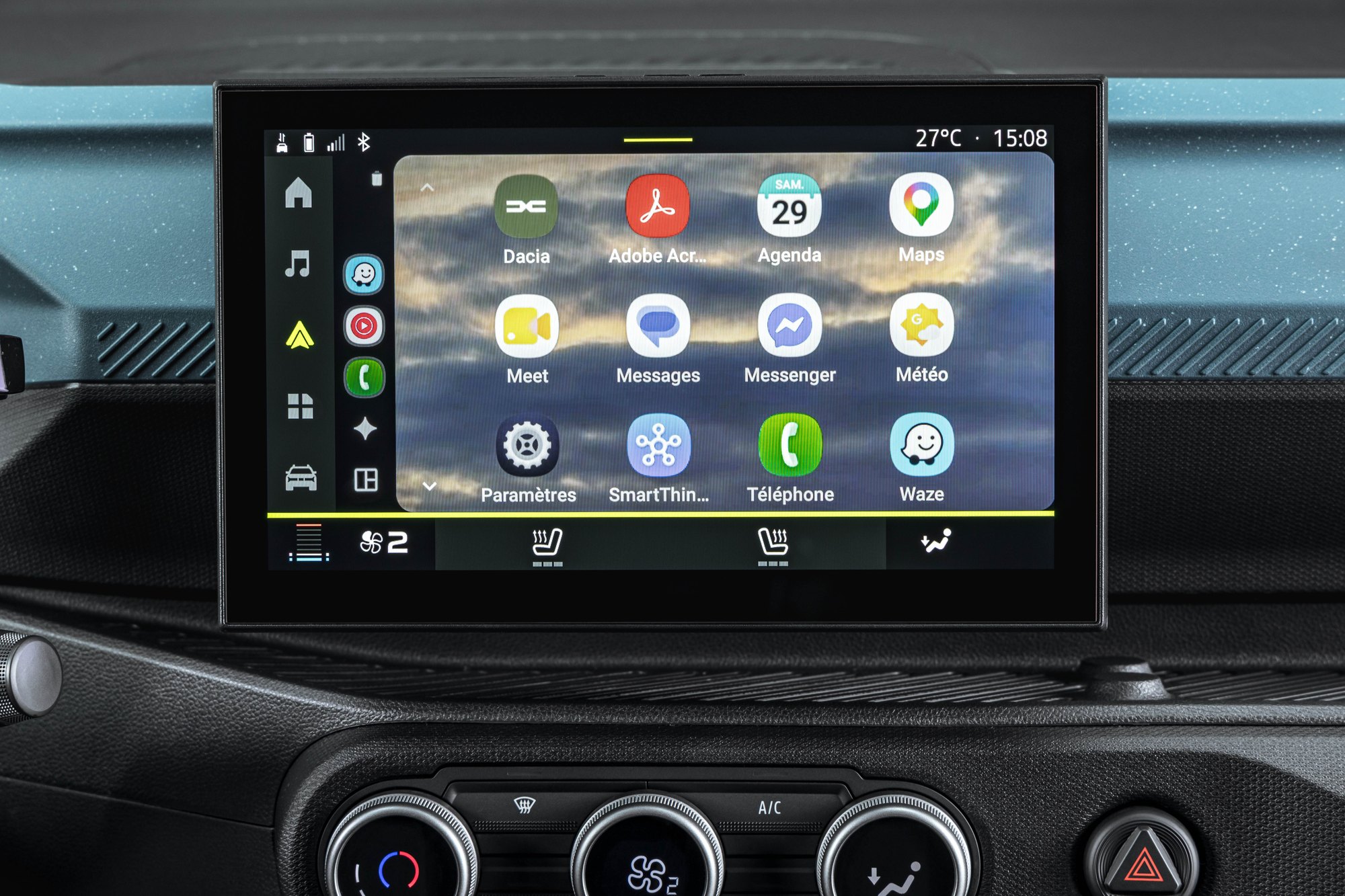
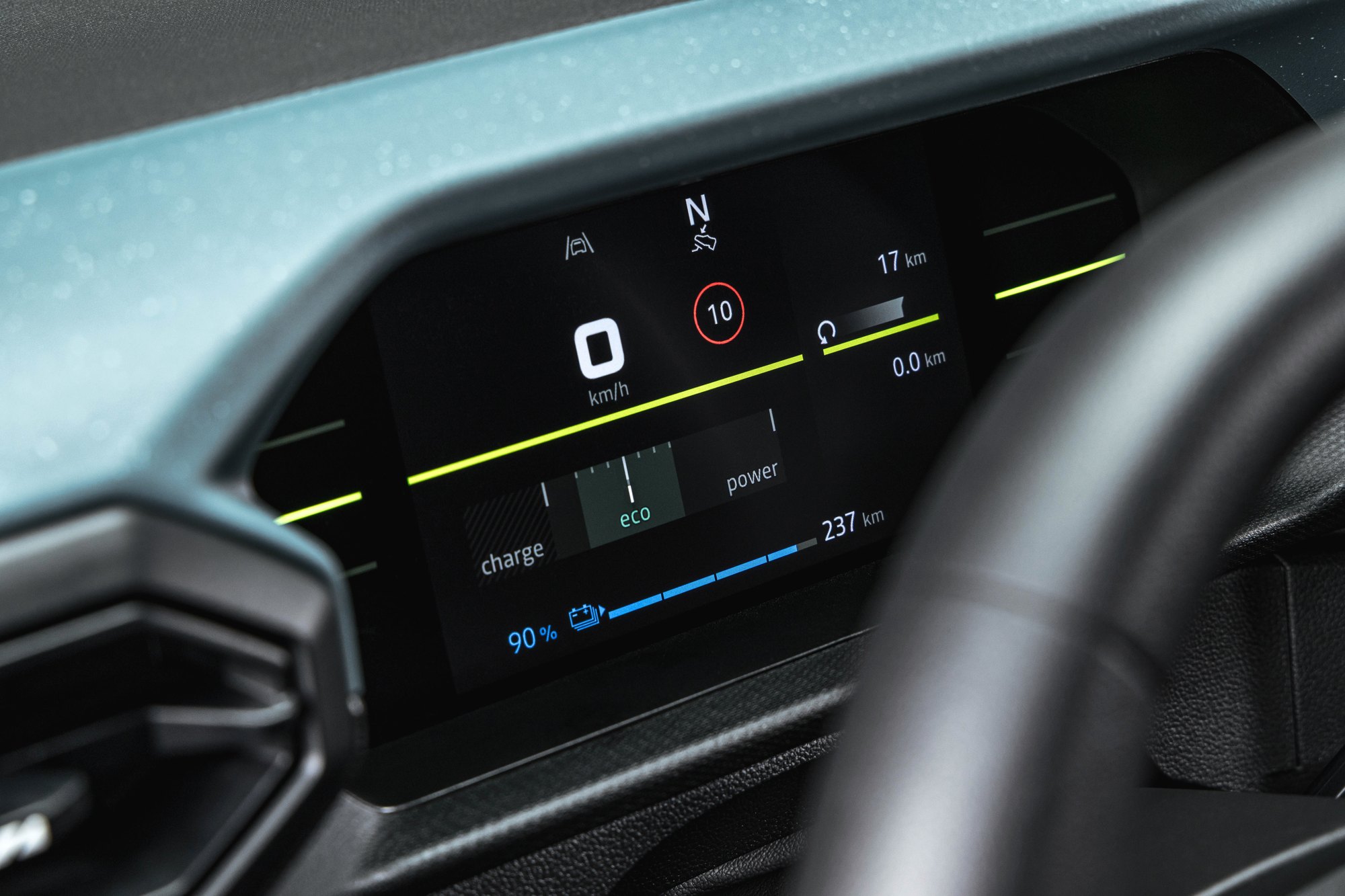
The two trims are simpler than the old range: Expression and Journey, one 60 kW motor, one battery. Expression has no central screen at all — Media Control puts the radio on the 7-inch instrument cluster and on your own phone, held in a cradle on the dashboard, which is the same trick Dacia has been pulling for years and still works. Journey adds a 10.1-inch touchscreen with navigation, eight years of connected maps, wireless CarPlay and Android Auto, a reversing camera, a hands-free card and 16-inch wheels.
None of that is what will sell it. What will sell it is a Dacia dealer being able to write a number beginning with a 1 and a 3 on a windscreen, on a European-built car with a 337 litre boot that goes 155 miles. Whether that number exists depends on a band nobody has announced. Dacia has done the hard half — it moved the factory.
The numbers
Identical across all 2 trims.
| Range | 155 miles |
|---|---|
| Efficiency | 4.89 mi/kWh |
| Battery | 27.5 kWh |
| Battery chemistry | LFP |
| Max fast charge power | 50 kW |
| Fastest charge time | 28 mins |
| Horsepower | 80 hp |
| Torque | 175 Nm |
| Acceleration | 12.1 secs |
| Top speed | 81 mph |
| Length | 3,850 mm |
| Width | 1,740 mm |
| Boot volume | 337 litres |
| Boot volume (max) | 1,283 litres |
How it compares
Matched on battery and price rather than trim name, since nobody names their trims the same way. Prices are on the road with any grant already taken off.
| Specification | Spring Dacia | Spring Dacia | ë-C3 Citroën | Dolphin Surf BYD | INSTER Hyundai | 5 E-Tech Renault |
|---|---|---|---|---|---|---|
| Price | — | £11,990 | £18,495 | £18,650 | £23,755 | £21,495 |
| Range | 155 miles | 140 miles | 130 miles | 137 miles | 203 miles | 192 miles |
| Efficiency | 4.89 mi/kWh | 5 mi/kWh | 3.68 mi/kWh | 4.01 mi/kWh | — | 4.23 mi/kWh |
| Battery | 27.5 kWh | 24.3 kWh | 30 kWh | 30 kWh | 42 kWh | 40 kWh |
| Battery chemistry | LFP | LFP | LFP | LFP | NMC | NMC |
| Max fast charge power | 50 kW | 40 kW | 30 kW | 65 kW | 73 kW | 80 kW |
| Fastest charge time | 28 mins | 29 mins | 36 mins | 30 mins | 30 mins | 31 mins |
| Horsepower | 80 hp | 70 hp | 113 hp | 88 hp | 97 hp | 120 hp |
| Torque | 175 Nm | 137 Nm | 124.5 Nm | 175 Nm | 147 Nm | 225 Nm |
| Acceleration | 12.1 secs | 12.3 secs | 10.4 secs | 11.1 secs | 11.7 secs | 9 secs |
| Top speed | 81 mph | 77 mph | 82 mph | 93 mph | 87 mph | 93 mph |
| Length | 3,850 mm | 3,701 mm | 4,015 mm | 3,990 mm | 3,825 mm | 3,922 mm |
| Width | 1,740 mm | 1,583 mm | 1,813 mm | 1,720 mm | 1,610 mm | 1,774 mm |
| Height | — | 1,489 mm | 1,577 mm | 1,590 mm | 1,575 mm | 1,498 mm |
| Wheelbase | — | 2,423 mm | 2,540 mm | 2,500 mm | 2,580 mm | 2,540 mm |
| Boot volume | 337 litres | 308 litres | 310 litres | 308 litres | 280 litres | 326 litres |
| Boot volume (max) | 1,283 litres | 1,004 litres | 1,188 litres | 1,037 litres | 1,059 litres | 1,106 litres |
| Seating | — | 4 seats | 5 seats | 5 seats | 4 seats | 5 seats |