
The Ignis is back, electric, and narrower than anything it has to beat
Suzuki Ignis
Suzuki has put four seats in a car 3.57 metres long that turns in nine. It has not said how far it goes, what it costs or whether Britain gets it.
25 November 2026
of 3
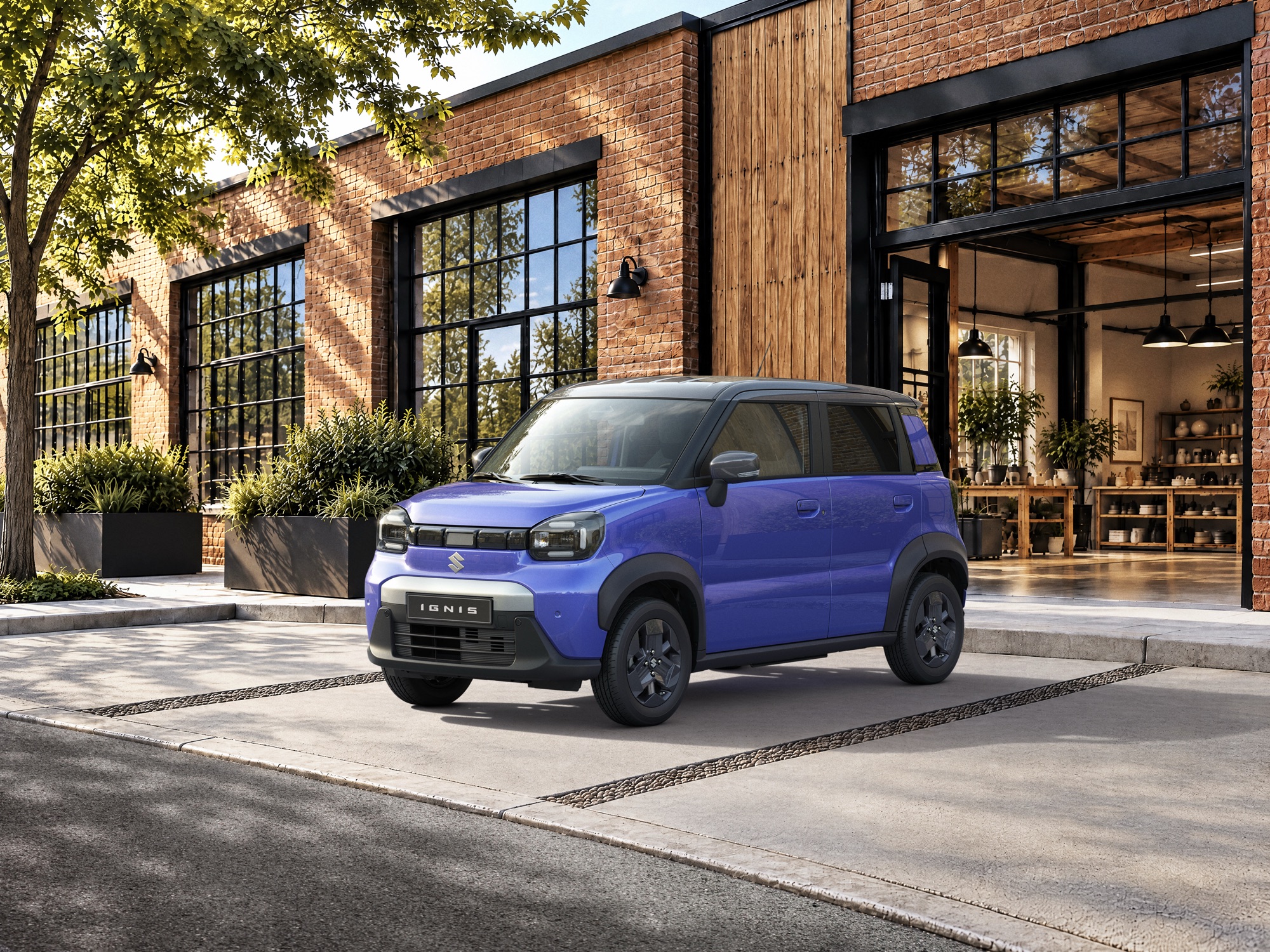
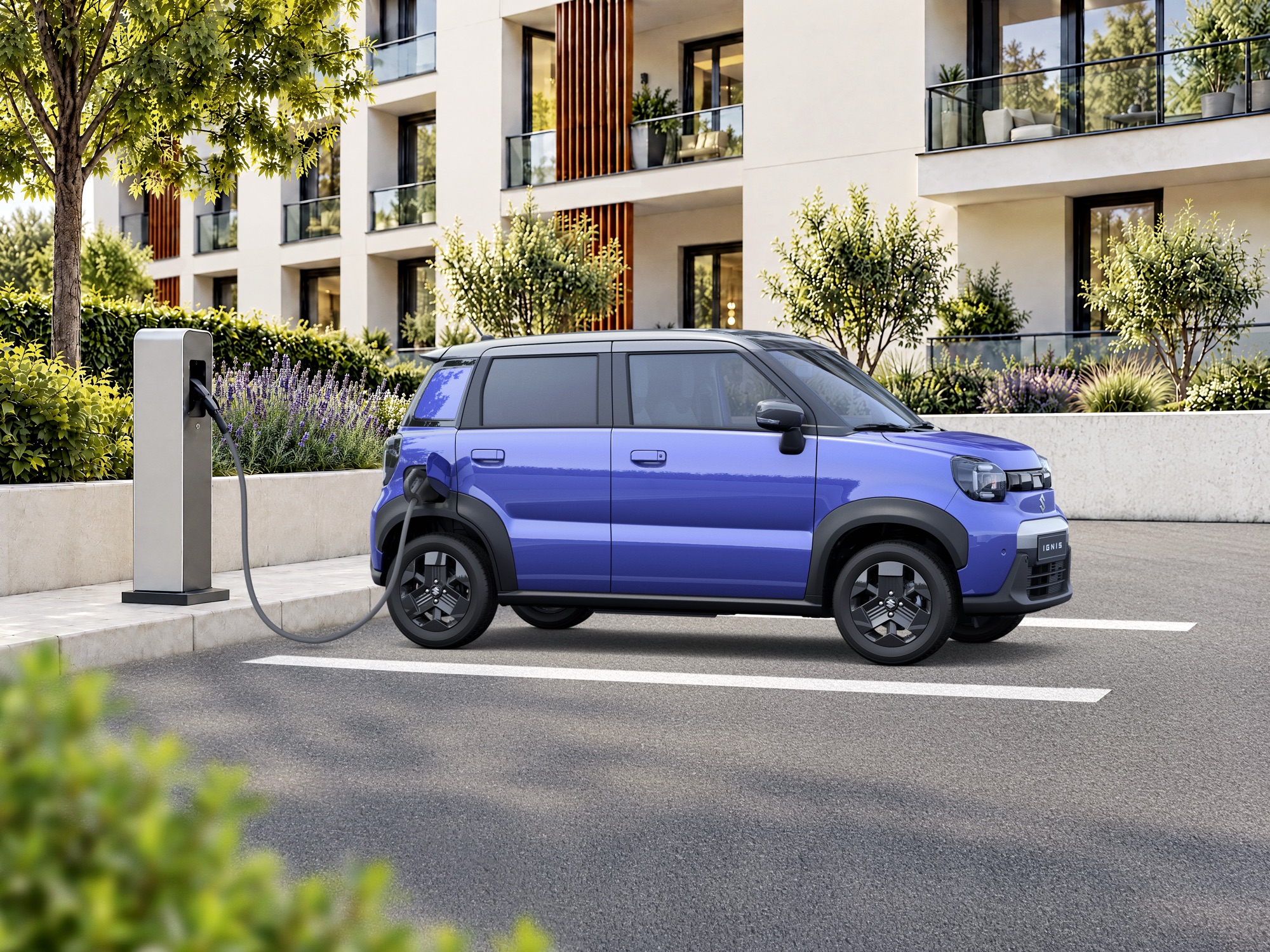
Suzuki has brought back the Ignis as an electric car. The new Ignis goes on sale "in Europe and other markets" from summer 2027, with a 26 kWh LFP battery, a 67 kW motor and four seats. The release gives no range, no price and no charging speed, and the specification table it does give is marked pre-homologation, so any of it could still move.
The dimensions are the story. At 3,570 mm long and 1,565 mm wide, the Ignis is smaller in both directions than the Honda Super-N, at 3,599 mm and 1,573 mm, and the Honda is the smallest four-seater we list that you can buy new. The Renault Twingo is 219 mm longer and 155 mm wider. The Nissan PIXO is 225 mm wider, without counting its mirrors. For anyone with a narrow street or an old garage, those are large differences.
It should also be easy to turn around. Suzuki quotes a minimum turning radius of 4.5 metres, which makes the turning circle nine. Among four-seaters on sale that we hold a figure for, nothing is tighter: the nearest is the rear-drive Skoda Enyaq at 9.3 metres, then the current Dacia Spring at 9.63 and the Fiat 500e at 9.7. The PIXO and the BYD Dolphin Surf both need 9.9.
What it gives away in width it looks for in height. The Ignis stands 1,635 mm tall, exactly the same as the e Vitara, which is 705 mm longer. It has the same arrangement as the old Ignis, then: a small car you sit up in, with 150 mm of ground clearance.
The battery is small even for this class. The Twingo's is 27.5 kWh and goes 163 miles; the Super-N's is 29.6 kWh and goes 128. Two kilowatt-hours apart, the bigger pack goes 35 miles less, so nobody should read a range off 26 kWh. The current Spring manages 140 miles from 24.3 kWh. Suzuki says energy efficiency is a strength of the car and has left the number for later.
On charging, What Car? reports that Suzuki has confirmed up to 50 kW, with a charge to 80% in under half an hour. That is not in the release, and What Car? says Suzuki did not specify where the charge starts from, so it is not on our specification page yet. It would put the Ignis level with the Twingo and the PIXO.
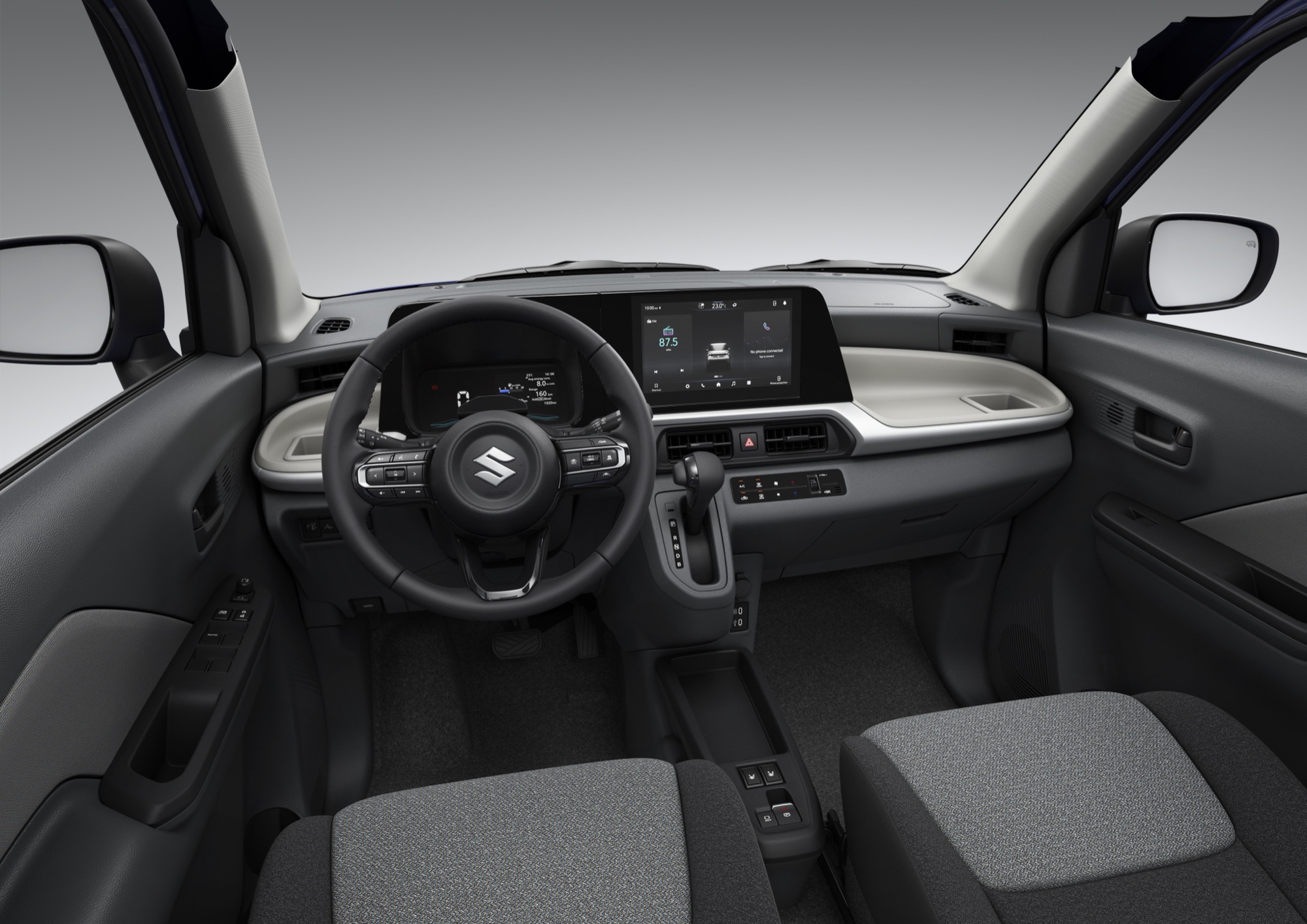
The rest is simple in a way Suzuki buyers will recognise: 15-inch wheels, ventilated discs at the front and drums at the back. Braking blends regeneration with the hydraulics, and there is an easy operation pedal on all but certain versions. The photographs show climate buttons and a wheel for the volume, with heated seat switches between the front seats. Which versions get those, Suzuki has not said.
Nor has it said where the car is built, and that decides a good deal of the price. The Electric Car Grant takes £3,750 off the Twingo, which is made in Slovenia and starts at £14,745 as a result. The e Vitara does not qualify, and for a while Suzuki paid buyers the same £3,750 itself before dropping the offer in October. The Spring at £11,990 and the Leapmotor T03 at £12,995 manage without the grant altogether. The Super-N, the closest car to the Ignis in size, is £18,995.
There is a coincidence in the timing. The first Nissan Pixo was a Suzuki Alto with Nissan badges. Seventeen years after it went on sale here, Nissan has a new PIXO built by Renault, and Suzuki has come back to the same class with a car of its own.
The last thing missing is Britain. Suzuki's UK press office has published the release, but the release does not mention the UK, and the Ignis on Suzuki's British website today is the old mild hybrid, marked as sold out. A UK date, a range and a price are what to wait for. The size is already worth noticing.
The numbers
| Battery | 26 kWh |
|---|---|
| Battery chemistry | LFP |
| Horsepower | 90 hp |
| Torque | 133 Nm |
| Length | 3,570 mm |
| Width | 1,565 mm |
| Height | 1,635 mm |
| Wheelbase | 2,460 mm |
| Seating | 4 seats |
How it compares
Matched on battery and price rather than trim name, since nobody names their trims the same way. Prices are on the road with any grant already taken off.
| Specification | Ignis Suzuki | Super-N Honda | Twingo E-Tech Renault | PIXO Nissan | Spring Dacia | T03 Leapmotor | Dolphin Surf BYD | 500e Fiat |
|---|---|---|---|---|---|---|---|---|
| Price | — | £18,995 | £14,745 | — | £11,990 | £12,995 | £18,650 | £17,245 |
| Range | — | 128 miles | 163 miles | 161 miles | 140 miles | 165 miles | 137 miles | 118 miles |
| Efficiency | — | — | — | — | 5 mi/kWh | — | 4.01 mi/kWh | — |
| Battery | 26 kWh | 29.6 kWh | — | 27.5 kWh | 24.3 kWh | 37.3 kWh | 30 kWh | 24 kWh |
| Battery chemistry | LFP | — | LFP | LFP | LFP | — | LFP | — |
| Max fast charge power | — | 50 kW | 50 kW | 50 kW | 40 kW | — | 65 kW | 50 kW |
| 10 to 80% charge time | — | 30 mins | — | 28 mins | 29 mins | — | 30 mins | 30 mins |
| Horsepower | 90 hp | — | 82 hp | — | 70 hp | 95 hp | 88 hp | 95 hp |
| Torque | 133 Nm | — | 175 Nm | — | 137 Nm | — | 175 Nm | 220 Nm |
| Acceleration | — | 10 secs | 12.1 secs | — | 12.3 secs | 12.7 secs | 11.1 secs | 9.5 secs |
| Top speed | — | — | 81 mph | — | 77 mph | — | 93 mph | 84 mph |
| Length | 3,570 mm | 3,599 mm | 3,789 mm | 3,796 mm | 3,701 mm | — | 3,990 mm | 3,632 mm |
| Width | 1,565 mm | 1,573 mm | 1,720 mm | 1,790 mm | 1,583 mm | — | 1,720 mm | 1,683 mm |
| Height | 1,635 mm | — | 1,491 mm | 1,512 mm | 1,489 mm | — | 1,590 mm | 1,527 mm |
| Wheelbase | 2,460 mm | — | 2,493 mm | 2,492 mm | 2,423 mm | — | 2,500 mm | — |
| Boot volume | — | 162 litres | 360 litres | 356 litres | 308 litres | — | 308 litres | 185 litres |
| Boot volume (max) | — | 967 litres | 1,000 litres | 1,221 litres | 1,004 litres | — | 1,037 litres | 550 litres |
| Seating | 4 seats | 4 seats | 4 seats | 4 seats | 4 seats | 5 seats | 4 seats | 4 seats |