
Audi went after the air, not the battery
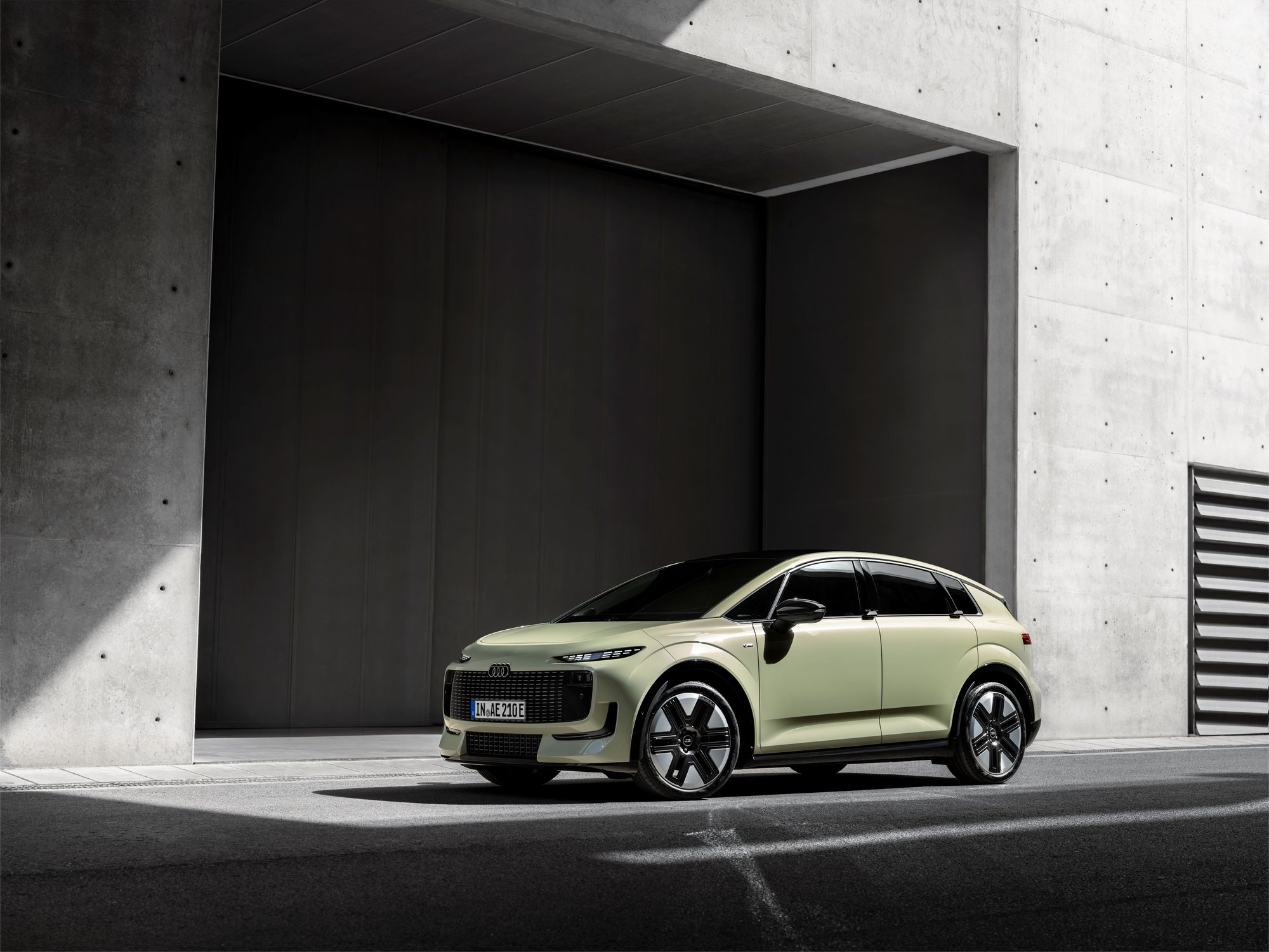
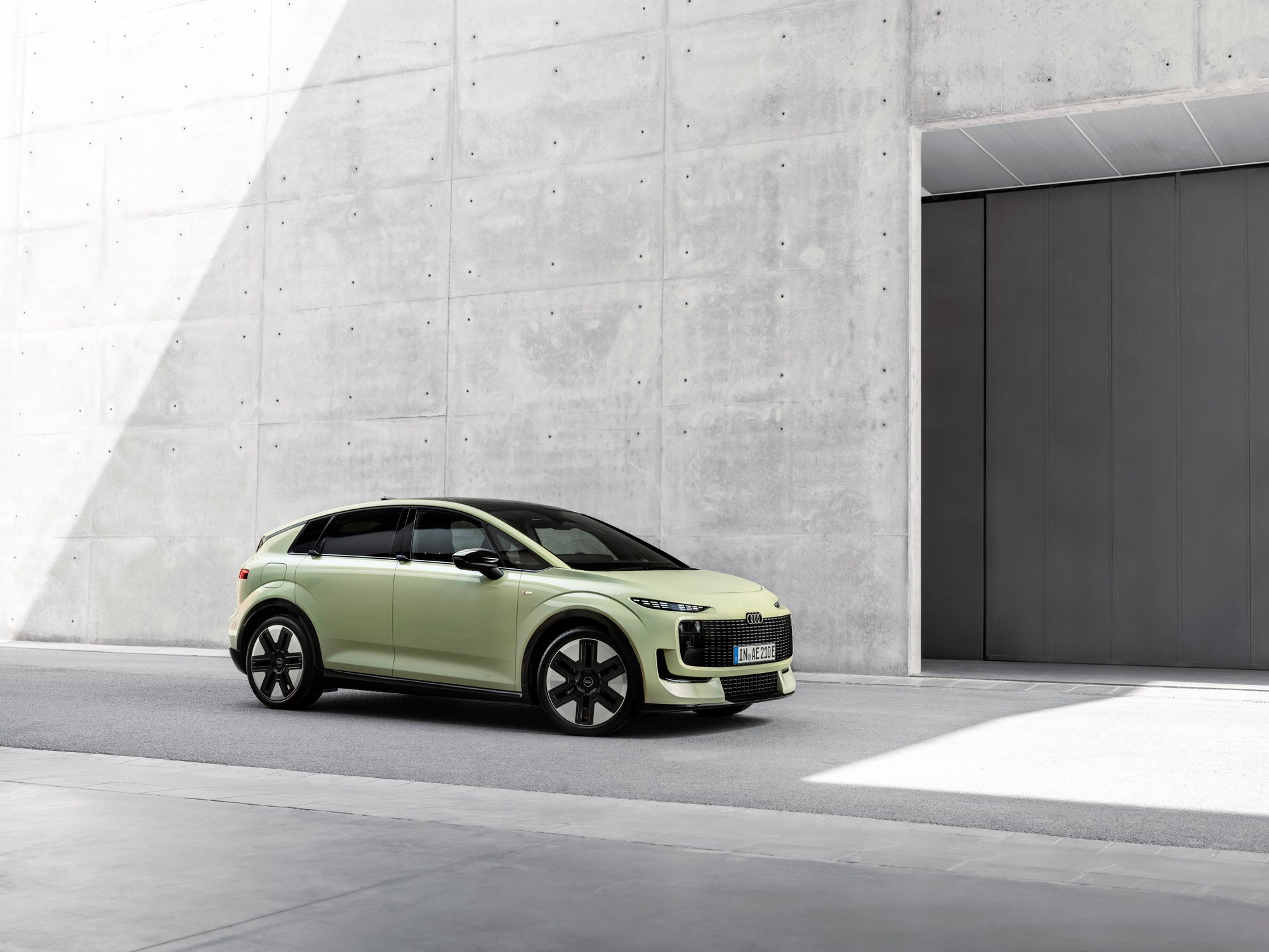
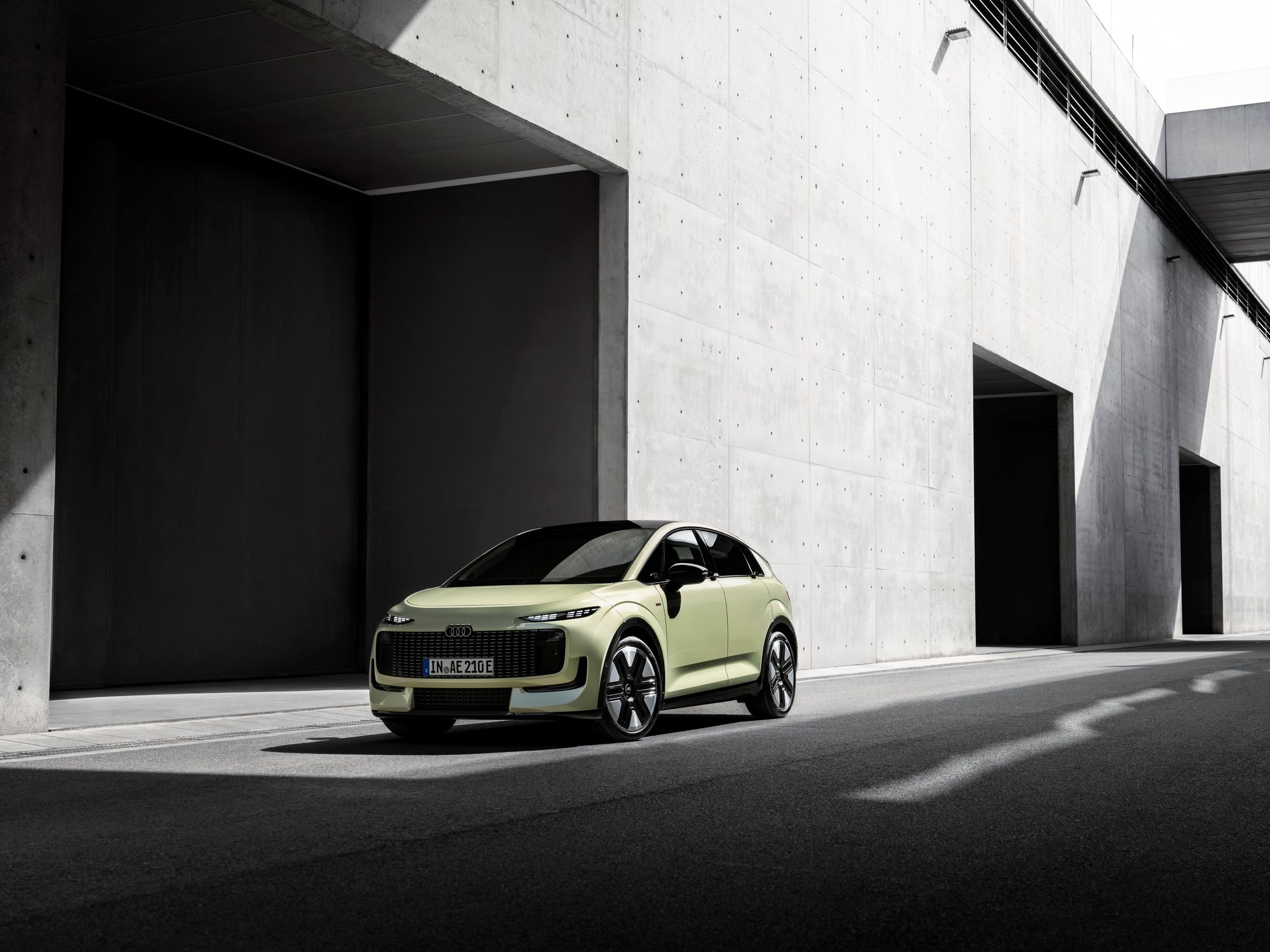
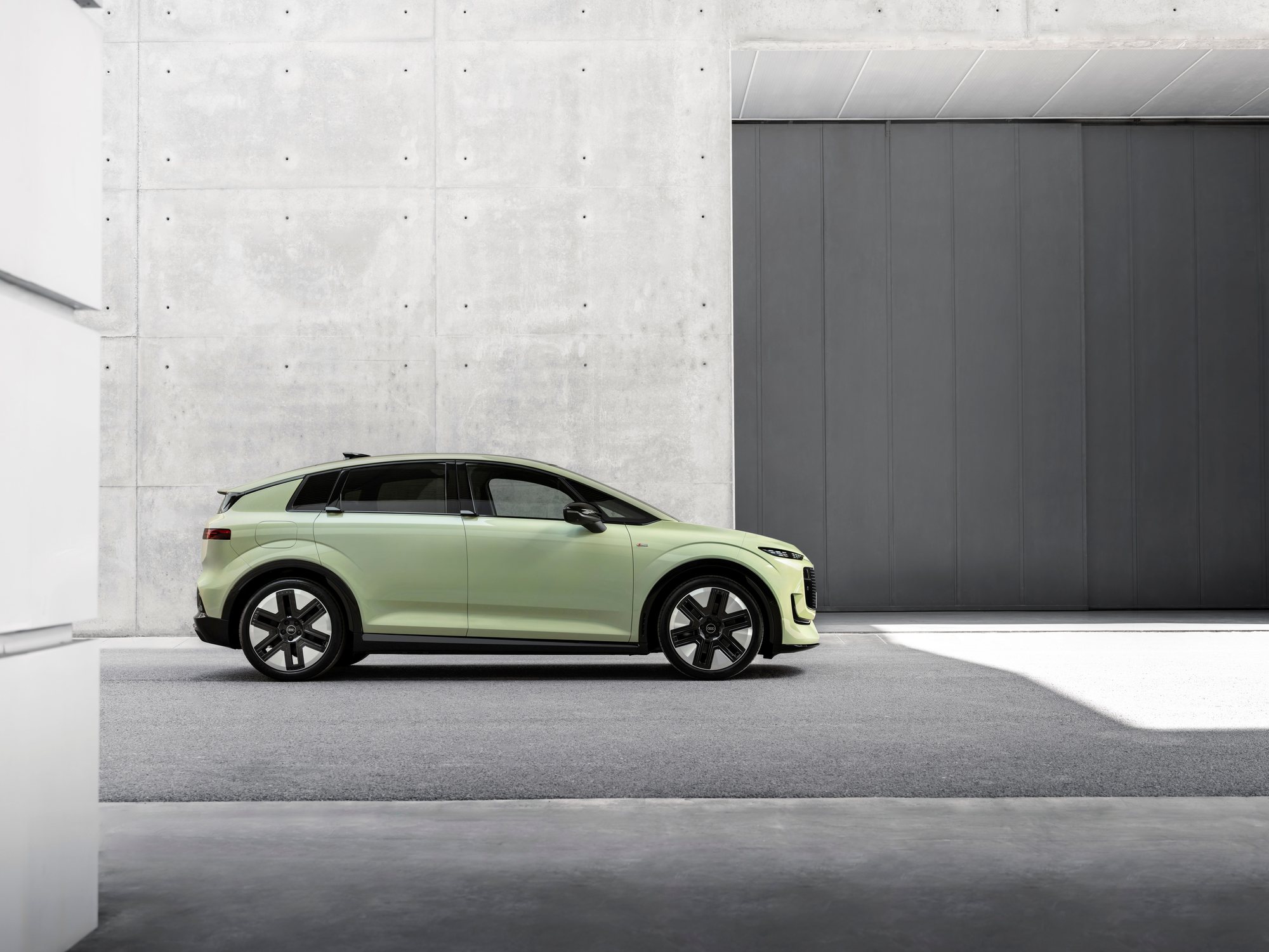
Audi A2 e-tron
The A2 e-tron opens at £32,200, which is £14,060 below anything else Audi will sell you with a plug, and gets 401 miles out of 84 kWh. The most efficient Audi ever built is not, however, the one you get for £32,200.
7 September 2026
of 15
The last Audi A2 was made until 2005. It was aluminium, it was expensive to build, and its whole argument was that using less is worth paying for. Audi has brought the badge back for a car making exactly the same argument by completely different means: this one is steel, it drives its rear wheels, and it is the cheapest thing the company sells with a plug.
£32,200 on the road is where it opens. The cheapest Audi you can order today is a Q4 e-tron at £46,260, so the A2 lands £14,060 under it. That is also the only UK price in the entire press pack: the other three power levels are not costed until order books open in October.
The engineering headline is 12.8 kWh per 100 km, or 4.85 miles per kWh, which Audi says makes this the most efficient car it has ever built. The figure is real and the small print matters. It belongs to the 190 PS on the 61 kWh battery with the optional efficiency package — sport suspension, low rolling resistance tyres — and the same car without that package is quoted at 15.6 kWh per 100 km, which is 3.98 miles per kWh. The gap between those two numbers is the size of the whole claim.
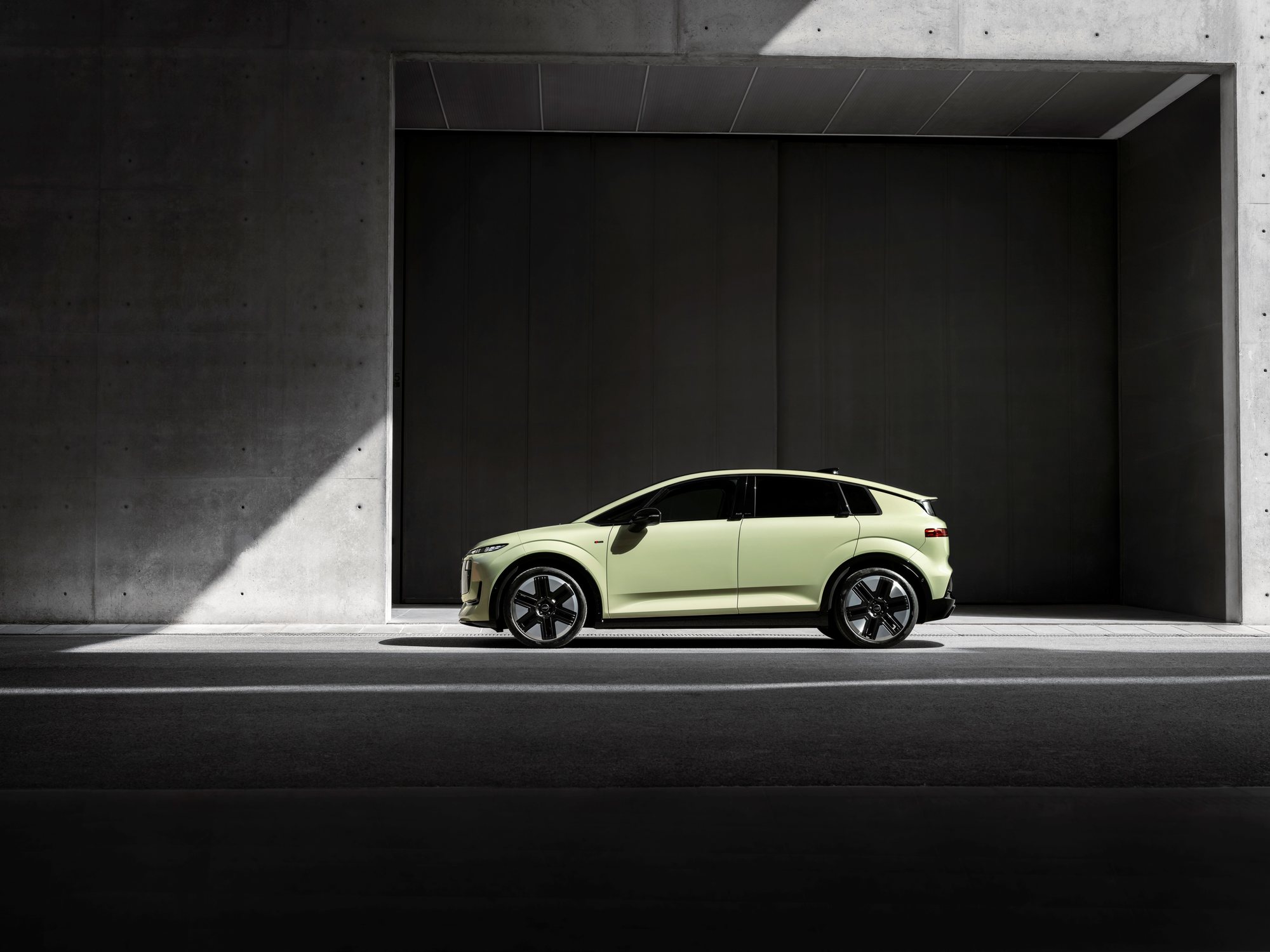
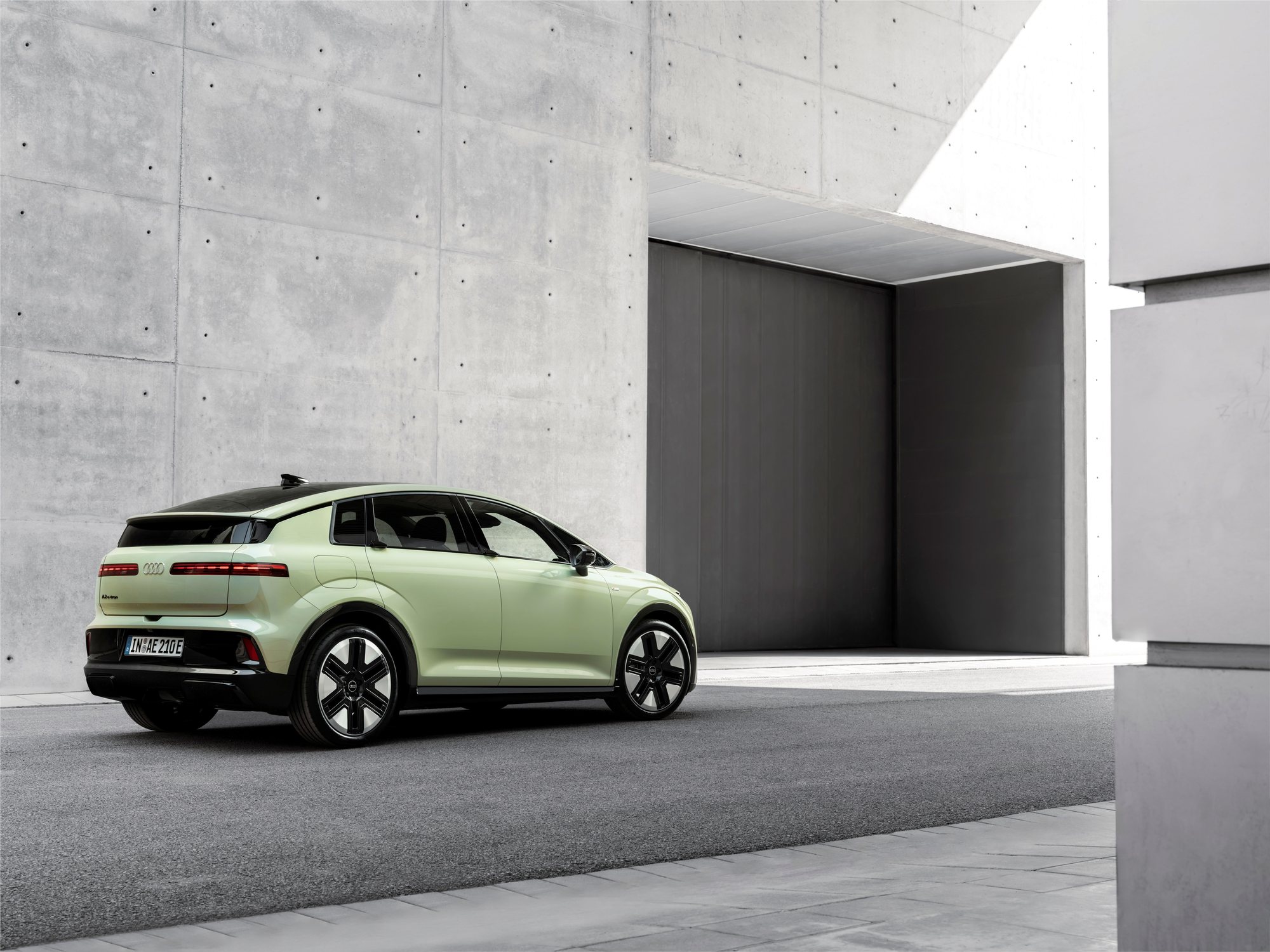
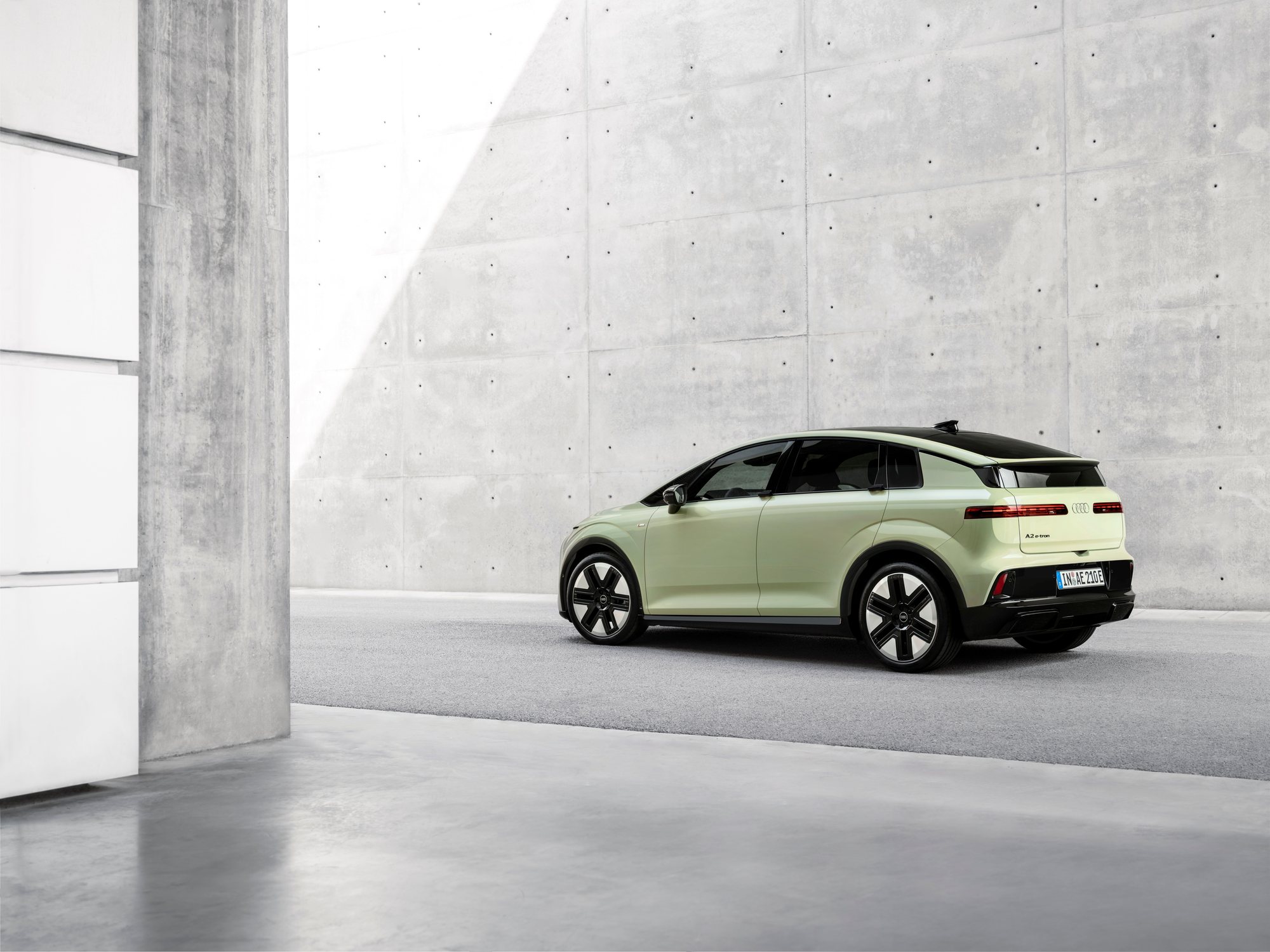
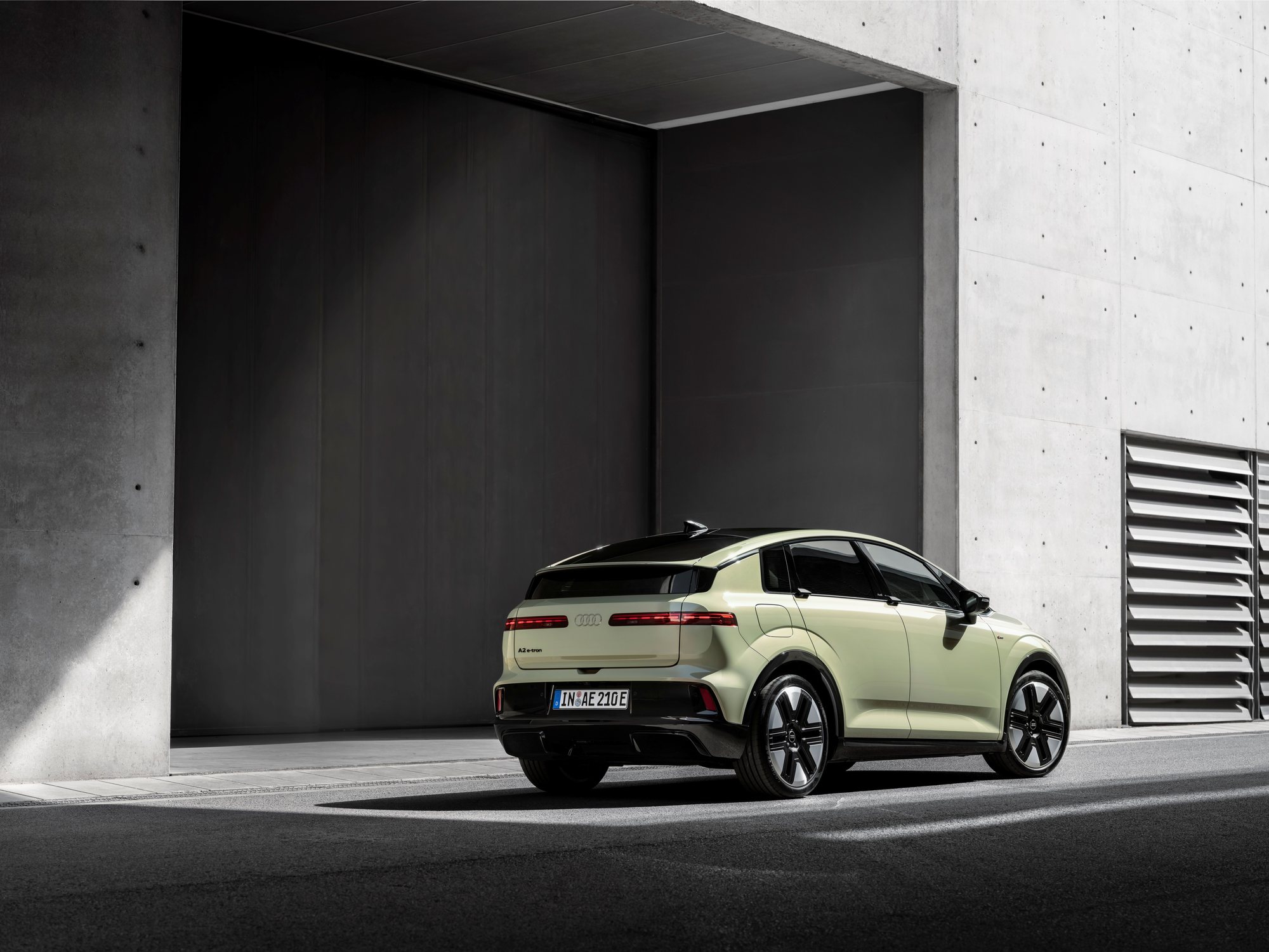
How it gets there is the interesting part, because none of it is a bigger battery. The drag coefficient is 0.24, the best in Audi's compact range. It comes from a cool-air intake that stays shut until something needs cooling, an underbody enclosed almost end to end, gap reducers moulded into the wheel arch trims to close the space between tyre and arch, and aero wheels matched to the tyres wrapped round them. With no engine or exhaust to route around, the floor can simply be flat.
There are three batteries — 52, 61 and 84 kWh gross — and four power levels on top of them. 401 miles is the best of them, from the 231 PS on the 84 kWh NMC pack. The 326 PS shares that battery, manages 391 miles and does 0 to 62 in 5.7 seconds. The two smaller packs are LFP, bonded straight into their case, and go 262 and 320 miles.
Hold that 401 next to what else is at the money. A Volkswagen ID.3 Life on 79 kWh does 390 miles for £36,995, out of the same parts bin and at the same 183 kW peak. A Kia EV3 Air on 81.4 kWh does 375 for £35,995. The Audi finds 26 miles more than the Kia out of 2.6 kWh more battery, which is the aerodynamics earning their keep. Put its middle pack against a Hyundai IONIQ 3 carrying an identical 61 kWh and the A2 goes 320 miles to the Hyundai's 308.
The car that opens the range is the one that flatters it least. £32,200 buys 170 PS, 52 kWh and 262 miles. A Volkswagen ID. Polo Life on a 52 kWh pack is £28,330 and goes 281. A CUPRA Raval V1 on the same battery is £29,995 and goes 277. Three cars, one group's engineering, and the Audi is the dearest and the shortest-legged of the three. What the four rings buy at that end is the cabin, the assistance kit and the charging — not the range.
The charging is properly good, and it is where the badge shows. 183 kW on the 84 kWh cars, 10 to 80% in 29 minutes. The small packs take 100 and 105 kW and cover the same stretch in 24 and 26 minutes, which is what a 400 volt LFP car ought to do and very often does not.
Then there is the bit nothing else in the class offers, with an asterisk on it. Vehicle-to-Load is the easy half: a 230 volt socket in the boot good for 2.3 kW, or 3.6 kW through an adapter on the charging socket, which covers a kettle, a laptop or an e-bike. Vehicle-to-Home is the interesting half, and the car becomes the house battery — solar in, surplus back out, discharging only between 20 and 80% so it never strands you.
Then read the small print. Audi's own diagram shows an 11 kW DC wallbox wired into the CCS socket, and the text says DC wall box four separate times. That is not the charger on your wall. Every home charger sold in Britain is AC — the box itself converts nothing, the car's onboard charger does that, and it cannot be run backwards — and a DC box is a different and much dearer piece of hardware. There are 21 home chargers in our own catalogue and not one of them is a DC box.
They do exist, barely. Wallbox's Quasar 2 is the one everybody names, and it is still not on sale in Britain; when it arrives it is expected to be around £6,000. The likelier route is Sigenergy's SigenStor EV DC, a 25 kW bidirectional module that stacks onto the company's own home battery — so what you are buying is not a charger at all but a whole home storage system with a car socket on the side, and the compatibility list that comes with it is Sigenergy's own field testing rather than anything a car maker has certified.
What makes that look like a choice rather than a constraint is that the AC version of this already works here, on hardware people can buy. Octopus, BYD and Zaptec have been selling the Power Pack since June 2025: a BYD Dolphin, a bidirectional Zaptec Pro — an ordinary-looking AC wallbox — and a tariff with free home charging up to 12,000 miles a year, the lot for under £300 a month. Humax has a V2G charge point coming. Audi's pack describes nothing of the kind. Bidirectional here means V2L and V2H and never V2G; the AC socket is an island supply for a kettle or an e-bike; and everything that reaches the meter leaves through the DC pins. On a car sold on being clever with energy, that is an odd corner to cut. Your A2 can power your house. Good luck buying the thing that lets it.
Audi is not even certain the UK is invited. The launch section names Britain alongside Germany, Austria and Switzerland; a later paragraph, carried over intact from the German original, names the other three and stops. One of those two sentences is wrong, and it is worth knowing which before anybody budgets for a wallbox that may not exist here anyway.
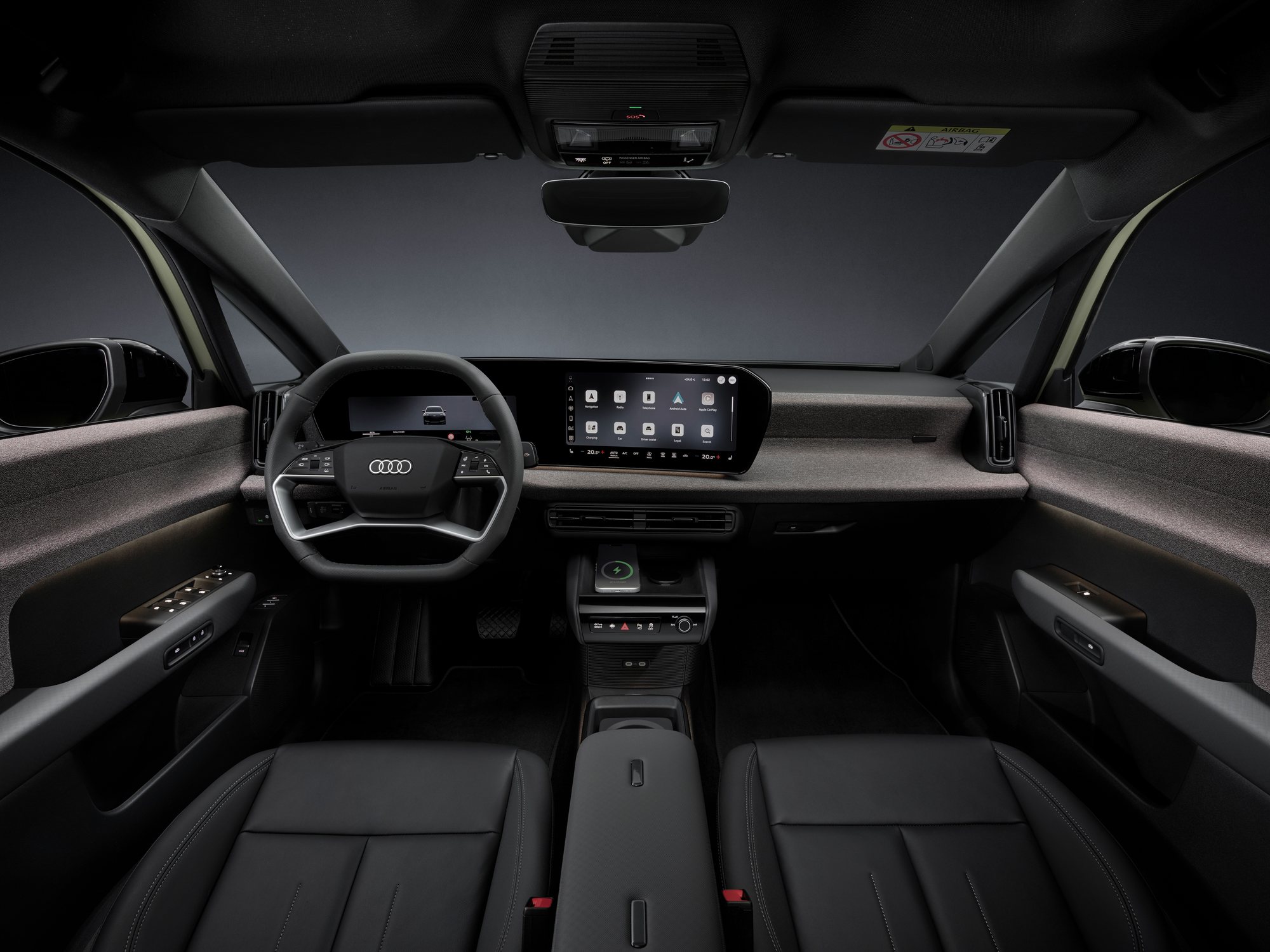
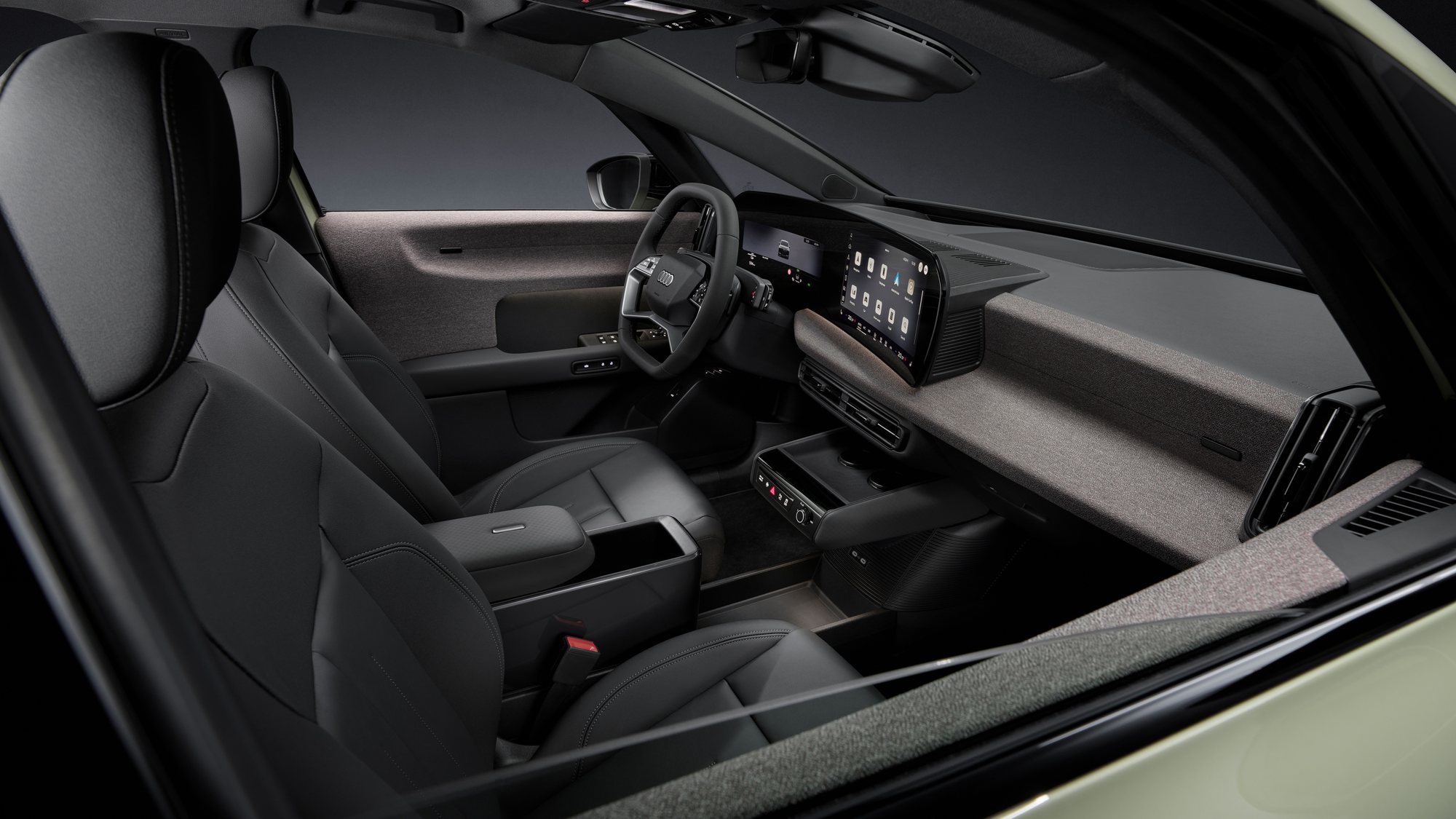
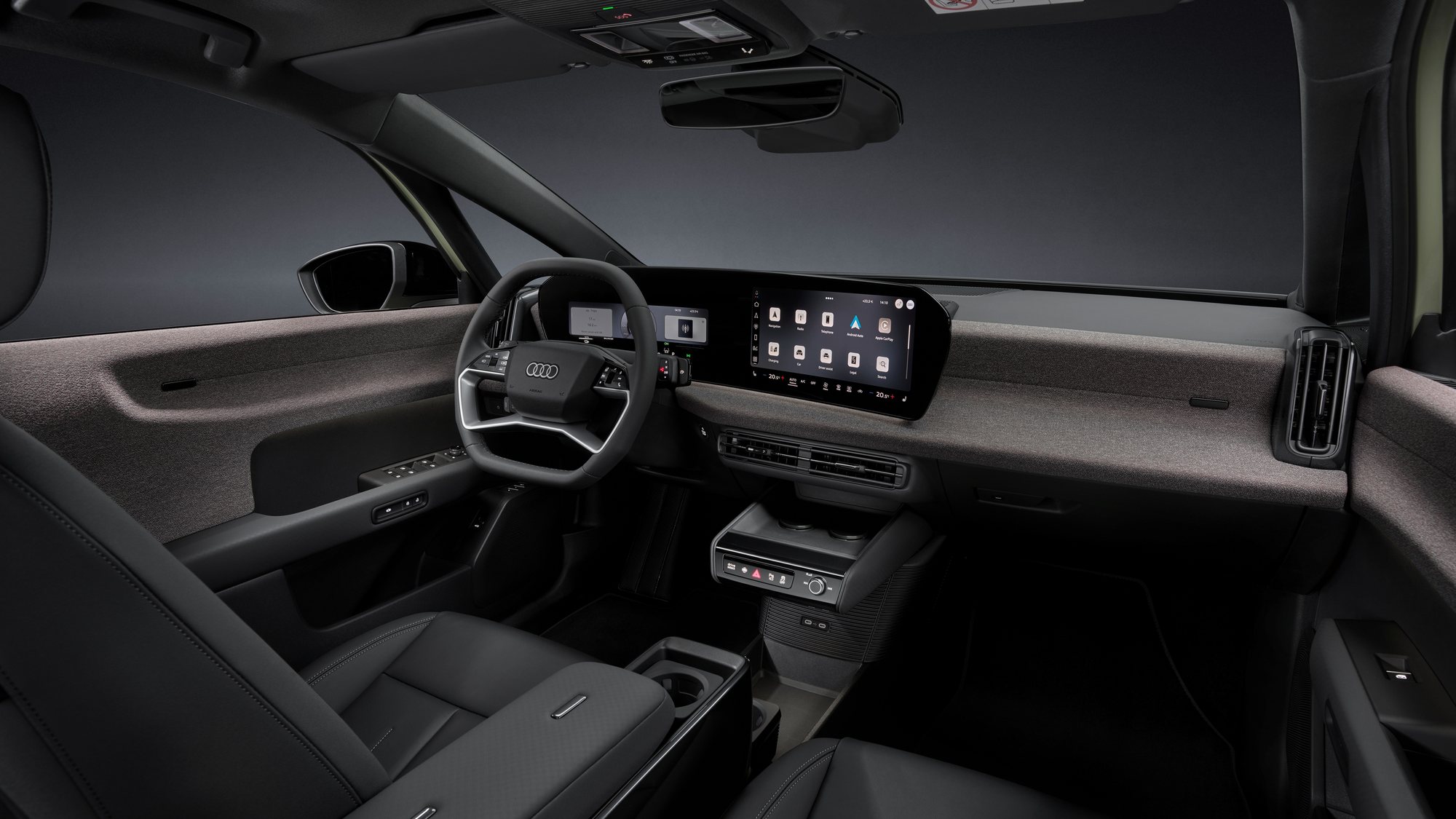
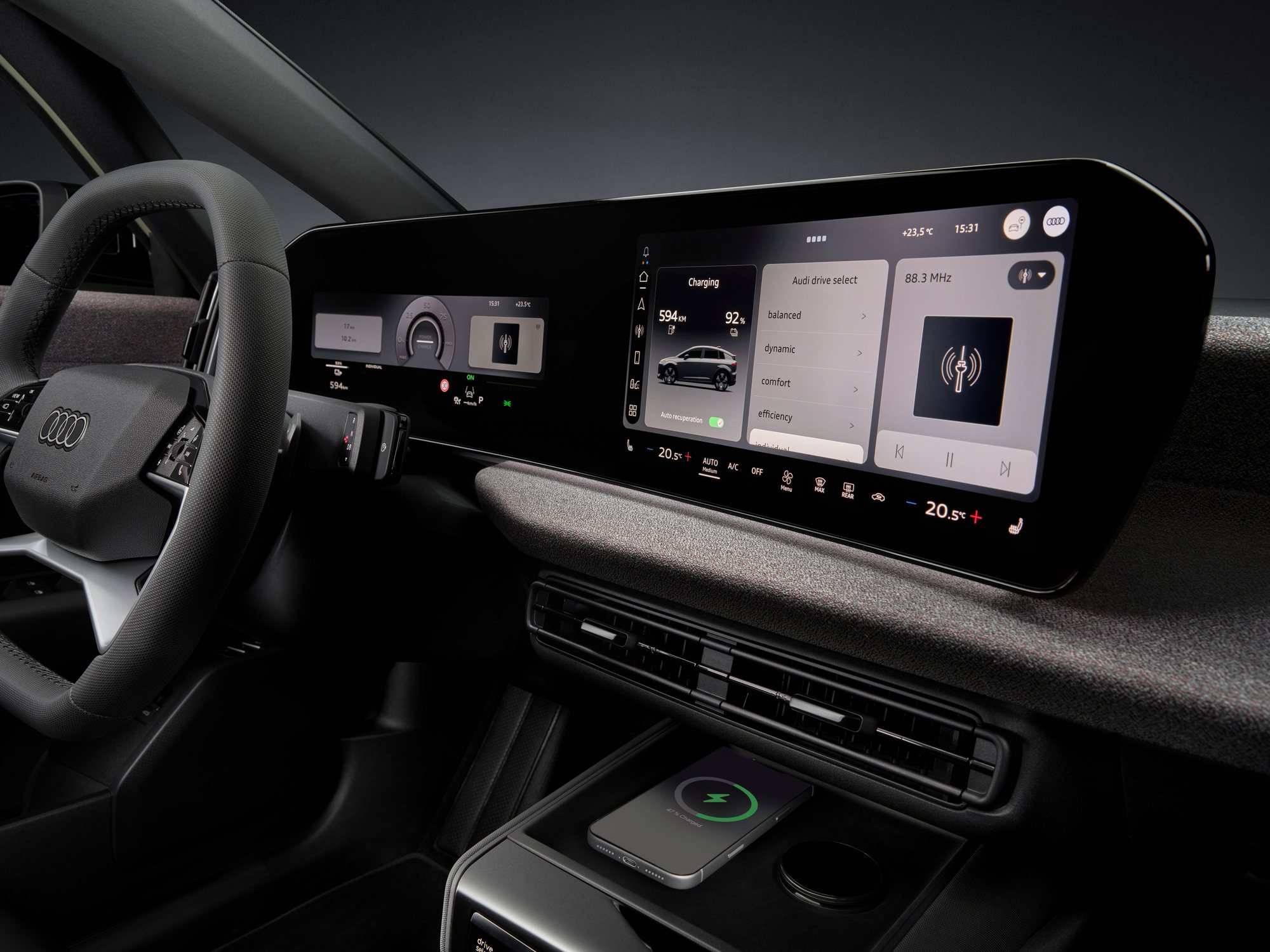
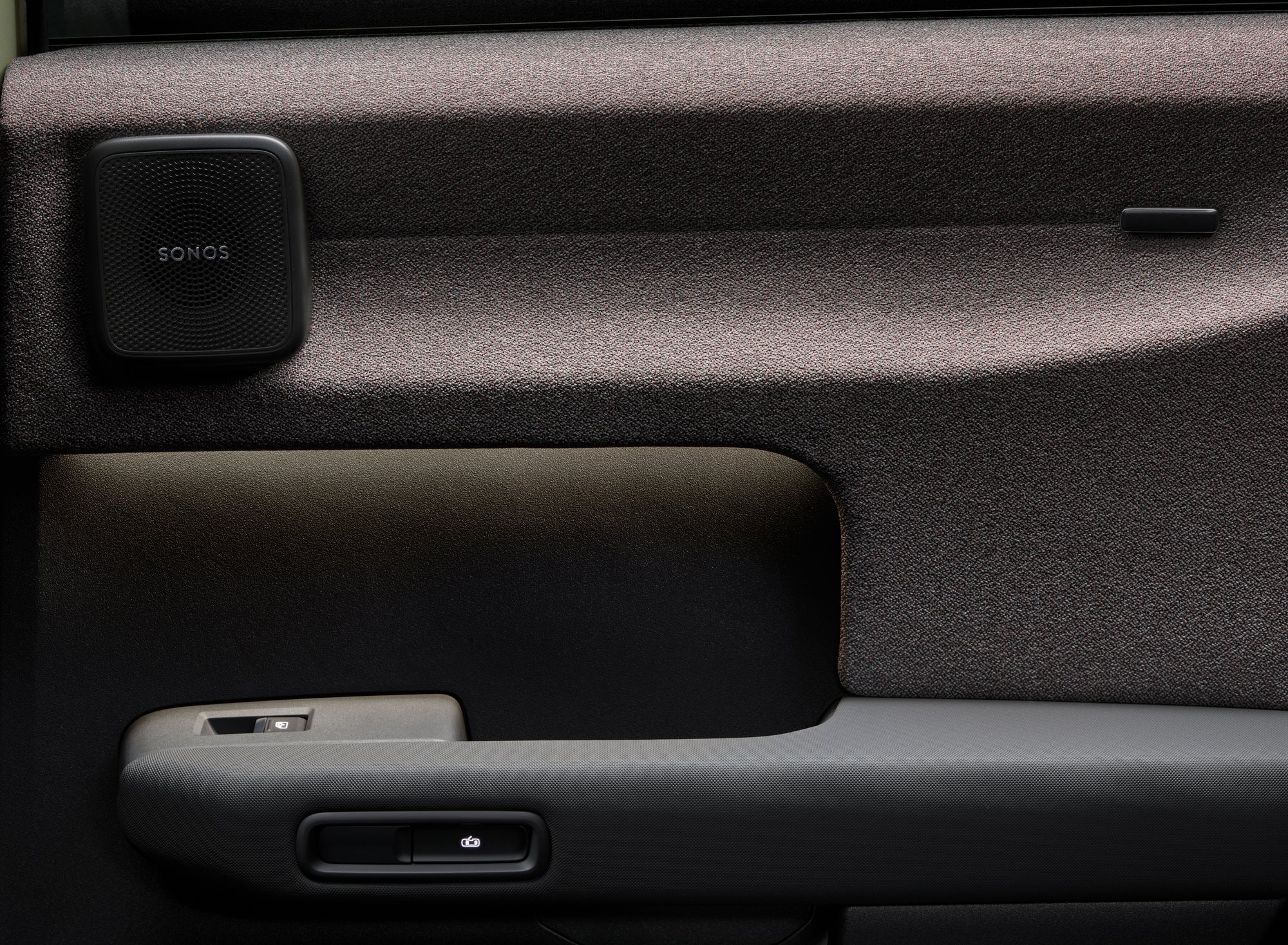
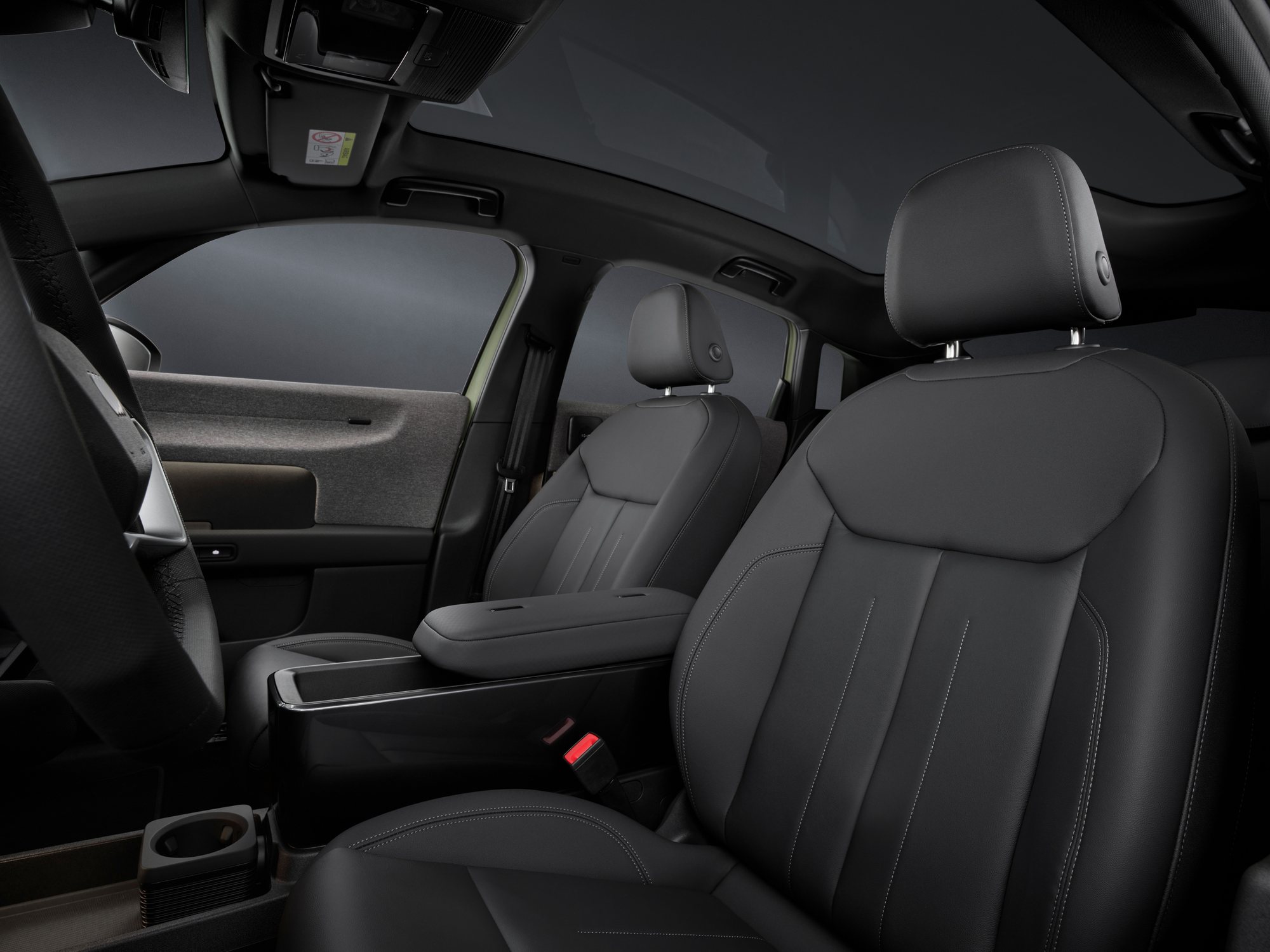
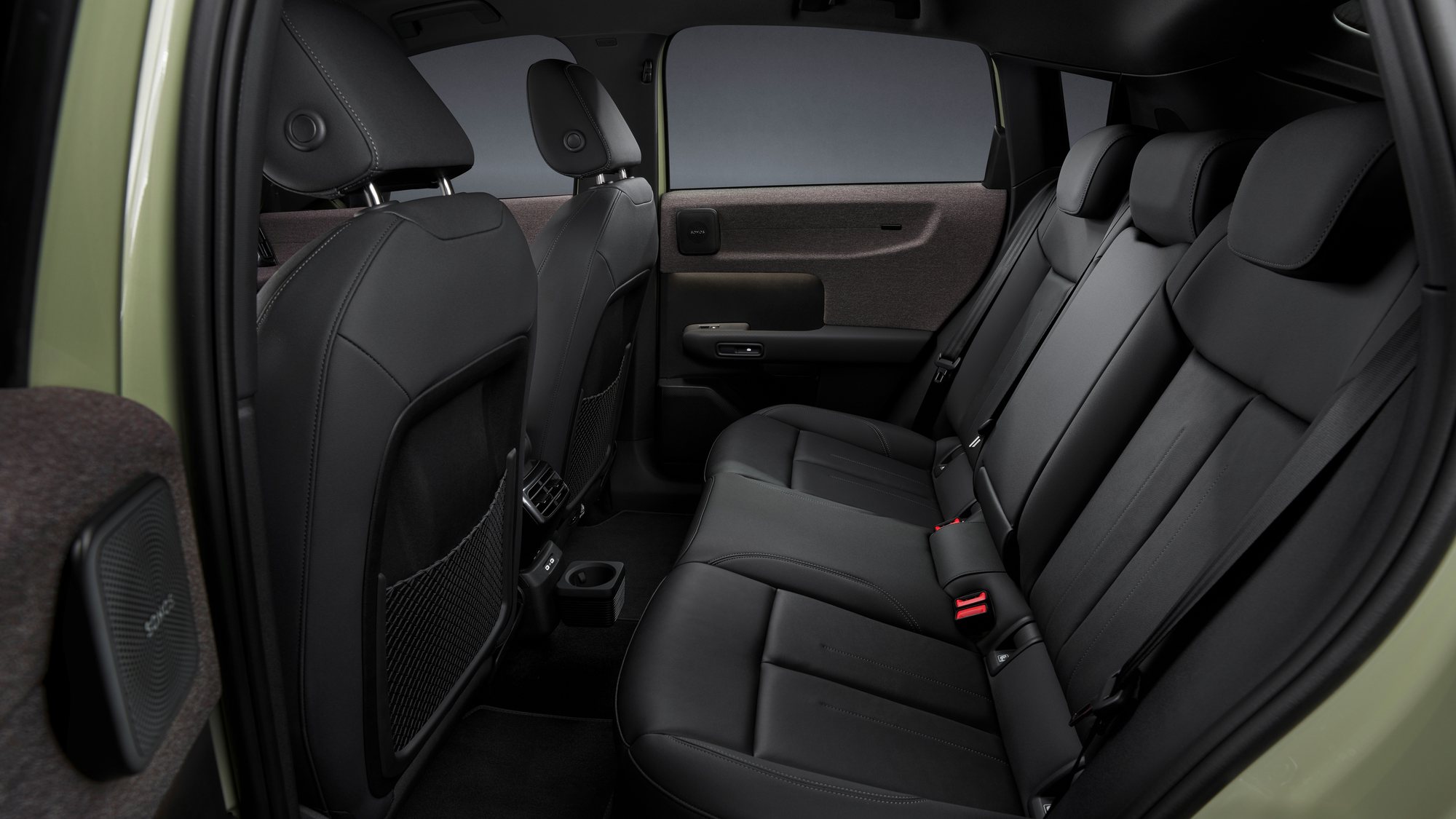
Standard equipment is unusually complete for an entry model. Every A2 gets the MMI panoramic display — an 11.9 inch instrument screen and a 12.8 inch curved touchscreen — along with adaptive cruise control, parking system plus, a reversing camera, cross-traffic assist front and rear, emergency brake assist up to about 52 mph and swerve assist between 18 and 93 mph. Audi is also the first premium maker to fit Fidlock as standard: magnetic mounting points in the centre console, three more in the boot as an option, that take a cup holder or a cable bag one-handed. The boot is 396 litres and 1,336 with the seats folded, and there is a 13 litre frunk — but only on the two 84 kWh cars.
What is missing is most of the specification. No UK trims, no equipment grid, no length, width or height, and three prices out of four. Audi's own wording is that full UK technical data and model specification are confirmed when ordering opens. That is October, with the first cars reaching Audi Centres early in 2027, built in Ingolstadt on the line next to the A3.
The numbers
| Specification | A2 e-tron 170 PS | A2 e-tron 190 PS | A2 e-tron 231 PS | A2 e-tron 326 PS |
|---|---|---|---|---|
| Price | £32,200 | — | — | — |
| Range | 262 miles | 320 miles | 401 miles | 391 miles |
| Efficiency | 4.54 mi/kWh | 4.85 mi/kWh | 4.47 mi/kWh | 4.38 mi/kWh |
| Battery | 52 kWh | 61 kWh | 84 kWh | 84 kWh |
| Battery chemistry | LFP | LFP | NMC | NMC |
| Max fast charge power | 100 kW | 105 kW | 183 kW | 183 kW |
| Fastest charge time | 24 mins | 26 mins | 29 mins | 29 mins |
| Horsepower | 170 hp | 190 hp | 231 hp | 326 hp |
| Torque | 350 Nm | 350 Nm | 350 Nm | 545 Nm |
| Acceleration | 8.8 secs | 7.9 secs | 7 secs | 5.7 secs |
| Top speed | 99 mph | 99 mph | 99 mph | 124 mph |
| Wheelbase | 2,770 mm | 2,770 mm | 2,770 mm | 2,770 mm |
| Boot volume | 396 litres | 396 litres | 396 litres | 396 litres |
| Boot volume (max) | 1,336 litres | 1,336 litres | 1,336 litres | 1,336 litres |
| Seating | 5 seats | 5 seats | 5 seats | 5 seats |
How it compares
Matched on battery and price rather than trim name, since nobody names their trims the same way. Prices are on the road with any grant already taken off.
| Specification | A2 e-tron Audi | Q4 e-tron Audi | ID.3 Volkswagen | EV3 Kia | IONIQ 3 Hyundai | ID. Polo Volkswagen | Raval CUPRA |
|---|---|---|---|---|---|---|---|
| Price | £32,200 | £46,260 | £35,495 | £35,995 | £24,245 | £26,830 | £28,495 |
| Range | 262 miles | 360 miles | 390 miles | 375 miles | 308 miles | 281 miles | 277 miles |
| Efficiency | 4.54 mi/kWh | — | — | 4.2 mi/kWh | — | — | 4.6 mi/kWh |
| Battery | 52 kWh | — | 79 kWh | 81.4 kWh | 61 kWh | 52 kWh | 52 kWh |
| Battery chemistry | LFP | — | — | — | NMC | NMC | NMC |
| Max fast charge power | 100 kW | — | 183 kW | 127.5 kW | 110 kW | 105 kW | 105 kW |
| Fastest charge time | 24 mins | — | 29 mins | 31 mins | 30 mins | 24 mins | 24 mins |
| Horsepower | 170 hp | 204 hp | 231 hp | 201 hp | 135 hp | 211 hp | 210 hp |
| Torque | 350 Nm | — | — | 283 Nm | 250 Nm | — | 290 Nm |
| Acceleration | 8.8 secs | — | 7.1 secs | 7.7 secs | 9.5 secs | 7.1 secs | 7.1 secs |
| Top speed | 99 mph | — | — | 105 mph | 104 mph | — | 99 mph |
| Length | — | — | — | 4,300 mm | 4,155 mm | — | 4,046 mm |
| Width | — | — | — | 1,850 mm | 1,800 mm | — | 1,784 mm |
| Height | — | — | — | 1,560 mm | 1,510 mm | — | 1,514 mm |
| Wheelbase | 2,770 mm | — | — | 2,680 mm | 2,680 mm | — | 2,599 mm |
| Boot volume | 396 litres | — | — | 460 litres | 441 litres | 441 litres | 441 litres |
| Boot volume (max) | 1,336 litres | — | — | 1,250 litres | 1,213 litres | — | — |
| Seating | 5 seats | 5 seats | 5 seats | 5 seats | 5 seats | 5 seats | 5 seats |