
Undercuts rivals, but at what cost?
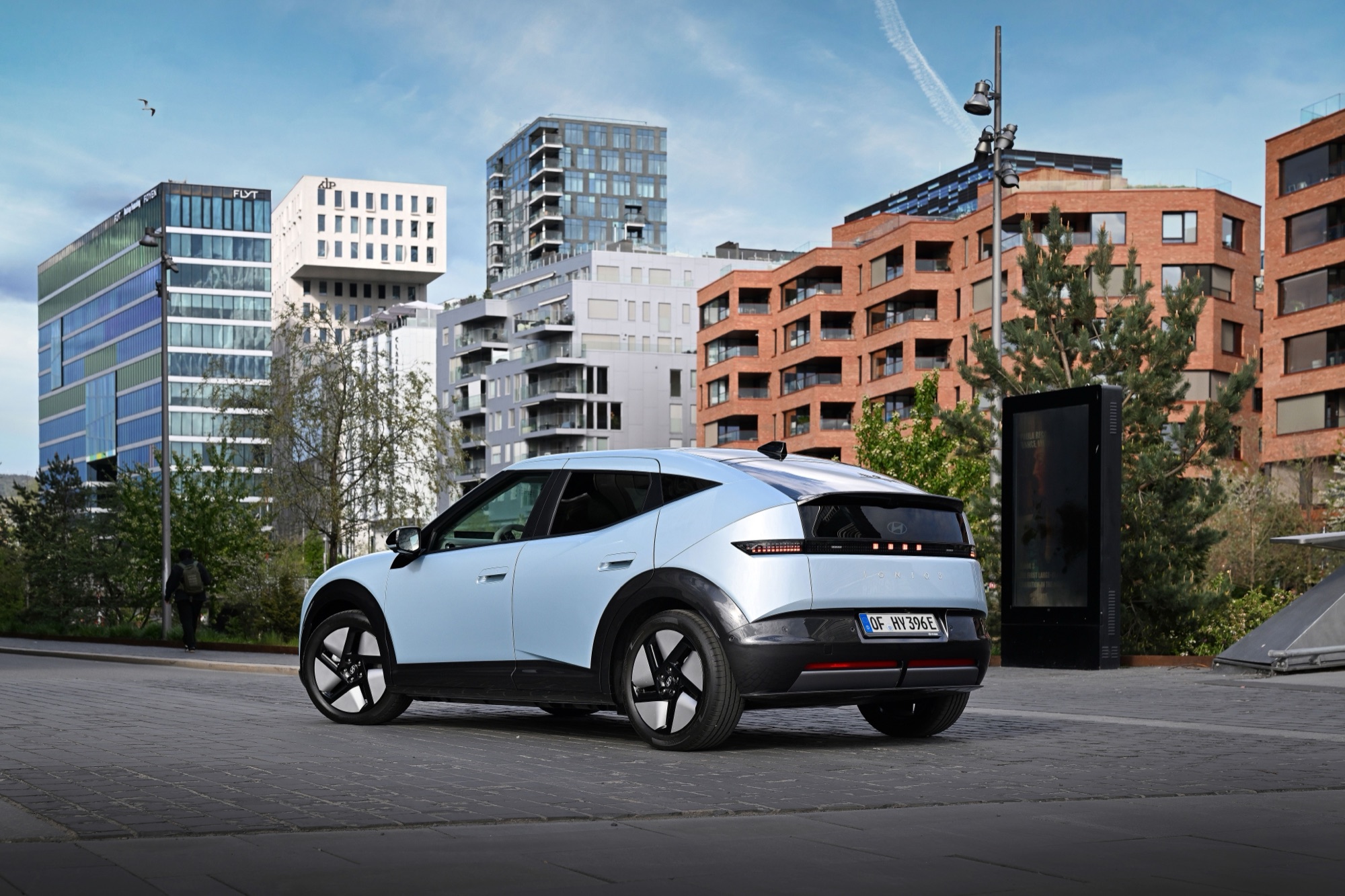
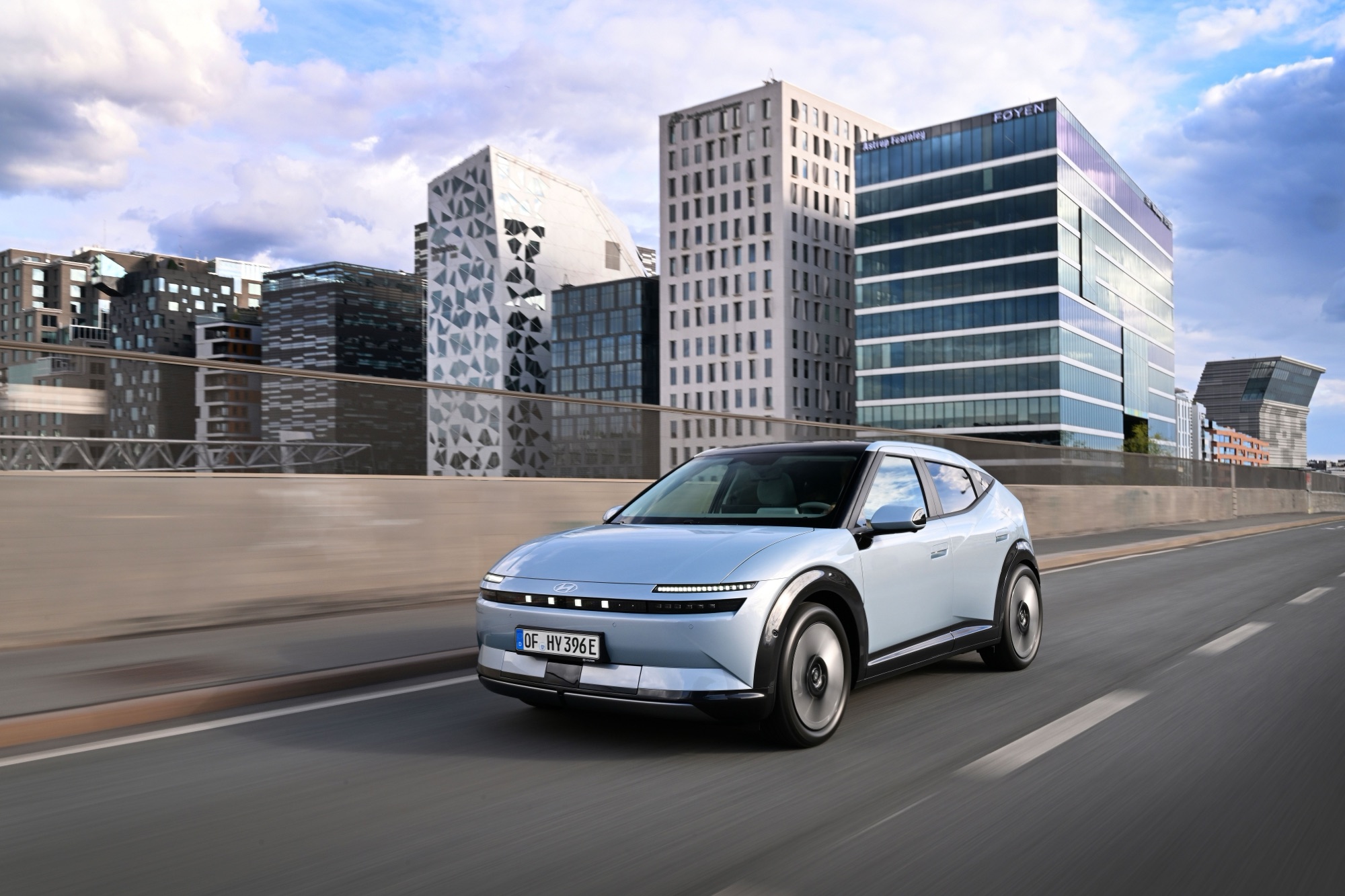
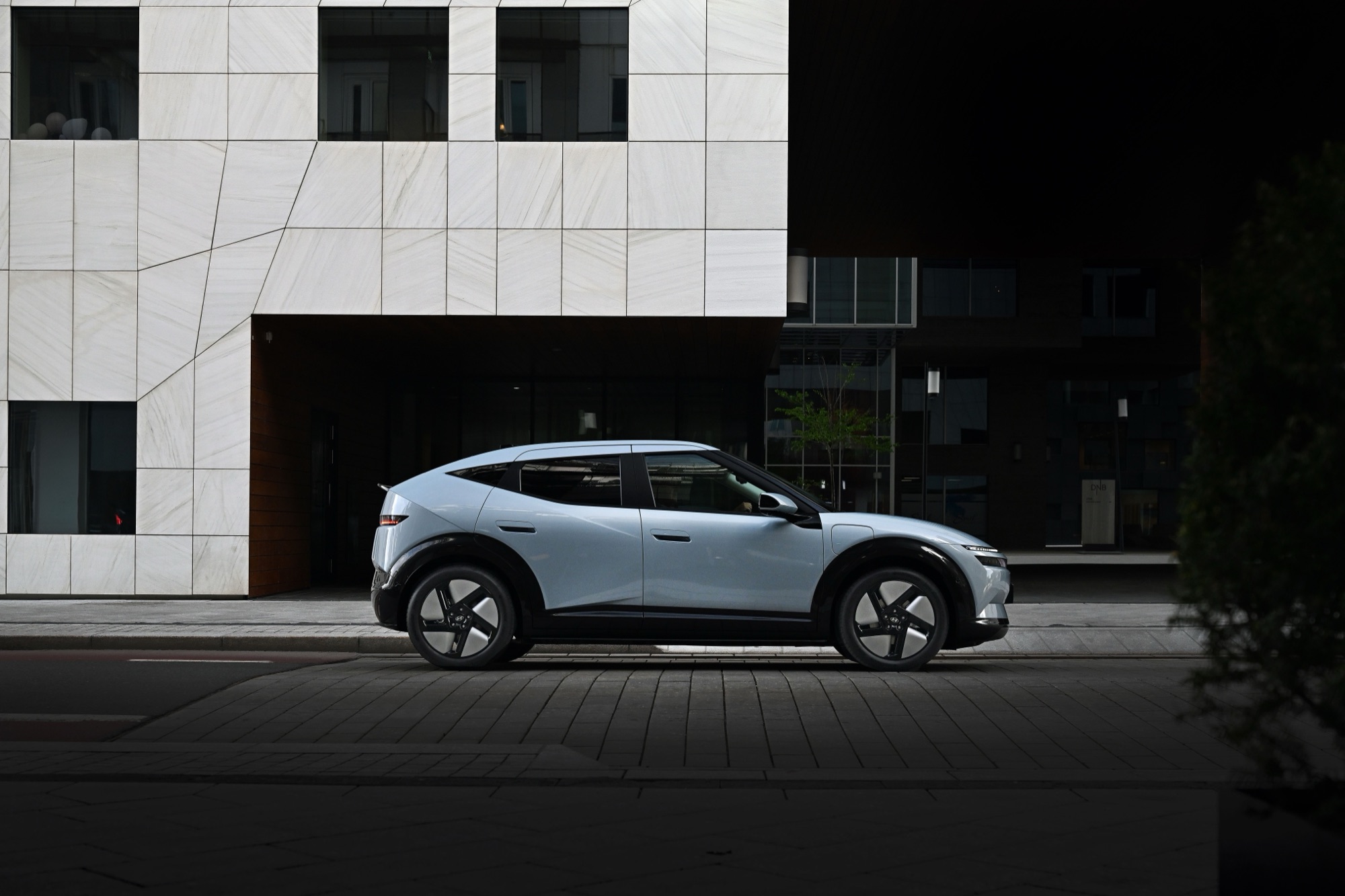
Hyundai IONIQ 3
The IONIQ 3 starts at £22,245 with no grant at all, and goes further than an IONIQ 5 costing £16,000 more. The savings had to come from somewhere, and they came out of the charging and the heated seats.
26 August 2026
of 3
Hyundai has been very good at electric cars that make you forget what they cost. The IONIQ 5 charges faster than almost anything at twice the money, and the IONIQ 6 is one of the few EVs whose motorway range matches its brochure. The IONIQ 3 is the first one built to hit a number instead, and the number is £22,245.
That is what a 42 kWh Advance costs, and there is no grant behind it: the small battery car does not qualify, so £22,245 is simply what Hyundai is asking. Step up to the 61 kWh Advance, which does qualify, and £24,245 after the £1,500 grant buys you 308 miles — more than the cheapest IONIQ 5 manages on 63 kWh, for £16,450 less. A smaller, cheaper Hyundai that goes further than the big one is a good headline, and Hyundai has earned it.
So what has gone?
The charging, mostly. The IONIQ 5 runs at 800 volts and takes 260 kW, which is why it does 10 to 80% in 18 minutes. The IONIQ 3 is a 400 volt car that peaks at 110 kW and takes 30 minutes to do the same. On a school run that is invisible. On the way to Cornwall it is the difference between a coffee and a meal, twice.
Then there is the kit. Heated seats and a heated steering wheel are not standard on an IONIQ 3, and that is the sort of omission you notice every morning between November and March rather than once a year on a long trip. It is worth knowing what the competition does here, because it is not the same answer. A Kia EV2 has heated front seats and a heated steering wheel on every version, including the cheapest one, and so does a Kia EV3. Kia treats them as things a car has. Hyundai, on this car, treats them as things you pay for.
The screens tell a similar story. Hyundai describes the slim instrument display behind the wheel as "available", which is the sort of word that means it is not on every car, and the centre screen comes as either 12.9 or 14.6 inches depending on how much you spend. Wheels start at 16 inches. None of that is unusual at this price. It is only notable because Hyundai has spent five years teaching us not to expect it.
There is one bit of the range that deserves a harder look. The N Line Evo costs £30,445 and manages 265 miles against the 308 of the Advance sitting £6,200 below it. Bigger wheels and a sportier set-up cost range on every car, but £6,200 for 43 fewer miles is a lot to pay for a look.
What has not been cut is the software, which is the interesting part. The IONIQ 3 is the first European Hyundai with PLEOS Connect, built on Android Automotive, with an app market, over-the-air updates and Hyundai's own Gleo voice assistant. That is the sort of thing that normally arrives on the expensive car first and trickles down three years later. Here it arrives on the cheap one.
The car is built at Hyundai's İzmit plant in Türkiye, developed and tuned in Europe for European roads, and aimed squarely at people who were never going to spend £40,000 on an IONIQ 5. Judged against that brief rather than against its own siblings, the IONIQ 3 looks well worked out. Just check how often you actually charge away from home before you decide the 30 minutes does not matter.
Update, 3 October 2026: the grant has moved, and in the IONIQ 3's favour. Every version now qualifies for the full £3,750, the 42 kWh car included, and Hyundai has not touched its list prices. That makes the cheapest IONIQ 3 £18,495 and the 61 kWh Advance £21,995, which is £2,250 under the cheapest EV2 after its own grant. The missing heated seats are a lot easier to forgive at that money.
The numbers
| Specification | IONIQ 3 Advance | IONIQ 3 Advance | IONIQ 3 Premium | IONIQ 3 Ultimate | IONIQ 3 N Line Evo |
|---|---|---|---|---|---|
| Price | £21,995 | £18,495 | £23,695 | £26,195 | £28,195 |
| Range | 308 miles | 213 miles | 303 miles | 300 miles | 265 miles |
| Battery | 61 kWh | 42.2 kWh | 61 kWh | 61 kWh | 61 kWh |
| Battery chemistry | NMC | LFP | NMC | NMC | NMC |
| Max fast charge power | 110 kW | 119 kW | 110 kW | 110 kW | 110 kW |
| Fastest charge time | 30 mins | 29 mins | 30 mins | 30 mins | 30 mins |
| Horsepower | 135 hp | 147 hp | 135 hp | 135 hp | 135 hp |
| Torque | 250 Nm | 250 Nm | 250 Nm | 250 Nm | 250 Nm |
| Acceleration | 9.5 secs | 8.8 secs | 9.5 secs | 9.5 secs | 9.6 secs |
| Top speed | 104 mph | 104 mph | 104 mph | 104 mph | 104 mph |
| Length | 4,155 mm | 4,155 mm | 4,155 mm | 4,155 mm | 4,170 mm |
| Width | 1,800 mm | 1,800 mm | 1,800 mm | 1,800 mm | 1,800 mm |
| Height | 1,510 mm | 1,510 mm | 1,510 mm | 1,510 mm | 1,515 mm |
| Wheelbase | 2,680 mm | 2,680 mm | 2,680 mm | 2,680 mm | 2,680 mm |
| Boot volume | 441 litres | 441 litres | 441 litres | 441 litres | 441 litres |
| Boot volume (max) | 1,213 litres | 1,213 litres | 1,213 litres | 1,213 litres | 1,213 litres |
| Seating | 5 seats | 5 seats | 5 seats | 5 seats | 5 seats |
How it compares
Matched on battery and price rather than trim name, since nobody names their trims the same way. Prices are on the road with any grant already taken off.
| Specification | IONIQ 3 Hyundai | EV2 Kia | ID. Polo Volkswagen | Raval CUPRA |
|---|---|---|---|---|
| Price | £21,995 | £24,245 | £26,830 | £28,495 |
| Range | 308 miles | 281 miles | 281 miles | 277 miles |
| Efficiency | — | — | — | 4.6 mi/kWh |
| Battery | 61 kWh | 61 kWh | 52 kWh | 52 kWh |
| Battery chemistry | NMC | NMC | NMC | NMC |
| Max fast charge power | 110 kW | — | 105 kW | 105 kW |
| Fastest charge time | 30 mins | 30 mins | 24 mins | 24 mins |
| Horsepower | 135 hp | 133 hp | 211 hp | 210 hp |
| Torque | 250 Nm | 250 Nm | — | 290 Nm |
| Acceleration | 9.5 secs | 9.5 secs | 7.1 secs | 7.1 secs |
| Top speed | 104 mph | — | — | 99 mph |
| Length | 4,155 mm | 4,060 mm | — | 4,046 mm |
| Width | 1,800 mm | 1,800 mm | — | 1,784 mm |
| Height | 1,510 mm | 1,575 mm | — | 1,514 mm |
| Wheelbase | 2,680 mm | — | — | 2,599 mm |
| Boot volume | 441 litres | 362 litres | 441 litres | 441 litres |
| Boot volume (max) | 1,213 litres | 1,201 litres | — | — |
| Seating | 5 seats | 5 seats | 5 seats | 5 seats |