
Kia's PV7 is the second 800-volt van, which is better news than the first
Kia PV7 Cargo
Kia showed the PV7 at IAA Transportation on Monday with 800 volts underneath and a 25-minute charging claim. Renault got a van there ten months ago. A voltage only becomes a standard when the second maker turns up.
14 September 2026

of 6
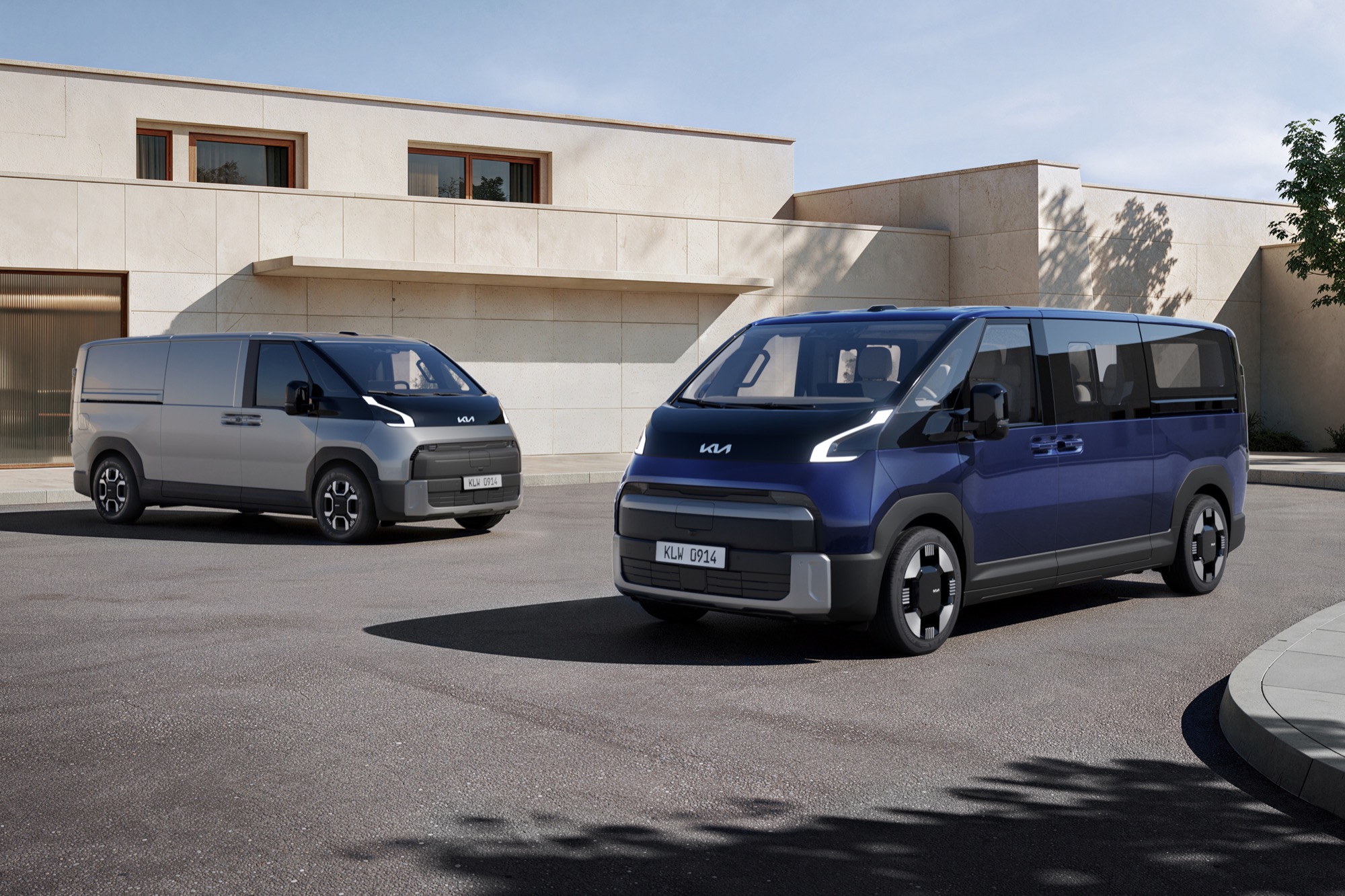
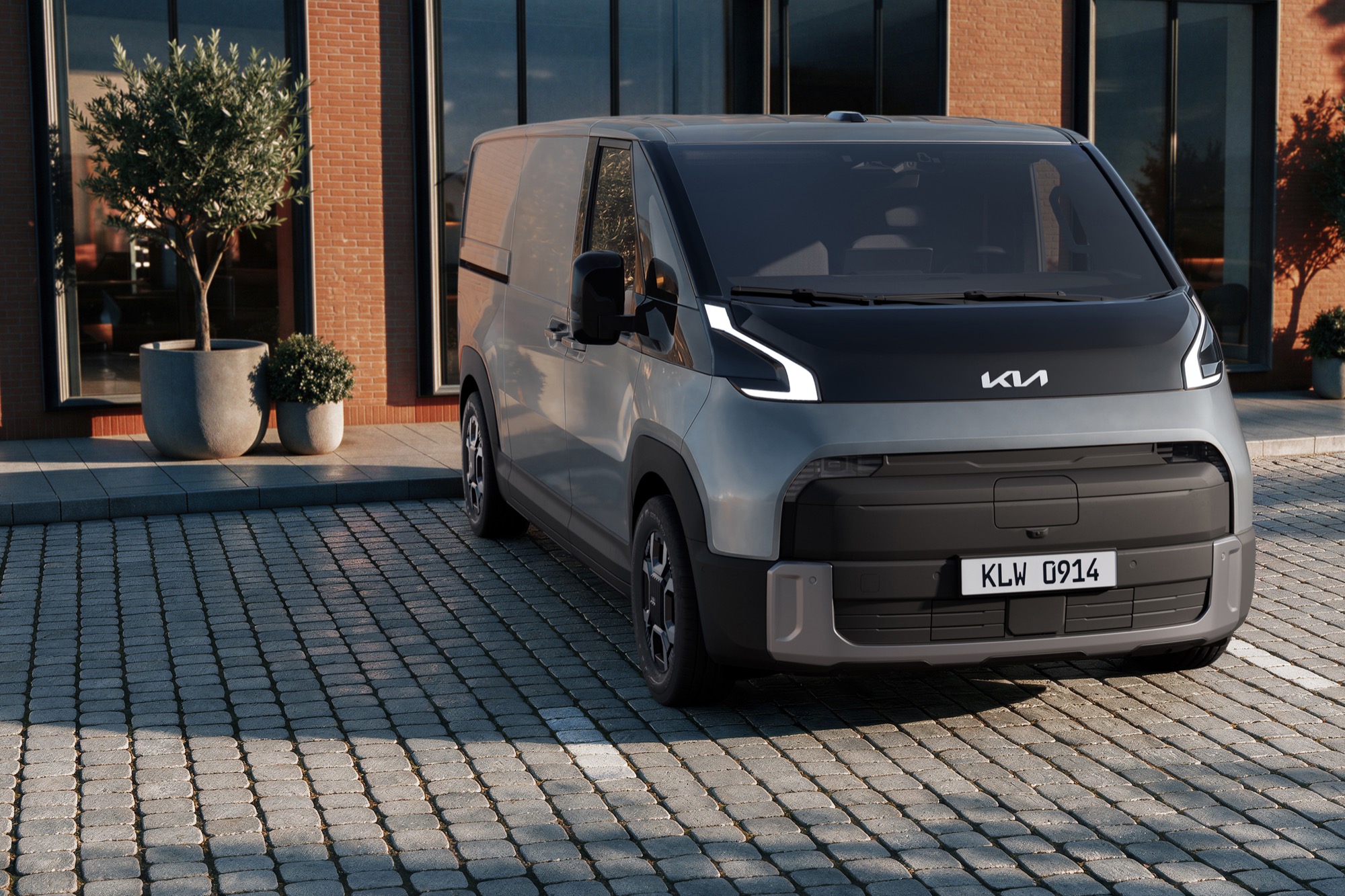
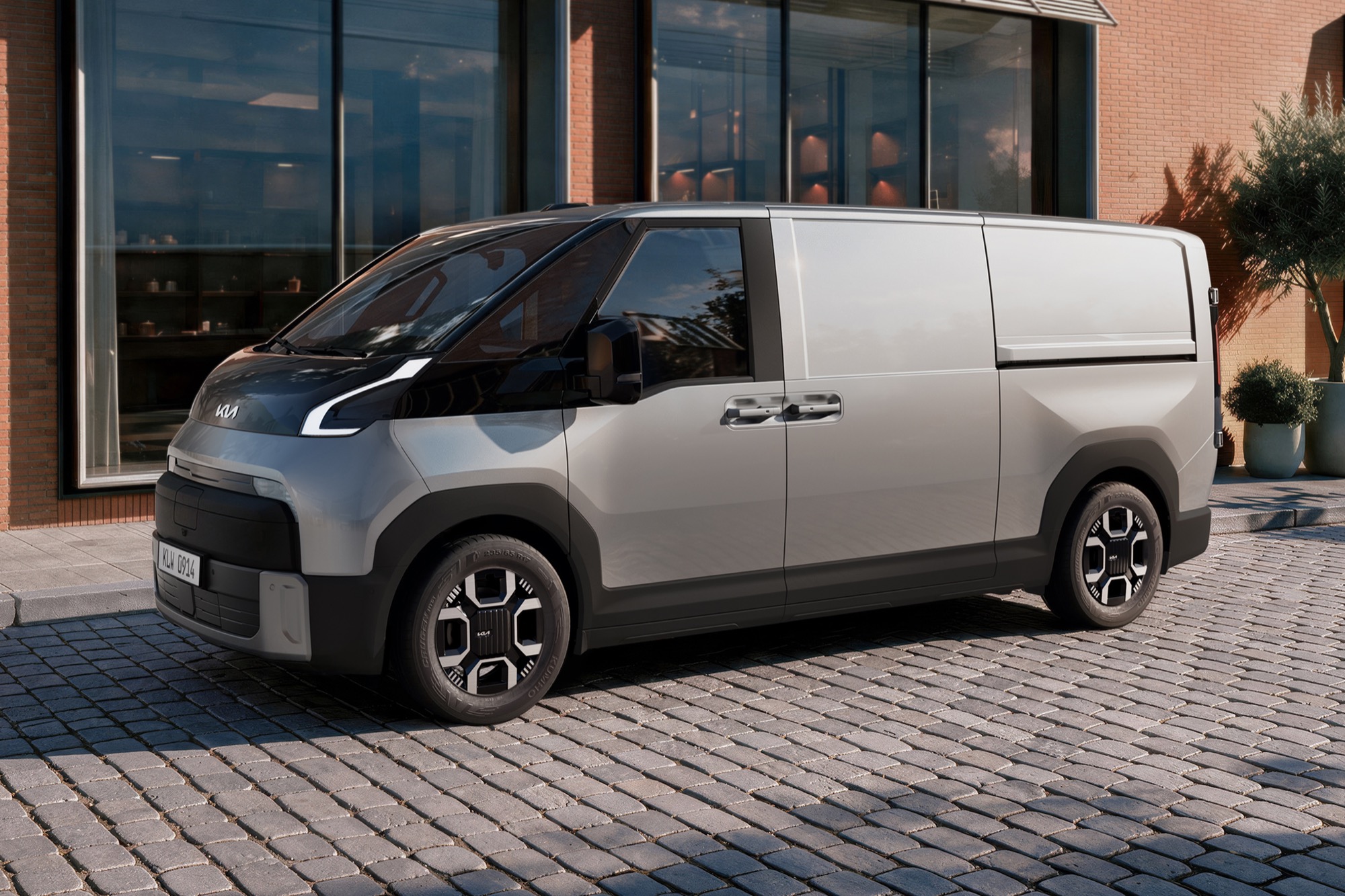
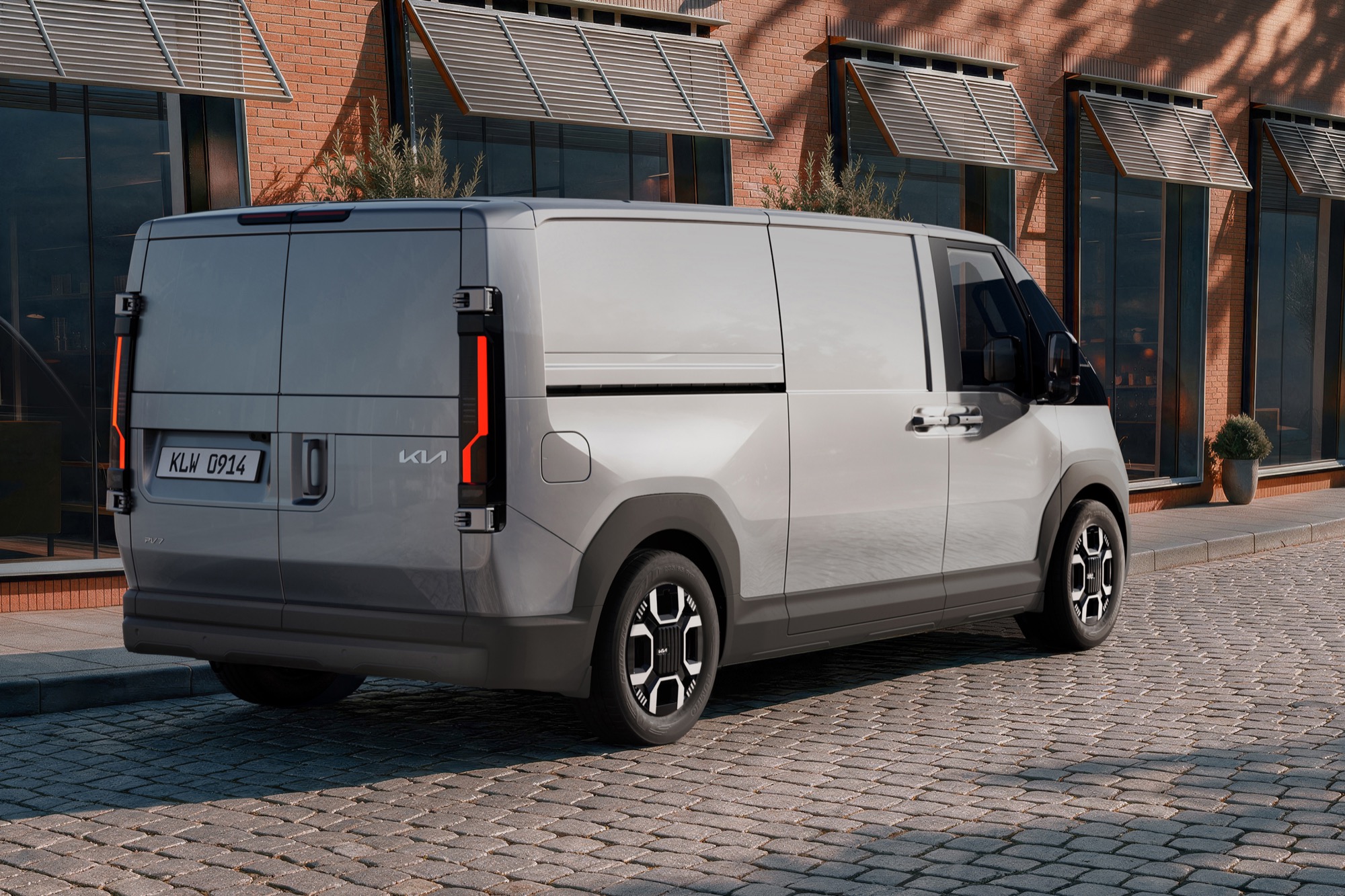
Kia unveiled the PV7 at IAA Transportation in Hanover this morning: the second of its Platform Beyond Vehicles, a full size up from the PV5, in a Cargo body and a Passenger one. It is 5,350 mm long on a 3,500 mm wheelbase, it takes 71.5 or 96.2 kWh of NCM battery, it sends up to 200 kW and 420 Nm to its front wheels, and it goes on sale in Korea and Europe in the second half of 2027. The Long Range Cargo is quoted at over 460 km, which is 286 miles.
The number Kia wants read, though, is not any of those. It is 800 volts, and the charging claim that comes with it: 10 to 80 per cent in what the release calls "the mid-20-minute range" on a 350 kW charger.
It is not the first van to do this, and the releases that say so are wrong. Renault showed the production Trafic E-Tech electric at Solutrans in Lyon in November 2025, on the 800 volt platform Ampere built for it, quoting 15 to 80 per cent in under twenty minutes. It goes on sale at the end of this year. Kia is second to show by ten months and second to sell by about a year.
That is the more interesting position to be in. One manufacturer adopting a voltage is a bet on its own supply chain; two manufacturers, independently, in the same segment, is the segment moving. And the van park is where the case for 800 volts is easiest to make, because the thing an 800 volt architecture buys is the one thing a van owner can put a price on. A car charging slowly is an inconvenience. A van charging slowly is a driver being paid to stand still.
The size of that saving is visible in what is already on sale. Kia's own PV5 Cargo takes 30 minutes to go from 10 to 80 per cent on a 150 kW charger. Ford's E-Transit takes 34, the Farizon SV 40, and Vauxhall's Vivaro-e 45 on a 100 kW charger. If the PV7 lands where Kia says it will, it halves the Vauxhall's stop and takes a third off the Ford's, every time a van plugs in.
Two cautions before anyone builds a duty cycle on that. Kia marks the charging figure "TBC" in its own release, and the 350 kW in the sentence is the charger, not the van: Kia has not published what the PV7 will actually peak at, which is the figure that decides everything. All of it is preliminary and pre-homologation, by Kia's own note to editors. Twenty-five minutes is the shape of the claim, not a tested result.
The detail that is unambiguously new is smaller and more practical. The PV7 gets two charging sockets, an AC/DC one at the front and an optional AC one at the rear side, which Kia says is a first for the brand. Anyone who has watched a driver reverse a van across a depot because the cable would not reach will understand why that is on the list.
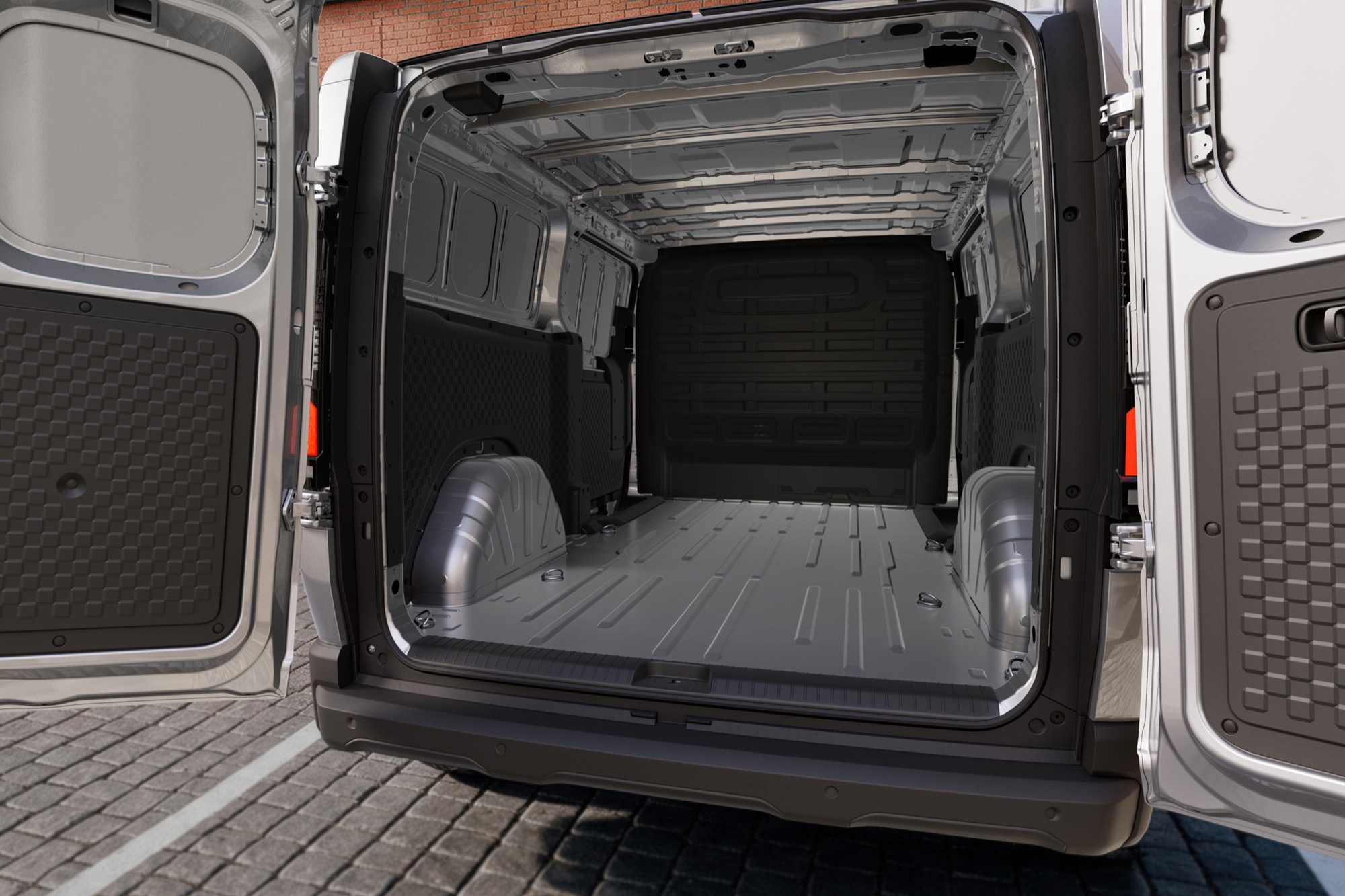
As a van, the Cargo Long holds 6.1 cubic metres to the VDA standard and takes three Euro pallets over a 550 mm load lip, with the High Roof going to 8.0. Payload is up to 1,165 kg on the Long and 1,200 on the Compact. The Passenger seats up to nine, or eleven in Korea, and the seven-seat car gets rails long enough to take the seats out altogether. There is a heavy-load driving mode, vehicle-to-load sockets inside and out, and Pleos Connect on Android Automotive with an app store attached.
Worth noting where this leaves Kia's own range. The PV5 underneath it is a 400 volt van on the same E-GMP.S platform, so within one family Kia has stepped the voltage up for the bigger vehicle rather than carrying it across. That is a decision about cost, and it is the decision every maker in this segment is now going to have to make twice.
What is missing is the part that decides whether any of it matters here: there is no price, no trim, no UK specification and no confirmed UK launch. Kia says the line will reach 23 variants after the 2027 launch, with a chassis cab and conversions among them. Those are the figures worth waiting for, and we will put them up when they land.
The numbers
| Range | 286 miles |
|---|---|
| Battery | 96.2 kWh |
| Battery chemistry | NCM |
| Fastest charge time | 25 mins |
| Torque | 420 Nm |
| Length | 5,350 mm |
| Width | 1,995 mm |
| Height | 1,990 mm |
| Wheelbase | 3,500 mm |
| Seating | 3 seats |
How it compares
Matched on battery and price rather than trim name, since nobody names their trims the same way. Prices are on the road with any grant already taken off.
| Specification | PV7 Cargo Kia | PV5 Cargo Kia | E-Transit Ford | SV Farizon | Vivaro Electric Vauxhall | e-Transporter Volkswagen | Proace Electric Toyota |
|---|---|---|---|---|---|---|---|
| Price | — | £33,216 | £41,000 | — | £40,040 | £55,009 | £47,195 |
| Range | 286 miles | 243 miles | 217 miles | 247 miles | 205 miles | — | 213 miles |
| Battery | 96.2 kWh | 71.2 kWh | 70 kWh | 106 kWh | 75 kWh | 83 kWh | 75 kWh |
| Battery chemistry | NCM | NMC | — | — | — | — | — |
| Max fast charge power | — | 150 kW | 115 kW | — | 100 kW | — | — |
| Fastest charge time | 25 mins | 30 mins | 34 mins | 40 mins | 45 mins | — | — |
| Horsepower | — | 160 hp | 265 hp | 231 hp | 136 hp | 136 hp | 136 hp |
| Torque | 420 Nm | 250 Nm | 430 Nm | 336 Nm | 260 Nm | — | 260 Nm |
| Acceleration | — | 12.4 secs | — | — | 14.3 secs | — | 11.9 secs |
| Top speed | — | 84 mph | — | — | 81 mph | — | 80 mph |
| Length | 5,350 mm | 4,695 mm | — | 4,990 mm | 5,300 mm | — | 4,981 mm |
| Width | 1,995 mm | 1,895 mm | — | 1,980 mm | 1,920 mm | — | 1,920 mm |
| Height | 1,990 mm | 1,923 mm | — | 1,980 mm | 1,900 mm | — | 1,895 mm |
| Wheelbase | 3,500 mm | 2,995 mm | — | 3,100 mm | 3,275 mm | — | 3,275 mm |
| Seating | 3 seats | 3 seats | — | 3 seats | 3 seats | 3 seats | — |
Full specification
Kia warranty
- Vehicle
- 7 years or 100,000 miles
- High voltage battery
- 8 years
The battery pack and motors are covered for eight years. Servicing is every 24 months or 20,000 miles.